 Pin
Pin I still remember the first time I assembled a noodle board for friends—it was a Saturday evening when I wanted to impress without spending hours at the stove. I'd just returned from a trip through Southeast Asia, and I was craving that sense of community around food, where everyone builds their own story with flavors. That's when the idea hit: why not create a canvas of noodles, proteins, and vibrant vegetables that lets each person become the chef? This Asian Fusion Noodle Bowl Board was born from that moment, and it's become my go-to for gatherings where the meal matters less than the connection it creates.
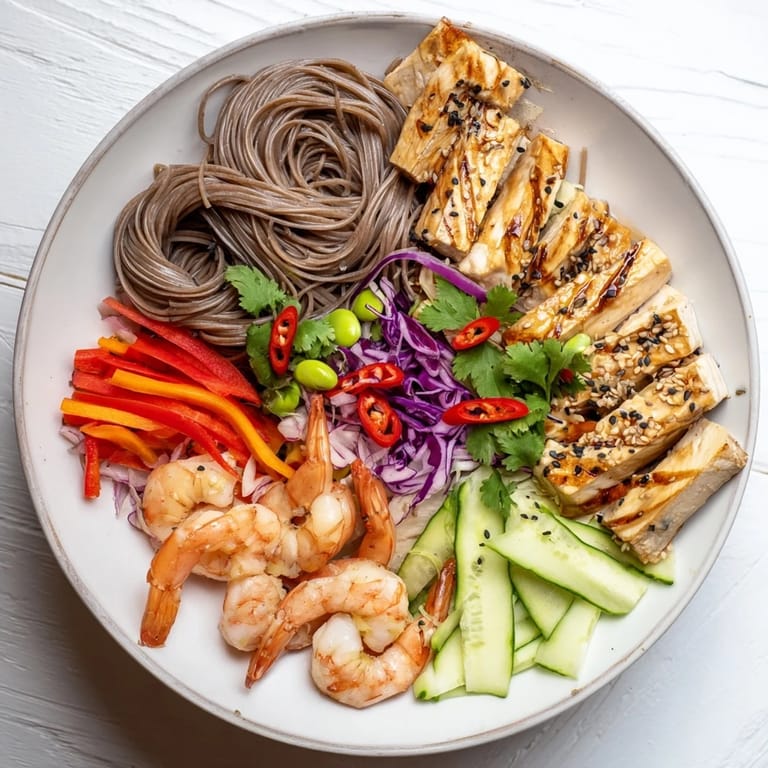
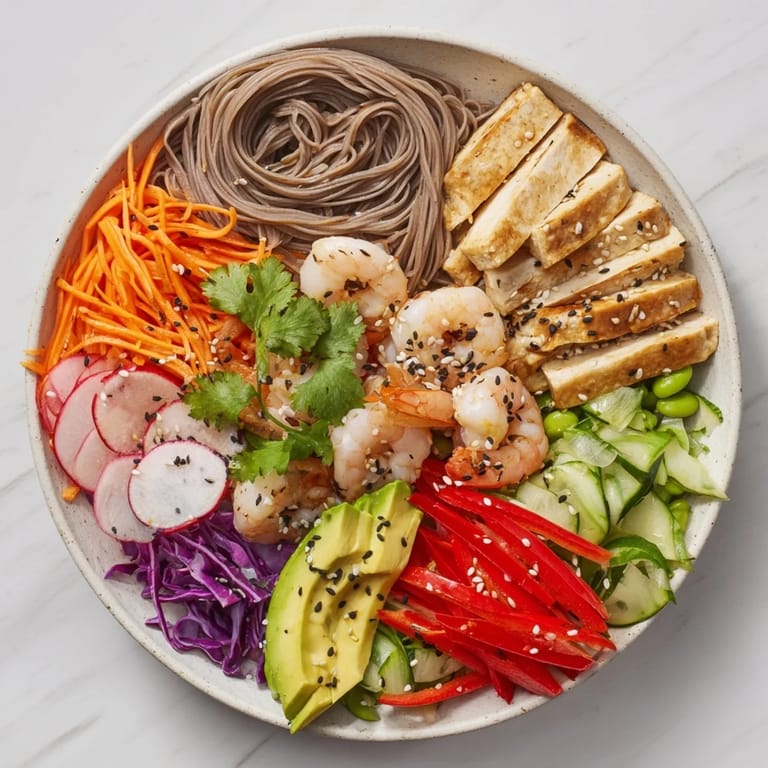
I made this board for my sister's birthday dinner last spring, and watching her face when she walked into the kitchen was priceless. The way the colors caught the light—those jewel-toned vegetables arranged in perfect rows, the golden shrimp, the creamy avocado fans—it looked like edible art. But what really got me was seeing everyone lean in, so engaged in building their own perfect bowl, trading tastes and laughing about their flavor combinations. That's when I knew this wasn't just a recipe; it was an experience.
What's for Dinner Tonight? 🤔
Stop stressing. Get 10 fast recipes that actually work on busy nights.
Free. No spam. Just easy meals.
Ingredients
- 200 g rice noodles (medium width): These cook quickly and have a delicate texture that lets sauce cling beautifully. I learned to rinse them thoroughly in cold water—it's the difference between springy noodles and gummy ones.
- 200 g soba noodles: Their nutty flavor adds depth. Cook them separately from the rice noodles; they need different timing and cooking water isn't interchangeable.
- 1 tbsp sesame oil (for tossing): A light toss prevents sticking and adds that unmistakable toasted aroma that makes everyone's nose perk up.
- 2 boneless, skinless chicken breasts: Poaching keeps them impossibly tender. Boiling is the enemy—I learned that the hard way years ago.
- 200 g firm tofu: The key is patting it completely dry before cooking. This is non-negotiable if you want that crispy exterior.
- 200 g cooked, peeled shrimp: If using raw, just 2–3 minutes in boiling salted water transforms them from translucent to that perfect firm-but-tender state.
- 1 tbsp soy sauce and 1 tsp toasted sesame oil (for proteins): These season and deepen the flavor without overwhelming.
- 1 tbsp neutral oil (for cooking): Canola or vegetable oil won't compete with the other flavors.
- 1 large carrot, julienned: The sweetness balances the salty-savory elements. A mandoline makes this effortless.
- 1 cucumber: Sliced into ribbons or thin rounds, it adds cooling crispness. Don't cut too far ahead or it wilts.
- 1 red bell pepper, thinly sliced: The color is part of the magic here. Choose one that's firm and glossy.
- 1 cup edamame, shelled: Blanched briefly, they stay vibrant green and have a satisfying pop.
- 1 cup purple cabbage, finely shredded: This is your color anchor. Its slight bitterness is sophisticated against the sweetness of other elements.
- 4 radishes, thinly sliced: They bring a peppery crunch that wakes up your palate. Slice them paper-thin for the best effect.
- 1 avocado (ripe but firm): Wait to slice until just before serving. I keep a bowl of lemon water nearby to prevent browning.
- 2 scallions, sliced on the diagonal: The diagonal cut is purely visual but it matters—it shows intention.
- 2 tbsp toasted sesame seeds and 1 tbsp black sesame seeds: The combination of colors adds sophistication. Toast them lightly yourself if you have time; the difference is noticeable.
- Fresh cilantro sprigs: Cilantro is polarizing, but it adds brightness. Use generously or omit if it's not your thing.
- 1 red chili, thinly sliced (optional): For those who want heat to build throughout the meal.
- Dipping sauce base: 1/4 cup hoisin, 1/4 cup soy sauce, 1 tbsp rice vinegar, 1 tbsp honey or maple syrup, 1 tbsp chili garlic sauce, 2 tbsp creamy peanut butter, 2 tbsp water, 2 tsp toasted sesame oil, 1 tsp grated ginger, 1 clove garlic (minced). This sauce is the soul of the board. Whisk it until completely smooth—no peanut butter lumps.
Instructions
- Bring two pots of water to a rolling boil:
- Use your largest pots. You're cooking two very different noodles with different needs, and they require their own space. While they heat, gather your ingredients—mise en place is your friend here.
- Cook the rice noodles until just tender:
- Follow package instructions, usually 4–6 minutes. Stir gently so they don't clump. They should feel tender when you bite one, never mushy. When they're done, drain and immediately rinse under cold running water, shaking off excess liquid.
- Cook the soba noodles separately:
- Usually 5–6 minutes. Stir occasionally. These have a slightly different texture than rice noodles and need their own attention. Drain and rinse in cold water just like the rice noodles.
- Toss each noodle type lightly with sesame oil:
- Use about 1/2 tbsp per noodle type. This prevents sticking and adds that subtle toasted flavor. The noodles should feel cool, springy, and completely separate.
- Poach the chicken breasts gently:
- Place them in a saucepan, cover with water, add a pinch of salt, and bring to a gentle simmer over medium heat. Do not boil—this is crucial. Cover and cook 10–12 minutes until the internal temperature reaches 165°F (74°C). The chicken should be opaque throughout with no pink. Let cool slightly, then slice thinly against the grain. This keeps each slice tender and elegant.
- Pan-fry the tofu until golden:
- Pat the tofu completely dry with paper towels. Cut into 1 cm thick slabs, then into rectangles. Heat neutral oil in a nonstick skillet over medium-high heat. Working carefully, add tofu slices and cook 2–3 minutes per side until golden brown and crisp on the outside. In the last moment before removing, drizzle with soy sauce and toasted sesame oil. You want contrast—crispy outside, creamy within. Don't overcrowd the pan; it steams instead of crisping.
- Chill the shrimp if using raw:
- Bring salted water to a boil, add shrimp, and cook just 2–3 minutes until they turn pink and curl. Immediately transfer to ice water to stop the cooking. They should be firm, opaque, and slightly sweet-smelling. Overcooked shrimp becomes rubbery.
- Prepare vegetables with precision:
- Peel the carrot and julienne thinly (or use a mandoline). Slice the cucumber lengthwise into ribbons or thin rounds. Remove seeds from the bell pepper and slice into thin strips. Blanch edamame for 2 minutes in boiling water, then chill in cold water. Shred the purple cabbage finely. Slice radishes paper-thin. Slice the avocado just before serving to prevent browning. Cut scallions on a sharp diagonal for elegance. Every vegetable should be bright, crisp, and evenly sliced. Don't cut too far ahead—the magic is in the freshness.
- Whisk the dipping sauce until smooth:
- In a medium bowl, combine hoisin, soy sauce, rice vinegar, honey, chili garlic sauce, peanut butter, water, sesame oil, ginger, and garlic. Whisk thoroughly until completely smooth with no peanut butter lumps. Taste and adjust salt, sweetness, or heat to your preference. This sauce is your flavor anchor.
- Assemble the board like you're composing a painting:
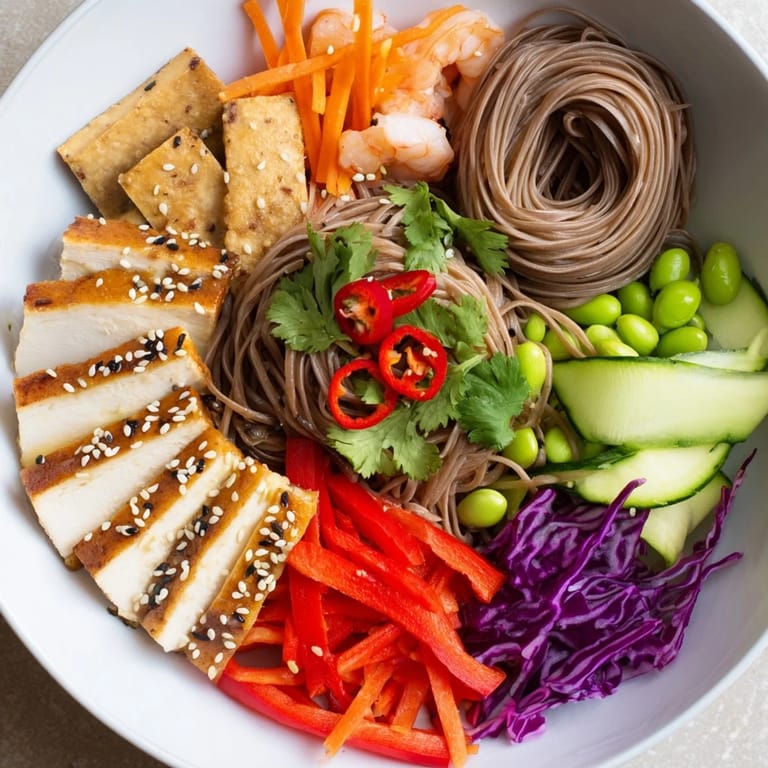
- Choose a large, flat board or platter at least 18 inches wide. Place the sauce bowl at the center. Arrange everything in neat, stacked rows radiating outward. Fan the noodles in two separate layers. Group proteins in overlapping fans or neat rows. Layer vegetables in color-contrasted segments. Place avocado and radish in overlapping fans for visual interest. Sprinkle garnishes over appropriate sections—sesame seeds, cilantro, chili. Use scallions and extra herbs to fill gaps. Maintain symmetry and precision. This is where the board becomes more than food.
- Serve immediately while everything is at peak freshness:
- Invite guests to build their own noodle bowls, mixing and matching to their taste. The beauty is in the freedom.
 Pin
Pin 
There was a moment during that birthday dinner when my sister took a bite of her custom bowl—she'd layered everything herself, creating this perfect balance of textures and flavors. She closed her eyes and just smiled. No words, just that look that told me this dish had become something bigger than ingredients on a plate. That's the moment I realized a good recipe isn't about perfection; it's about creating space for people to feel something.
The Art of the Board
The visual presentation here isn't just for Instagram. When ingredients are arranged beautifully, guests slow down. They look, they appreciate, they make more intentional choices about what goes into their bowl. Use a damp kitchen towel under your board to keep everything stable while you're arranging. This prevents slipping and keeps your precision intact. Work quickly once ingredients are on the board—the vegetables are best at their peak crispness and color. Every element should look like you cared, because you did.
Building Flavor Layers
The magic of this board lives in the layers. The noodles are your neutral base—they're vehicles for flavor. The proteins add weight and richness. The vegetables bring freshness, crunch, and slight bitterness that makes your palate come alive. The sauce ties everything together into harmony. When someone builds their own bowl, they're creating their own flavor story. Some people load up on vegetables and light on sauce. Others want noodles and protein with just a touch of vegetables. There's no wrong answer. That freedom is the point. Every bite should feel like a conversation between textures and flavors working together.
Timing and Preparation Strategy
Prep this board in stages, starting 1–2 hours ahead. Cook and chill the noodles first—they improve as they cool. Poach the chicken and cook the tofu next, letting them cool while you prep vegetables. Blanch the edamame and prepare everything that can sit for a while. Save the avocado for the very last moment. Whisk the sauce 30 minutes before serving so the flavors meld. This staged approach means you're calm and present when guests arrive, not frantically slicing avocado at the last second.
- Chill all ingredients before assembly for best texture and color vibrancy
- Keep a bowl of acidulated water (water with lemon juice) nearby to prevent browning of avocado and radishes
- Use a damp towel under your board to prevent slipping during assembly and service
 Pin
Pin Every time I make this board, it reminds me that some of the best meals aren't about complicated techniques—they're about creating moments where people feel cared for and free to enjoy food exactly as they want it. That's the real recipe.
Recipe Questions & Answers
- → How do I prevent noodles from sticking together?
Rinse cooked noodles under cold running water and toss lightly with sesame oil to keep them separate and maintain a pleasant texture.
- → What is the best way to cook the proteins for this dish?
Poach chicken gently to retain tenderness, pan-fry tofu until golden and crisp, and quickly boil shrimp until pink and firm.
- → How should vegetables be prepared for optimal texture?
Slice vegetables thinly and just before serving to keep them crisp and vibrant, especially avocado and radishes to prevent browning.
- → What ingredients create the dipping sauce’s flavor balance?
The sauce blends hoisin, soy, rice vinegar, honey or maple syrup, chili garlic, peanut butter, and toasted sesame oil for a sweet, savory, and slightly spicy finish.
- → How can this bowl be adapted for vegan preferences?
Omit chicken and shrimp, increase tofu and edamame portions, and replace honey with maple syrup in the dipping sauce.