 Pin
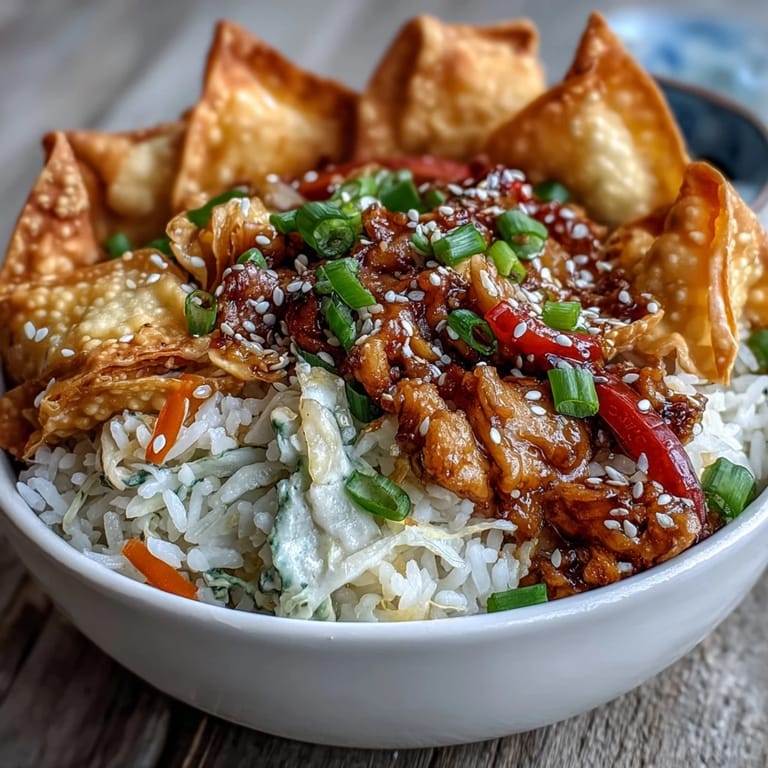
Pin My sister called me halfway through a weeknight, stressed about feeding her family something that felt special but wouldn't keep her in the kitchen past seven. I'd just made egg roll bowls for the first time that morning, and something about the way the crispy wonton strips shattered between my teeth made me think of her. The next time she visited, I made them together, and watching her kids dig into their bowls with actual enthusiasm—no negotiations, no complaints—told me I'd found something worth making again and again.
I made this for a casual dinner with friends who were always ordering takeout, and one of them asked for the recipe before dessert even came out. That's when I knew the crispy wonton strips were doing real work—it's the unexpected crunch that makes people pause and actually notice what they're eating.
What's for Dinner Tonight? 🤔
Stop stressing. Get 10 fast recipes that actually work on busy nights.
Free. No spam. Just easy meals.
Ingredients
- Ground chicken: One pound gives you enough substance to fill four generous bowls without feeling heavy, and it cooks quickly if you break it into small pieces as it hits the pan.
- Vegetable oil: Use something neutral that can handle high heat without smoking, keeping the flavor on the proteins and aromatics.
- Garlic and ginger: Three cloves minced fine and a tablespoon of grated ginger build the backbone of authentic flavor that makes people lean in and ask what they're tasting.
- Fresh onion: One small onion finely chopped adds sweetness and body to the chicken mixture without overpowering the vegetables.
- Carrot: Julienne or shred it so it cooks through in the same time the cabbage needs to soften.
- Green cabbage: Three cups thinly sliced gives you that signature crunch and slight sweetness that defines the egg roll flavor profile.
- Red bell pepper: Half a pepper thinly sliced brings color and a mild sweetness that balances the savory soy and ginger.
- Green onions: Three sliced and reserved for garnish finish each bowl with fresh, sharp bite.
- Soy sauce: Two tablespoons of low-sodium keeps the dish from becoming too salty while you layer in other flavors.
- Hoisin sauce: This tablespoon adds umami depth and slight sweetness that ties everything together.
- Rice vinegar: One tablespoon brightens the whole mixture and keeps it from tasting flat.
- Toasted sesame oil: A teaspoon is enough to fill the bowl with that toasted, nutty aroma that signals homemade to your nose.
- Wonton wrappers: Eight squares brushed with oil and crisped up become the textural payoff that makes this more interesting than a regular chicken stir-fry.
- Cooked rice: Two cups prepared gives you a neutral canvas that soaks up all the sauce without competing for attention.
- Sesame seeds and fresh green onions: These final garnishes make the bowl look like you cared, and they add freshness right before you eat.
Instructions
- Get your oven ready and prep the crispiest part:
- Preheat to 375°F and line a baking sheet with parchment paper. Cut your wonton wrappers into thin, uneven strips—they don't need to be perfect because imperfect strips crisp at different rates and you'll end up with more texture variety. Toss them with oil and salt, spread them out in one layer so they're not touching, and bake for 7 to 9 minutes while you start the chicken, tossing them halfway through so they golden on both sides.
- Brown the chicken until it's breaking apart:
- Heat oil in a large skillet over medium-high heat and add your ground chicken, using a wooden spoon to break it into small, irregular pieces as it cooks. You want it to brown in its own rendered fat for about 5 to 6 minutes, which gives you flavor and color you can't get any other way.
- Build layers of aroma with garlic, ginger, and onion:
- Once the chicken is cooked through, add your minced garlic, grated ginger, and finely chopped onion and let them sauté together for about 2 minutes until your kitchen smells like something special. Don't rush this step because this is where the depth comes from.
- Add vegetables and let them stay crisp:
- Stir in your julienned carrot, sliced cabbage, and bell pepper and sauté for 4 to 5 minutes, which is long enough for them to soften slightly but not so long that they turn mushy and lose their character. You want to still hear them crunch between your teeth.
- Finish with sauces that tie everything together:
- Add soy sauce, hoisin, rice vinegar, sesame oil, and black pepper and stir everything until it's coated and glossy. Cook for another minute or so just to let the flavors marry, then take it off the heat and taste it—this is your moment to adjust if something needs more salty or more bright.
- Assemble bowls that look and taste intentional:
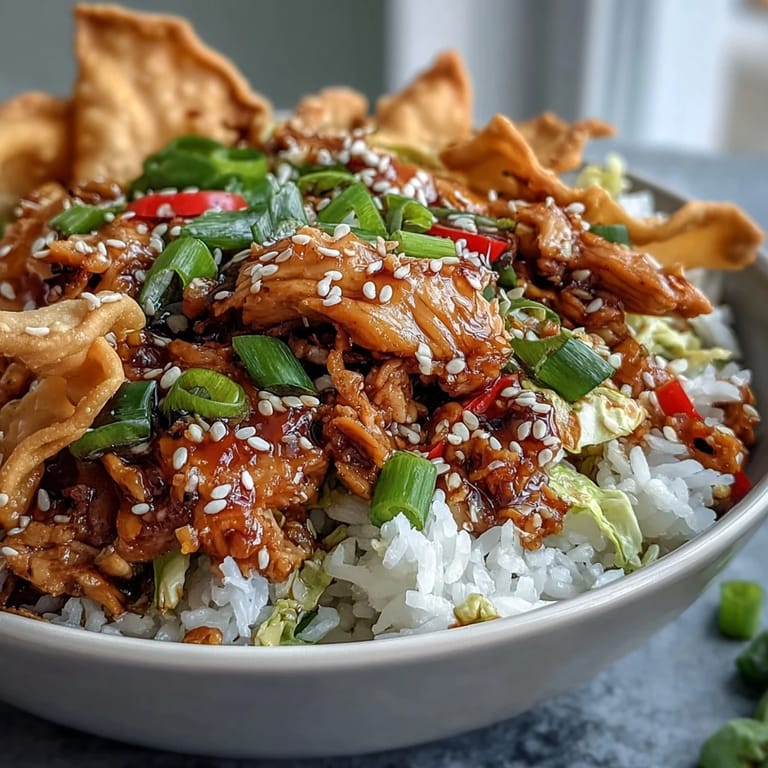
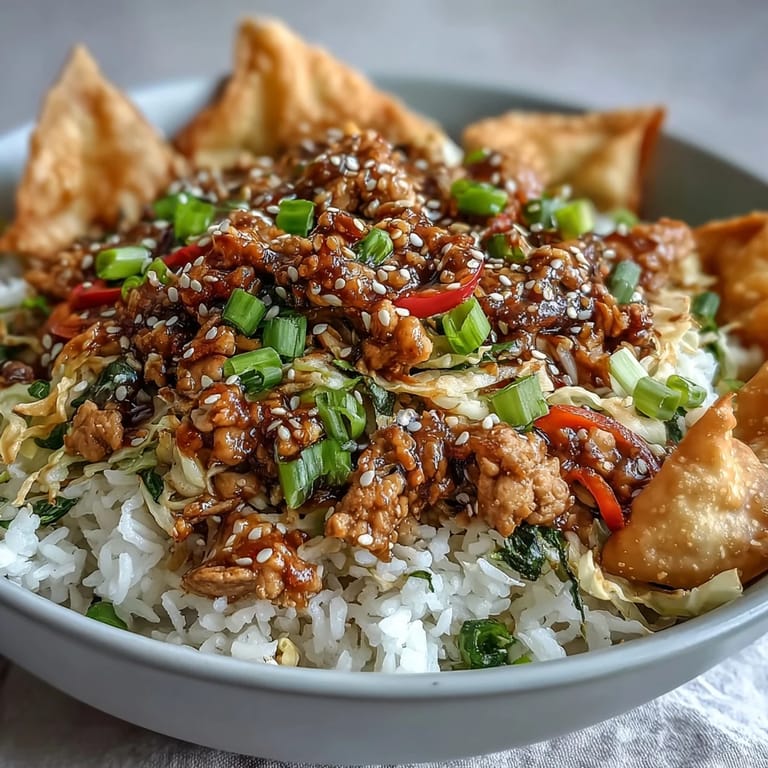
- Divide your cooked rice among four bowls and top each one with a generous scoop of the warm chicken mixture. The rice will absorb all those savory juices, and each bite becomes more flavorful than the one before.
- Crown it all with texture and freshness:
- Sprinkle sesame seeds across the top, scatter fresh sliced green onions, and add a big handful of those crispy wonton strips right before serving so they stay crunchy instead of softening into the warm rice.
 Pin
Pin 
There's a moment right when you add the sauce to the cooked chicken and vegetables when everything smells so good you almost want to forget the rice and just eat it straight from the pan. That's when you know you've nailed the proportions and the technique, and it's the exact moment someone walks into your kitchen asking what smells so incredible.
Why the Crispy Wonton Strips Matter
A lot of people think crispy wonton strips are just garnish, but they're actually the entire reason this dish feels exciting instead of ordinary. They're what makes someone take a second bite, and they're the detail that separates a bowl of chicken and rice from something you'd actually crave. Baking them instead of frying keeps the dish lighter and faster, and they stay crunchier longer because there's no oil weighing them down.
Swapping Proteins and Vegetables
Ground turkey works just as well as chicken and cooks at the same pace, while ground pork gives you a richer, slightly sweeter result that pairs beautifully with the hoisin. If you want to use vegetables that are already in your fridge, anything firm enough to stay crisp through a quick sauté works—think shredded zucchini, snap peas, or mushrooms sliced thin so they soften at the same rate as the cabbage.
Making It Hotter, Fresher, or Gluten-Free
The heat level is completely up to you, and I've found that adding sriracha or chili-garlic sauce at the same time as the other sauces lets it distribute evenly instead of creating spicy pockets. For a gluten-free version, swap soy sauce for tamari and use certified gluten-free wonton wrappers, or skip the wonton strips entirely and add extra sesame seeds for crunch. If fresh ginger isn't available, ground ginger works in a pinch but use half as much since it's more concentrated.
- A squeeze of lime juice right before serving brightens everything and adds complexity that people can't quite identify.
- Make extra wonton strips because they disappear faster than you'd expect, and they're just as good snacked on straight from the cooling pan.
- Assemble the bowls right before eating so the wonton strips stay crispy and the rice stays warm.
 Pin
Pin This dish became my go-to when I wanted to prove that homemade didn't have to mean complicated, and every time I make it, someone asks for the recipe. That's enough for me to keep making it.
Recipe Questions & Answers
- → Can I make this ahead of time?
Yes! Prepare the chicken and vegetable mixture up to 3 days in advance and store in the refrigerator. The wonton strips can be made ahead and kept in an airtight container for up to 5 days. Reheat the filling gently and assemble bowls when ready to serve.
- → What other protein works well?
Ground turkey, pork, or even crumbled tofu work beautifully as alternatives. Adjust cooking time slightly depending on the protein you choose—turkey may need a touch more oil while tofu cooks faster.
- → How do I store leftovers?
Store the chicken mixture and rice separately in airtight containers for up to 4 days. Keep the wonton strips in a separate container at room temperature to maintain their crispiness. Reheat the filling in the microwave or on the stovetop, adding fresh toppings before serving.
- → Can I make this gluten-free?
Absolutely! Substitute soy sauce with tamari or coconut aminos, use gluten-free hoisin, and either make homemade gluten-free wonton strips or skip them in favor of crushed rice crackers or extra toasted sesame seeds for crunch.
- → What can I serve instead of rice?
Cauliflower rice, quinoa, or even noodles like ramen or rice noodles make excellent alternatives. For a low-carb version, serve over shredded lettuce or use it as a filling for lettuce wraps.
- → How spicy is this dish?
The base version is mild with just a hint of warmth from ginger and black pepper. Add sriracha, chili-garlic sauce, or red pepper flakes during cooking to increase the heat level to your preference.