
 Pin
Pin There's a particular magic that happens when you step into a Parisian bistro on a quiet afternoon. I remember sitting at a small table near the window, watching the light dance across a carefully composed charcuterie board—not cluttered or abundant, but restrained, elegant, almost architectural. The baker's baguette was still warm, the cheese slices so thin they were nearly translucent, and everything seemed to breathe with intentional space. I realized that day that a beautiful board isn't about having more; it's about knowing exactly what matters and letting each element speak.
I've made this board countless times now, but one evening stands out. I'd invited friends over on short notice, and instead of panicking about having the 'right' food, I remembered this approach. Thirty minutes later, they walked in to find this serene, almost gallery-like arrangement waiting. One friend said, 'This looks like it belongs in a magazine,' and honestly, that's the entire point—it's not fussy, it's just intentional.
What's for Dinner Tonight? 🤔
Stop stressing. Get 10 fast recipes that actually work on busy nights.
Free. No spam. Just easy meals.
Ingredients
- French baguette (1 full-length, about 60 cm): This is your canvas. Fresh matters here—you want that crisp exterior that shatters slightly and an interior that's pillowy. A day-old baguette works in a pinch, but truly fresh is worth a quick trip to the bakery
- Comté (120 g): A Swiss-French nutty cheese that slices cleanly and has just enough personality without overwhelming. The way it catches light when sliced thin is part of the beauty
- Brie de Meaux (120 g): The creamy, earthy heart of the board. Keep it chilled until the last moment so it holds its shape and doesn't look like it's melting into surrender
- Saint-Nectaire (120 g): A semi-soft treasure with a natural rind and subtle mushroom notes. Slice it and fan it like you're creating something precious, because you are
- Nicoise or Picholine olives (12–16): Brined, slightly bitter, the foil to all that creamy cheese. Rinse them lightly so their brine doesn't stain everything around them
- Marcona almonds (1 small handful, lightly toasted): Spanish, slightly buttery, they add texture and a whisper of saltiness. Toast them yourself if you have time; the kitchen will smell incredible
- French butter, softened (1–2 tbsp of something like Beurre d'Isigny): Not just any butter. The good stuff. Grass-fed, high butterfat, the kind that makes you understand why the French care so much about butter
- French wholegrain mustard (1 tbsp): Sharp, textured, a small punctuation mark of flavor. A tiny ramekin or smear is all you need
- Flaky sea salt: The final whisper. Let guests add it as they wish
- Fresh thyme or chervil (6–8 sprigs): These aren't decoration; they're the quiet voice that ties everything together. Use them sparingly
- Edible flowers (optional, 1–2): If you have them, one small bloom off-center. If not, you don't need them. The board is already beautiful
Instructions
- Prepare the Baguette with Intention:
- Take your sharpest bread knife—dull knives are your enemy here. Trim the ends of the baguette with clean, confident cuts. Now for the slice that defines this entire board: angle your knife to about 45 degrees and cut the baguette on a long diagonal. You're aiming for pieces about 1.5 cm thick, each one an elegant, elongated slice with a golden crust catching the light. Don't rush this; each slice is part of the composition. Arrange them in a slight overlapping row along one side of your board, leaving plenty of white space. You should feel like you're positioning elements in a still life, not filling every gap.
- Slice and Fan Each Cheese Like an Artist:
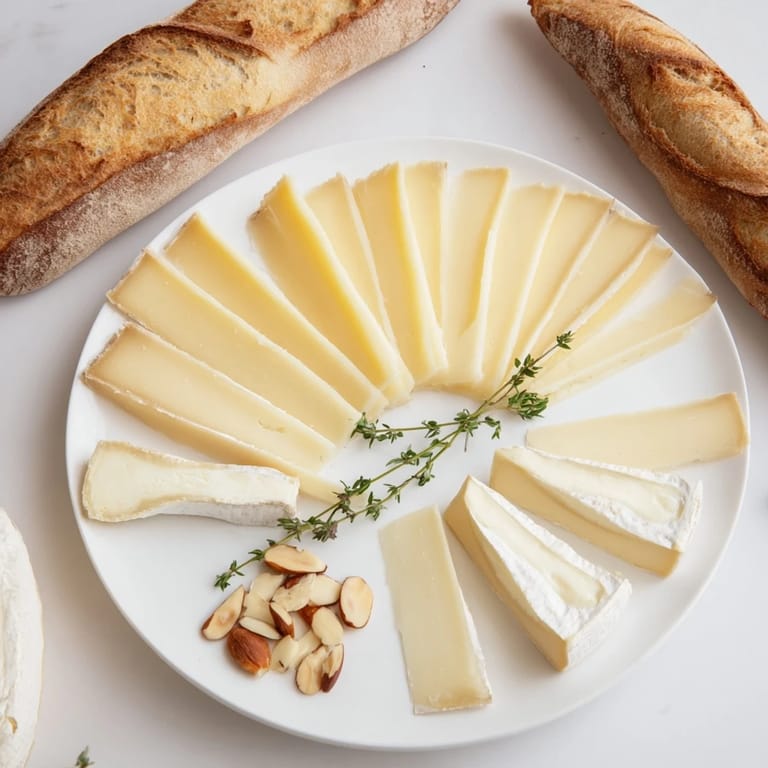
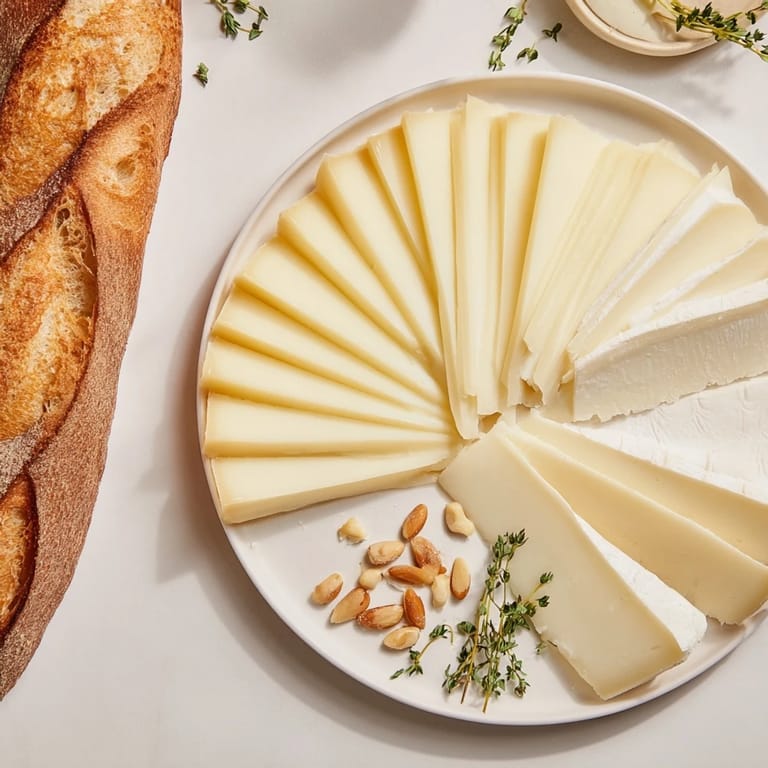
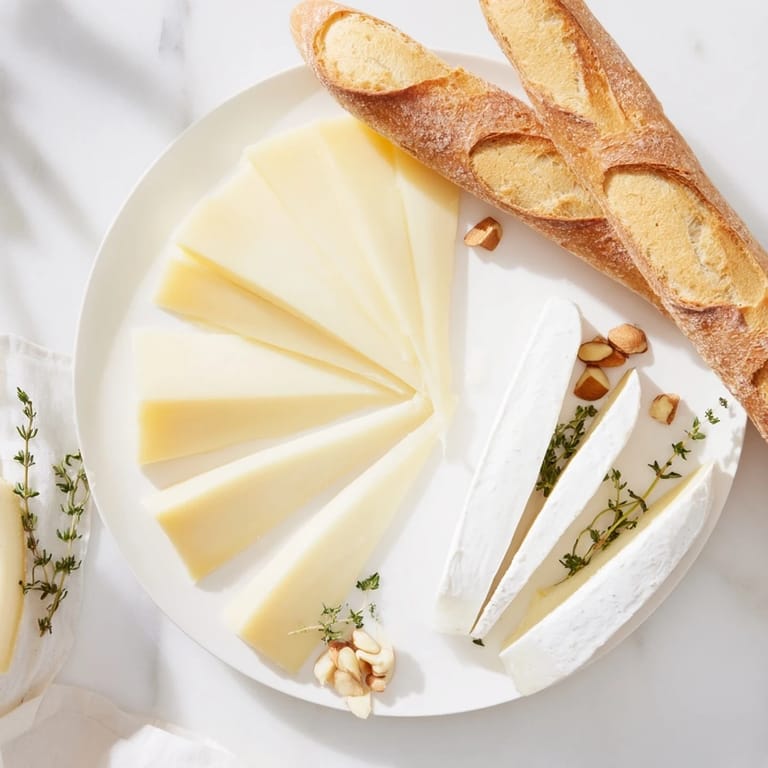
- Start with the Comté. Use a dedicated cheese knife and slice lengthwise into thin, even pieces—about 3 mm thick, nearly see-through. This takes a steady hand and patience. Fan these slices in a gentle arc next to the baguette, each slice slightly separated so light catches between them. For the Brie, chill it for 10 minutes first if it's soft; you want it firm enough to slice into clean wedges without the knife dragging. Arrange these in their own neat fan, keeping them fractionally apart. Finally, the Saint-Nectaire: slice thin and fan in a semi-circle that mirrors the Comté, creating visual balance. Step back. You should see clean, glossy cheese, not weeping or melting. If anything looks ragged, you can re-slice it; perfection is the whole point here.
- Arrange Accompaniments with Precision:
- This is where restraint becomes an art form. Place your olives in a tight, elegant cluster—either in a tiny dish or directly on the board, keeping them slightly apart from the cheese so their brine doesn't stain anything. Take your Marcona almonds and scatter 6 to 8 in a neat line or small pile, maintaining that sense of space. Using a small offset spatula, swipe the butter onto a chilled stone or shape it into a minimal quenelle—a French technique of scooping it with two spoons to create an elegant, elongated form. The mustard goes in a tiny ramekin or as a single, clean smear at the edge of the board. Sprinkle just a pinch of flaky sea salt near the butter. Every element should feel intentional and framed by white space. Nothing should touch unless it's part of the composition.
- Garnish and Finalize:
- Tuck your fresh thyme or chervil sprigs discreetly between the cheese and bread—think of them as punctuation marks, not decoration. If you're using an edible flower, place just one, off-center, for a subtle pop of color. Never overdo it. Now stand back and look at what you've created. Every element should feel intentional, with clean lines and ample breathing room. Wipe any smudges or errant crumbs from the board with a clean cloth. This is the moment it becomes art.
 Pin
Pin 
I learned the power of this board during a moment when it became more than just food. A friend was going through something difficult, and instead of arriving with heavy sympathy, I brought this—elegant, nourishing, a reminder that beauty and care exist in simplicity. We sat together, tore pieces of bread, shared cheese, and somehow, in that act of slowing down to appreciate something deliberately composed, the world felt a little less heavy. That's when I understood: a charcuterie board like this is a language of care.
The Art of Elegant Simplicity
French bistro culture isn't about abundance or showiness. It's about knowing what's essential and presenting it so beautifully that nothing else is needed. When you walk into a proper bistro, you notice the restraint—the uncluttered table, the single, perfect flower in a bud vase, the way a plate of cheese seems to breathe. This board carries that philosophy. You're not trying to impress with quantity; you're creating a moment of quiet sophistication where every ingredient has space to exist and be appreciated. This is the kind of entertaining that feels effortless to the guest but is actually deeply intentional from your end.
Sourcing Matters More Than You'd Think
I used to think any baguette from any bakery would do. Then I started going to a proper French boulangerie, and everything changed. The difference between a rushed, under-fermented baguette and one that's been slowly developed with care is the difference between cardboard and something transcendent. The same goes for the cheeses—if you can find a proper fromager (cheese shop), they'll know the provenance of every wheel. A Comté from a specific Alpine dairy tastes different from a generic one. These details matter because they're not about being fancy; they're about flavor. Spend time sourcing, and your board becomes exceptional rather than just pretty.
Timing and Temperature Are Your Silent Partners
Temperature control is the secret language of a successful charcuterie board. Cold Brie holds its shape and won't look like it's surrendering to the warmth of the room. A fresh baguette at room temperature has the ideal texture contrast between crust and crumb. Butter that's just slightly softened spreads like silk without falling apart. And those almonds—if you toast them yourself just 10 minutes before serving, the warmth releases their oils and fragrance. It's a small thing, but it means guests don't just see beautiful food; they experience it with all their senses. The moment you set this board down, you're orchestrating a sensory symphony, and every element has to be in tune.
- Toast your almonds fresh right before serving if you have the time—the warm scent of toasted nuts is an invitation all by itself
- Keep cheeses chilled until the absolute last moment you arrange them, and serve the board immediately so everything is at its intended temperature
- Baguette should be at room temperature for the perfect balance of crispy exterior and soft interior
 Pin
Pin This board is an invitation to slow down and savor. Serve it with good wine and better company, and let the simplicity and care you've put into it do the talking.
Recipe Questions & Answers
- → How should the baguette be sliced for optimal presentation?
Slice the baguette diagonally into thin 1.5 cm slices to create elongated pieces with a crisp crust and airy interior, ideal for fanning.
- → What is the best way to prepare the cheeses for display?
Slice Comté thinly lengthwise, chill Brie briefly and cut into slim wedges, then fan Saint-Nectaire into semi-circles for a balanced elegance.
- → How are the accompaniments arranged on the board?
Olives should be in a tight cluster separate from cheeses; almonds arranged neatly; butter and mustard placed with care, maintaining ample negative space.
- → What garnishes enhance the board without overcrowding?
Fresh thyme or chervil sprigs tucked discreetly and a small number of edible flowers add freshness and subtle color without clutter.
- → How can leftovers be stored safely?
Wrap cheeses and bread separately and tightly, store refrigerated, and consume within 24 hours to maintain freshness and safety.
- → Are there suitable ingredient substitutions?
Aged Gruyère or Tomme de Savoie can replace cheeses; hazelnuts or walnuts may substitute almonds; gluten-free baguette can be used as needed.