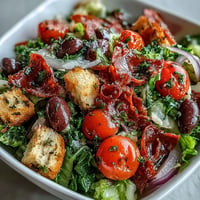
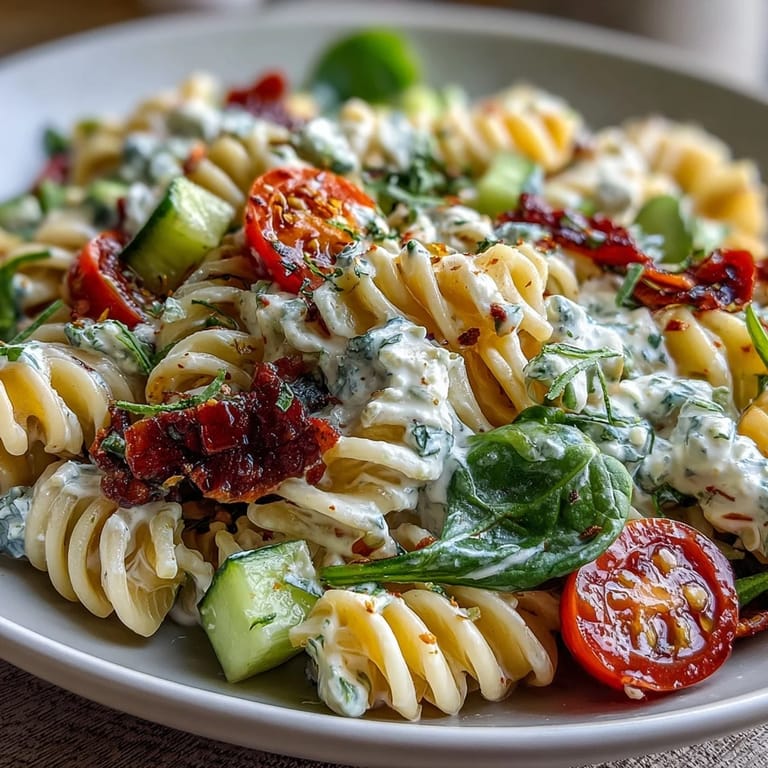
 Pin
Pin There's something about a pasta salad that feels effortless until you're standing in your kitchen at 2 PM on a Tuesday, realizing you need lunch that actually fills you up. I discovered this cottage cheese version by accident when I had half a container sitting in the fridge and a box of pasta begging to be used. The moment those tangy curds mixed with cold pasta and crisp vegetables, I understood why this became my go-to when I needed something substantial but not heavy. It's become the dish I make when I want to feel like I've got my act together without spending hours in the kitchen.
I'll never forget bringing this to my friend's backyard gathering last summer when everyone showed up with store-bought sides. Someone asked what was in it, and when I mentioned cottage cheese, there was this beat of hesitation before they tried it. By the end of the afternoon, it was gone and three people asked for the recipe. That moment shifted something for me—this humble salad had become proof that simple ingredients treated with care could actually impress people.
What's for Dinner Tonight? 🤔
Stop stressing. Get 10 fast recipes that actually work on busy nights.
Free. No spam. Just easy meals.
Ingredients
- Short pasta (350 g / 12 oz): Rotini, penne, shells, or farfalle work best because they actually hold onto the dressing instead of sliding off like spaghetti would.
- Cottage cheese (250 g / 9 oz, about 1 cup): This is your secret weapon for creaminess and protein—small curd gives a smoother texture, large curd adds more bite.
- Cucumber (1 medium, diced): Adds that essential crunch and keeps things feeling fresh rather than heavy.
- Red bell pepper (1, diced): Sweet and colorful, this gives the salad life and visual appeal that matters more than you'd think.
- Cherry tomatoes (200 g / 7 oz, halved): Fresh and juicy, they're so much better than regular tomatoes which can get watery and sad in a cold salad.
- Baby spinach (2 cups, roughly chopped): Wilts slightly into the dressing as it sits, adding greens without the chewiness of heartier lettuces.
- Red onion (2 tbsp, finely diced, optional): Sharpness that cuts through the creaminess if you want a little attitude in your salad.
- Italian dressing (60 ml / 4 tbsp): Store-bought saves time; homemade lets you control the salt.
- Extra-virgin olive oil (1 tbsp): Smooths out the dressing and adds that kitchen-made touch.
- Lemon juice (1 tbsp, freshly squeezed): Brightness that keeps the whole thing from feeling monotone.
- Dijon mustard (1 tsp): A tiny amount that adds sophistication without anyone knowing what's making them taste it twice.
- Garlic powder (1/2 tsp): Better than fresh garlic here because it stays evenly distributed throughout.
- Dried oregano (1/2 tsp): Herb that whispers rather than shouts, keeping everything harmonious.
- Salt and black pepper: Taste as you go because every brand of cottage cheese and dressing has different sodium levels.
Instructions
- Boil your pasta with intention:
- Bring a large pot of salted water to a rolling boil—you want it aggressive enough that the pasta cooks evenly. Cook according to package directions until al dente, which means it should have a tiny bit of resistance when you bite it, not mushy. Drain it, then rinse thoroughly with cold water while stirring gently; this stops the cooking and removes excess starch so it won't clump.
- Prep your vegetables while pasta cooks:
- Dice your cucumber and bell pepper into similar-sized pieces so everything cooks with the cold evenly. Halve the cherry tomatoes lengthwise, roughly chop your spinach into bite-sized pieces, and if you're using red onion, go fine with it so the sharpness distributes rather than bites.
- Build your dressing in the bowl:
- In a large mixing bowl, whisk together the Italian dressing, olive oil, lemon juice, Dijon mustard, garlic powder, and oregano until it looks cohesive. You should hear the whisk moving through something that feels almost silky—if it looks separated, keep whisking gently until it comes together.
- Combine everything with care:
- Add your cooled pasta, cottage cheese, and all your vegetables to the bowl at once. Toss gently but thoroughly, using two forks or salad tongs so nothing gets crushed—you want distinct bites of texture, not mush.
- Let it breathe and marry:
- Cover and refrigerate for at least an hour before serving; this lets the flavors actually get to know each other instead of tasting like separate ingredients. Before serving, give it a stir and taste again—you might want another squeeze of lemon or splash of dressing because cold mellows everything.
 Pin
Pin 
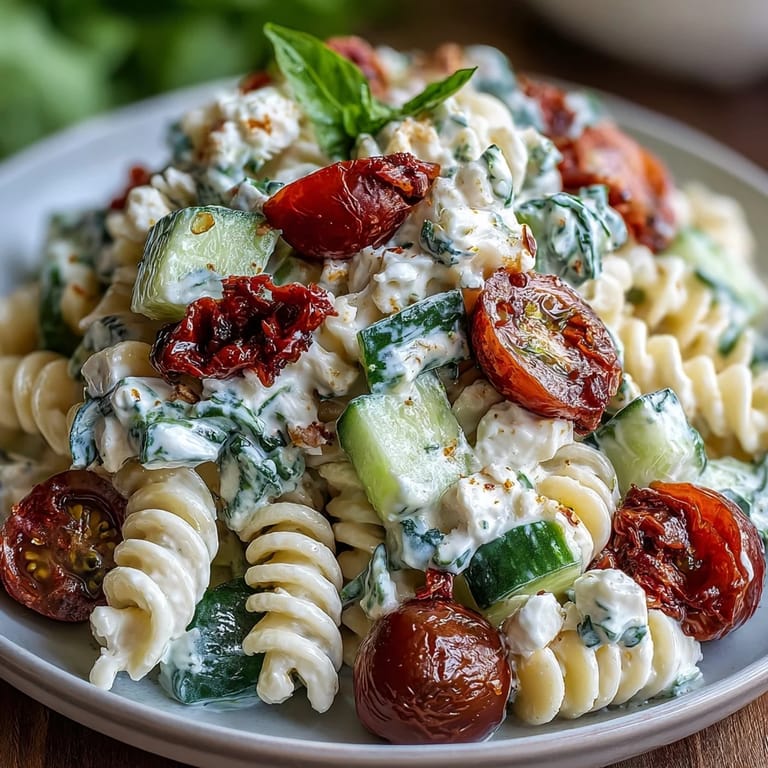
What really got me about this salad was realizing it could be different every time I made it, depending on what was in my crisper drawer or my mood that day. It stopped being a recipe and became more like a framework—a way to make something nourishing without thinking too hard about it.
When Cottage Cheese Stops Being Weird
I used to be one of those people who thought cottage cheese belonged in very specific situations, mostly ones I wasn't interested in. But in a cold pasta salad where it's mixed with bright acidity and fresh vegetables, something shifts—it becomes creamy without being heavy, protein-rich without tasting like diet food. The cold temperature keeps it light, and the contrast with crisp vegetables makes you forget you're eating something that's essentially curdled milk. It's one of those ingredients that reveals itself differently depending on how you treat it.
Make-Ahead Magic
This is genuinely one of the best salads for actually being able to make ahead without regret. Unlike leafy green salads that wilt into sadness by the next day, this actually improves as it sits because the pasta absorbs the dressing and everything melds together. I've made this on Sunday and still been thrilled to eat it Wednesday evening, which is rare for any salad. The key is keeping the vegetables cut to a reasonable size so they stay distinct rather than breaking down into mush.
Playing With What You Have
The beauty of this salad is that it's forgiving in a way that baking never is—you can substitute almost anything in the vegetable category and it still works. Swap spinach for arugula if you want something peppery, use snap peas instead of bell pepper, throw in shredded carrots, add halved cherry tomatoes or diced regular tomatoes. You could even do a Mediterranean version with kalamata olives, fresh basil, and a touch of feta if you want something completely different. Just keep the proportions roughly similar so the pasta-to-vegetable-to-dressing ratio stays balanced.
- Add grilled chicken or tofu: If you need more protein or are feeding someone who needs it, a cup of diced grilled protein turns this into an even heartier main dish.
- Blend half the cottage cheese: If creamy texture is your love language, blend half the cottage cheese with a splash of milk to make a smoother dressing base.
- Keep it in the coldest part of your fridge: It'll stay fresh and flavorful for three full days if stored properly.
 Pin
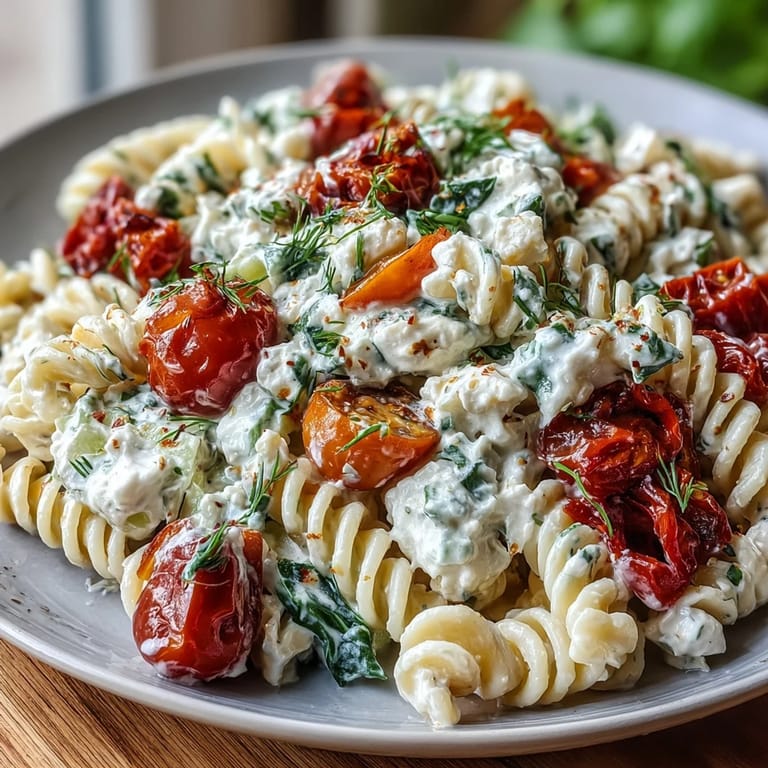
Pin This salad became my answer to the afternoon question of what to eat when you're hungry but don't want to cook. It's nourishing, it's easy, and it genuinely tastes better the next day.
Recipe Questions & Answers
- → How should the pasta be prepared for this salad?
Cook the pasta in salted boiling water until al dente, then rinse thoroughly with cold water to cool it down and stop cooking.
- → Can I use different vegetables in this salad?
Yes, substitutions like arugula, kale, zucchini, snap peas, or shredded carrots work well to vary texture and flavor.
- → Is there a way to make the dressing creamier?
Blending the cottage cheese before mixing it with the dressing ingredients creates a smoother, creamier texture.
- → How long can this salad be stored?
It keeps well refrigerated for up to three days; stir well before serving to redistribute the dressing and flavors.
- → Can I add protein to boost this dish?
Adding grilled chicken, tofu, or chickpeas enhances the protein content and makes it more filling.