 Pin
Pin I'll never forget the first time I assembled a proper Mediterranean mezza platter—it was for a dinner party on a warm summer evening, and I was nervous about getting everything right. My friend who'd spent years living in Beirut walked into my kitchen, took one look at my carefully arranged bowls, and simply said, "No, no—it should look like abundance, like you couldn't possibly contain all this goodness on one board." That single moment changed how I approach this dish. Now, whenever I make it, I'm transported back to that evening, surrounded by the sounds of sizzling pita warming in the oven and the smell of toasted cumin drifting through the air. A mezza platter isn't just an appetizer—it's an invitation to slow down, gather close, and share something genuine.
The first time someone told me that a proper mezza platter was "the best way to start a meal," I understood it wasn't really about the food at all—it was about the pause, the conversation, the way strangers become friends when they're gathered around something this beautiful and shareable. I've since made this platter for celebrations, quiet weeknight dinners, and those in-between moments when you need to remind yourself why cooking matters.
What's for Dinner Tonight? 🤔
Stop stressing. Get 10 fast recipes that actually work on busy nights.
Free. No spam. Just easy meals.
Ingredients
- Chickpeas (15 oz can, drained and rinsed): The soul of hummus—their mild, slightly earthy flavor becomes silky and luxurious when blended properly. Rinsing them removes the starchy liquid that would make your hummus grainy, not creamy.
- Tahini (4 tbsp total): This sesame paste is what transforms chickpeas into something ethereal. Use a brand you'd eat straight from the jar—quality matters more here than anywhere else in the recipe.
- Lemon juice (freshly squeezed, about 5 tbsp total): Never use bottled. Fresh lemon juice brings brightness and snap that bottled juice simply cannot deliver; it's the difference between good hummus and one that tastes alive.
- Garlic cloves (2 total, minced): Two cloves might seem bold, but they mellow as they blend and add a gentle warmth that anchors both dips.
- Extra-virgin olive oil (about ½ cup total, plus more for drizzling): This is your finishing ingredient, your luxury touch. The quality of your oil will be tasted in every bite—buy the best you can afford.
- Ground cumin (½ tsp): Toast it briefly in a dry pan before using if you have time; the warmth releases oils that deepen the hummus's flavor profile.
- Smoked paprika (½ tsp): This gives baba ganoush its signature warmth and color. It's not spicy—it's a whisper of smoke that reminds you of Mediterranean summers.
- Fine sea salt (1½ tsp total): Season in layers as you build each component; never add all salt at once.
- Eggplants (2 medium): Look for ones that feel heavy for their size, with skin that's tight and glossy. They should blister and collapse in the oven—that's when you know they're ready.
- Bulgur wheat (½ cup, fine): The quick-soaking method means no cooking, no fuss, just fluffy grains ready to absorb lemony dressing within minutes.
- Fresh herbs (parsley, mint, dill—about 2 cups total): These are non-negotiable. Dried herbs will make your platter taste like a grocery store; fresh herbs make it taste like a memory. Buy them the day you're serving.
- Cherry tomatoes, cucumber, radishes (3 cups total, fresh): Choose vegetables at their peak ripeness; a perfect tomato needs no embellishment, just a gentle slicing.
- Feta cheese (½ cup): Rough, rustic cubes beat perfectly cut blocks every time—imperfection is the point.
- Mixed pitted olives (1 cup): A mix of colors and varieties makes the platter more visually interesting and gives you flavor variation bite to bite.
- Pita breads (3–4): Warming them just before serving is the detail that separates a good platter from a memorable one.
Instructions
- Blend the hummus into silk:
- Add chickpeas, tahini, lemon, garlic, olive oil, cumin, and salt to your food processor. Blend hard for a full minute—the motor should strain slightly, which means it's working. Scrape down the sides, then add cold water one tablespoon at a time while blending. This is where patience pays off: keep blending until the mixture transforms into something pale, glossy, and impossibly creamy. You're looking for the texture of soft butter. This takes about 3 minutes total. Taste it. Does it sing with lemon? Does it coat your mouth in richness? Adjust salt or lemon until it makes you smile.
- Roast eggplants until they collapse:
- Heat your oven to 425°F. Prick each eggplant all over with a fork—this prevents them from bursting and creating a mess on your oven floor. Place them on parchment and roast for 35–40 minutes. You're waiting for the skin to wrinkle and darken, and for the whole eggplant to feel like it might deflate. Let them cool for 10 minutes, then peel away the skin—it should slip off easily. Scoop out the soft flesh and discard any large seed clusters; the flesh should be pale and creamy. Place flesh in a sieve and let it drain for 10 minutes to remove excess moisture. This step is crucial and often skipped—it's the difference between baba ganoush and baba water.
- Make baba ganoush, rustic and smoky:
- In a bowl, mash the drained eggplant flesh with tahini, lemon juice, garlic, olive oil, smoked paprika, and salt. Don't over-blend here—a wooden spoon and a little elbow grease creates that rustic texture that makes baba ganoush so inviting. You want soft, creamy, with just enough texture to remind you that this came from a vegetable. Taste it and imagine smoke and lemon dancing together. That's what you're aiming for.
- Steep bulgur in boiling water:
- Place bulgur in a heatproof bowl and pour boiling water over it—the water should just cover the grain. Cover tightly with plastic wrap or a plate and set a timer for 12 minutes. When you uncover it, the bulgur should be tender and have absorbed all the water. Fluff it gently with a fork; each grain should be distinct, not mushy.
- Build tabbouleh with herbs as the star:
- To your fluffed bulgur, add chopped parsley, mint, tomatoes, scallions, olive oil, lemon juice, and salt. Mix gently but thoroughly—you're combining flavors, not crushing herbs. Taste it. If it feels dull, add more lemon. If it lacks brightness, add more herbs. Tabbouleh should taste green and alive, herbaceous and light, with just enough lemon to make you pucker slightly then smile. Let it sit for a few minutes; flavors will deepen.
- Infuse olives with aromatics:
- Toss olives with olive oil, fresh thyme leaves, and lemon zest. Let them sit for at least 10 minutes—the longer they marinate, the more they'll taste intentional and special. They should look glossy and smell like a Mediterranean hillside.
- Prepare vegetables with care:
- Wash and thoroughly dry everything. Slice tomatoes in half. Slice cucumbers on the bias for elegance. Slice radishes paper-thin. Cut feta into rough, uneven cubes. These small details matter because guests eat with their eyes first. Just before serving, warm pita in a 350°F oven wrapped in foil for 5–7 minutes until they're soft and pliable again.
- Arrange the platter like a painting:
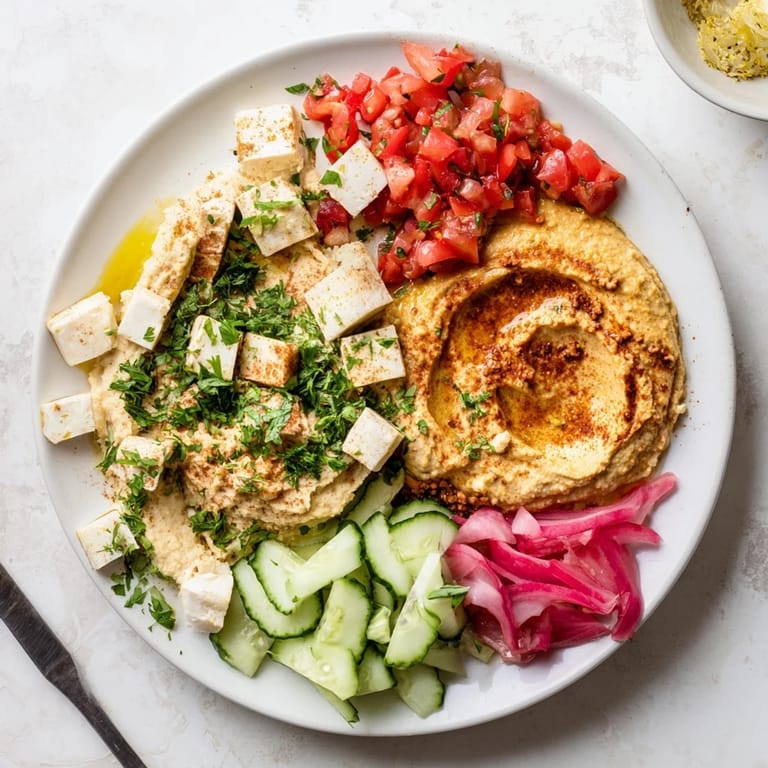
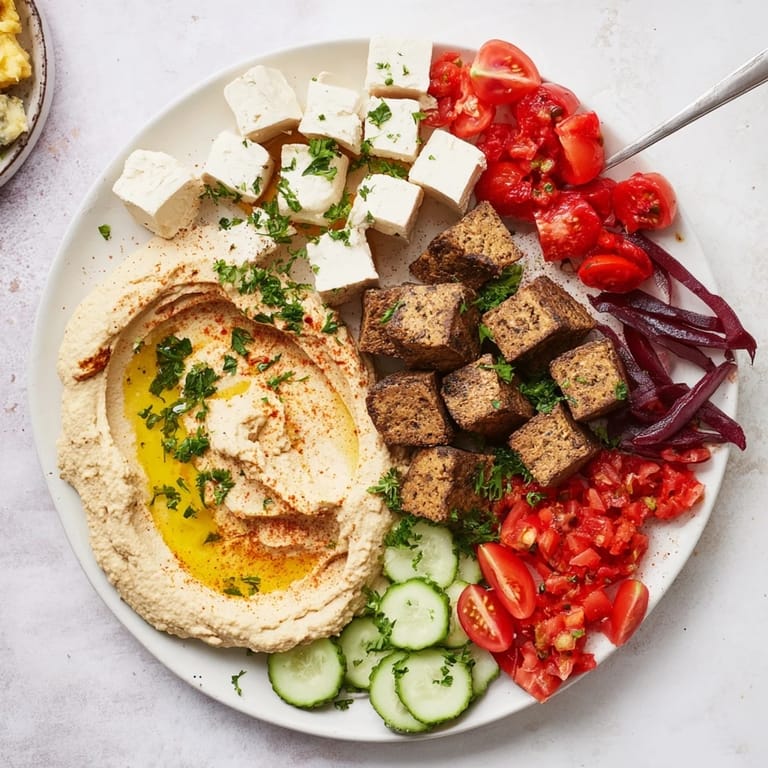
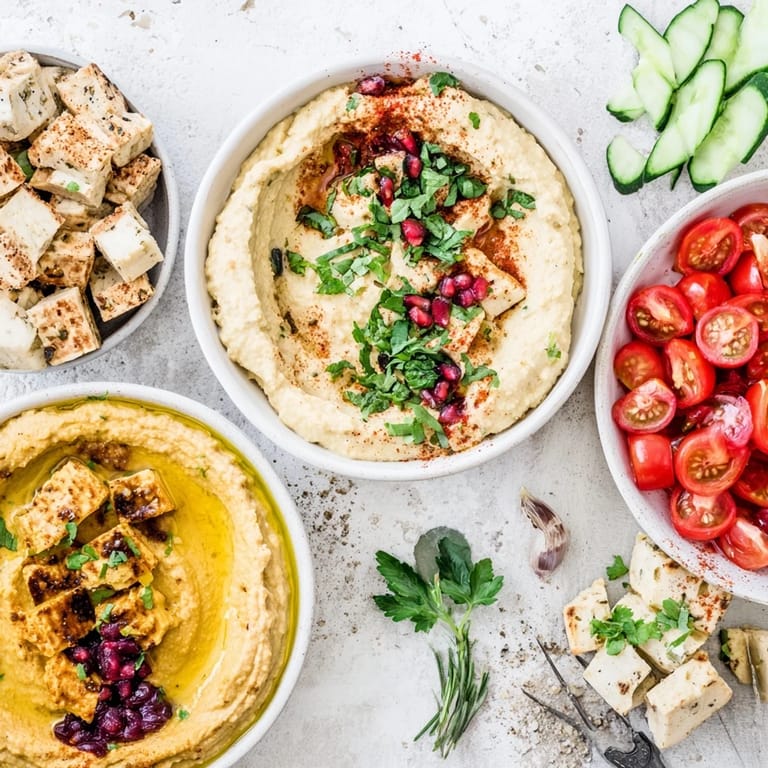
- Choose a large, beautiful board or platter—this is the canvas for your work. Place each dip in its own space, creating small mounds but letting edges stay loose and organic, not perfectly contained. The imperfection is what makes it look real and generous. Around these dips, scatter marinated olives, feta cubes, roasted red peppers, and fresh vegetables, grouping each ingredient loosely so the platter feels abundant. Tuck arugula and greens into empty spaces. Drizzle everything generously with your best olive oil—let it pool in the dips, glisten on vegetables. Finish with a shower of fresh dill and parsley, a sprinkle of flaky sea salt, and fresh cracked black pepper. Arrange warm pita wedges in a basket alongside. Step back and look at it. Does it make you want to gather people close? That's when you know it's ready.
 Pin
Pin 
I remember watching my grandmother assemble a similar platter years ago in her kitchen in Athens. She didn't measure anything, didn't fuss over perfect presentation, yet people kept returning to it all evening, layer after layer of flavors revealing themselves. It taught me that this isn't about perfection—it's about generosity, about saying "help yourself to as much as you need" without anyone feeling rushed or judged. Every time I make a mezza platter now, I'm honoring that moment and passing it forward.
The Art of Flavor Layering
A mezza platter works because each component brings its own sensory experience: smoky warmth, bright acidity, creamy richness, herbaceous freshness, briny salt. When you taste them together—a bite of hummus with a piece of cucumber, then baba ganoush with an olive, then tabbouleh on warm pita—your palate keeps finding new combinations, new moments of joy. This is why mezza culture centers around grazing and lingering. Nothing is rushed. Nothing is presented as the main event; everything is equally important.
Making This Recipe Your Own
The beauty of a mezza platter is its flexibility. Can't find roasted red peppers? Add grilled zucchini or charred eggplant strips. Want more substance? Toss in warm falafel or grilled halloumi. Serving someone gluten-free? Make the tabbouleh with quinoa instead of bulgur. These aren't substitutions—they're invitations to make the platter reflect what you have, what you love, and who you're feeding. The recipe is a starting point, not a rule.
Timing and Strategy for Stress-Free Entertaining
The secret to serving this platter without stress is understanding that almost everything can be prepared ahead. Make the dips in the morning; they'll taste even better by evening. Prep vegetables earlier in the day and store them in the fridge. Thirty minutes before guests arrive, warm the pita, arrange the platter, and take a breath. You've already done the hard work; now you get to enjoy the moment.
- Cook eggplants and make both dips up to 8 hours ahead; store covered in the fridge, then bring to room temperature 15 minutes before serving.
- Tabbouleh can be made 4 hours ahead; it actually improves as it sits and flavors meld together.
- Chop vegetables and herbs just before assembling to preserve their crispness and vibrant color.
- Warm pita in the oven while people are arriving; it's one of the last details but makes a surprising difference in how the meal feels.
 Pin
Pin Make this platter for people you love, and watch what happens when they see it. That moment of connection, of knowing someone took time to create beauty and abundance just for them—that's the real recipe here. Everything else is just ingredients.
Recipe Questions & Answers
- → How is the hummus made creamy without being grainy?
Blend chickpeas with tahini, lemon juice, garlic, olive oil, and seasoning, adding cold water gradually until ultra-smooth and silky, avoiding overadding water that can make it loose.
- → What is the best way to prepare baba ganoush for the right texture?
Roast eggplants until very tender and skins wrinkle, then peel and drain to remove excess moisture before mashing with tahini, lemon, garlic, smoked paprika, and olive oil for a creamy yet slightly rustic texture.
- → How should tabbouleh be prepared to maintain its freshness?
Soak bulgur in boiling water until tender, then combine with chopped parsley, mint, tomatoes, scallions, lemon juice, olive oil, salt, and pepper for a vibrant and moist but not soggy salad.
- → What are tips for marinating olives in this platter?
Toss olives with olive oil, fresh thyme, and lemon zest, allowing them to stand at least 10 minutes so flavors can infuse fully before serving.
- → How can the platter be assembled attractively?
Arrange each dip in small rustic mounds with loose edges, surround with marinated olives, feta cubes, roasted red peppers, fresh vegetables, and arugula, then drizzle with olive oil and sprinkle fresh herbs for color and texture.
- → How to keep pita warm and soft for serving?
Wrap pita breads in foil and warm them in a preheated oven at 350°F (175°C) for 5–7 minutes just before serving, avoiding microwave heating which toughens the bread.