
 Pin
Pin I discovered this salad on a misty October morning while hiking through the Cascade foothills, where a forest floor carpeted with moss and mushrooms inspired me to create something that captures that moment on a plate. The deep earthiness of wild mushrooms, the toasted warmth of hazelnuts, and the bright pop of fresh berries reminded me why I fell in love with Pacific Northwest cooking—it's about honoring what grows around you and letting those ingredients speak for themselves.
I made this for a dinner party last spring when a friend mentioned she'd never had foraged mushrooms prepared simply, and watching her close her eyes on the first bite—just savoring that earthy, nutty flavor—reminded me that sometimes the best dishes are the ones that let ingredients shine without fussing.
What's for Dinner Tonight? 🤔
Stop stressing. Get 10 fast recipes that actually work on busy nights.
Free. No spam. Just easy meals.
Ingredients
- Wild mushrooms (300 g): Chanterelles, morels, or cremini work beautifully; I prefer a mix for varied textures. The key is cleaning them gently with a damp brush rather than soaking, which keeps them from becoming waterlogged and losing that concentrated, nutty flavor.
- Extra-virgin olive oil: You need two separate portions—one for roasting the mushrooms and one for the dressing. A good quality oil makes all the difference here.
- Fresh thyme leaves: These strip easily from the stem with your fingers and add a subtle woodsy note that feels essential to the forest floor concept.
- Raw hazelnuts and walnuts (60 g and 40 g): Toasting these yourself transforms them; the aromas that fill your kitchen are part of the experience, and store-bought roasted nuts won't have the same bright, alive quality.
- Fresh blackberries and blueberries (80 g and 60 g): Choose berries that are just ripe—they should glisten but hold their shape. If blackberries aren't available, raspberries or huckleberries capture that regional Pacific Northwest essence.
- Fresh herbs—parsley, dill, chervil, chives: These create the mossy base that makes the salad visually distinctive. Use whatever is freshest at your market; this isn't about precision but about lush abundance.
- Honey or maple syrup: I prefer maple syrup for authenticity, but honey works just as well; the touch of sweetness plays beautifully against the earthiness.
- Aged balsamic vinegar: This is where you want to invest a little; cheaper vinegars taste sharp rather than complex, and they'll overpower the delicate flavors you've built.
- Dijon mustard: Just a teaspoon acts as an emulsifier and adds subtle complexity without announcing itself.
Instructions
- Roast the Mushrooms with Care:
- Preheat your oven to 220°C (425°F) and line a baking sheet with parchment paper. In a large bowl, gently toss your cleaned mushrooms with olive oil, salt, pepper, and fresh thyme—this is where you're building that foundation of flavor. Spread them out in a single layer, giving each piece space to breathe; crowding will steam them into submission rather than coax out their golden, crispy edges. Roast for 17 to 20 minutes, stirring halfway through so they brown evenly. You'll know they're done when they've shrunk slightly, darkened to a deep golden-brown, and smell rich and nutty rather than raw and earthy. Let them cool on the sheet before using them.
- Toast the Nuts While Mushrooms Roast:
- While your mushrooms are in the oven, spread the chopped hazelnuts and walnuts on a separate small tray and slide them into the same oven. Toast for 5 to 6 minutes, shaking the tray halfway through. This is where you need to stay close—nuts can go from golden to bitter in seconds. When they're ready, they'll smell incredible and look burnished and warm. Transfer them immediately to a cool plate to stop the cooking process; leaving them on the hot tray will continue toasting them in the residual heat and turn them from perfect to overdone.
- Prepare the Herb Base Like You're Building a Moss Bed:
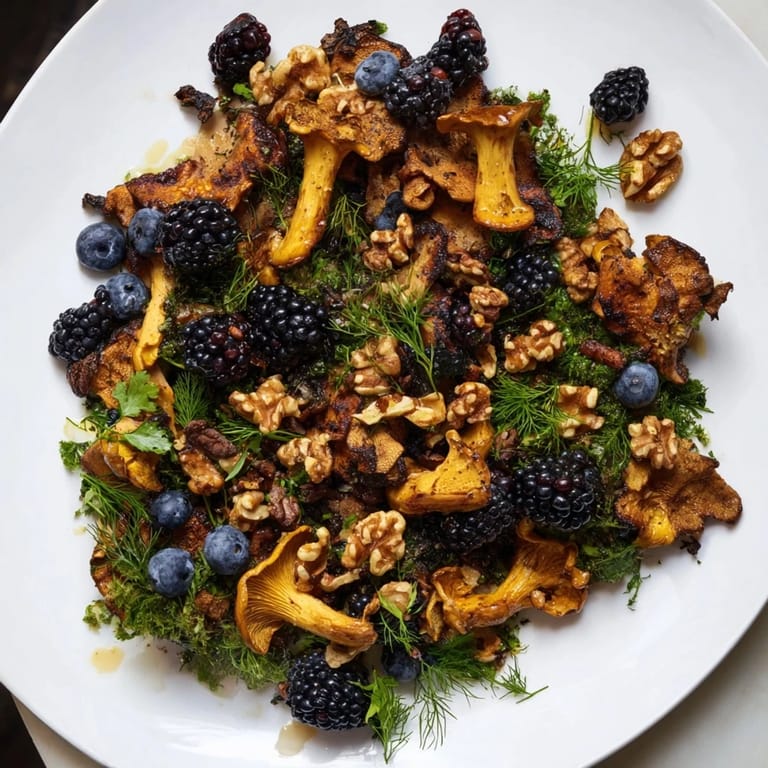
- Wash all your herbs thoroughly and dry them completely using a salad spinner or a clean kitchen towel. Excess water is the enemy here—it will wilt everything and make the final salad soggy. Gently tear the parsley, dill, and chervil into bite-sized pieces by hand rather than cutting them; this preserves their delicate texture and lets them look natural and slightly wild. Snip your chives finely and combine everything in a mixing bowl, tossing gently so the herbs stay fluffy and cloud-like. Arrange this herb mixture on your serving platter or individual plates in dense, organic clumps that actually do look like a forest floor—lush, slightly chaotic, inviting.
- Create Nut and Berry Clusters:
- Combine your toasted nuts, blackberries, and blueberries in a bowl. Drizzle everything with honey or maple syrup and a pinch of sea salt, then toss gently—you want the berries to stay whole and glossy while the nuts get a subtle shine. Using your clean hands, arrange these clusters over the herb base in irregular, dense groupings that mimic how things actually fall in nature. Don't fuss with perfect placement; the imperfection is what makes it beautiful.
- Whisk Together the Dressing:
- In a small bowl, whisk together the olive oil, balsamic vinegar, Dijon mustard, honey, sea salt, and cracked black pepper until the mixture becomes glossy and emulsified. Taste it and adjust the seasoning if needed—it should taste tangy with a subtle sweetness that doesn't overpower those delicate earthy flavors you've built. This is your moment to balance everything before you put it on the plate.
- Assemble and Serve Immediately:
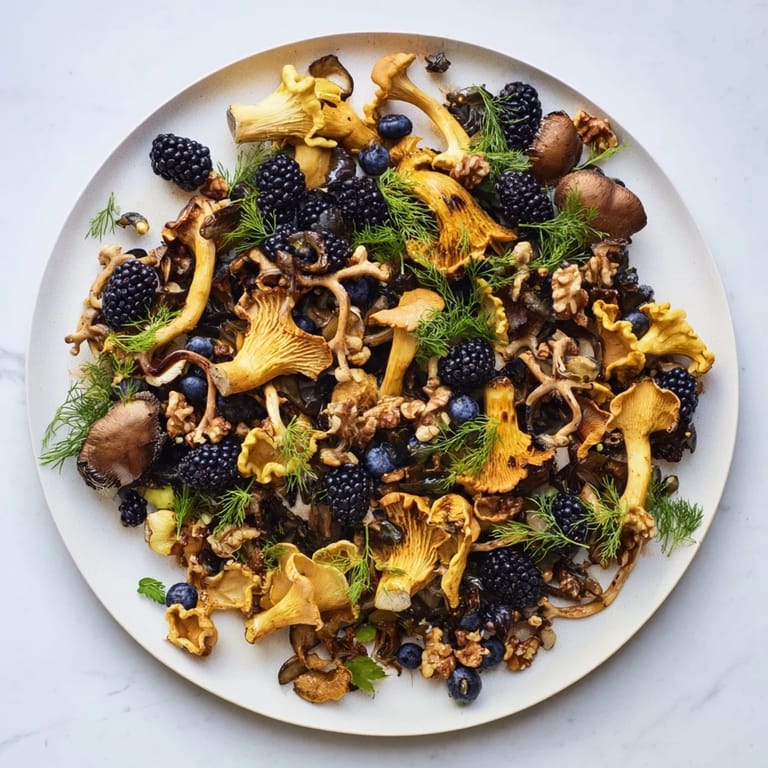
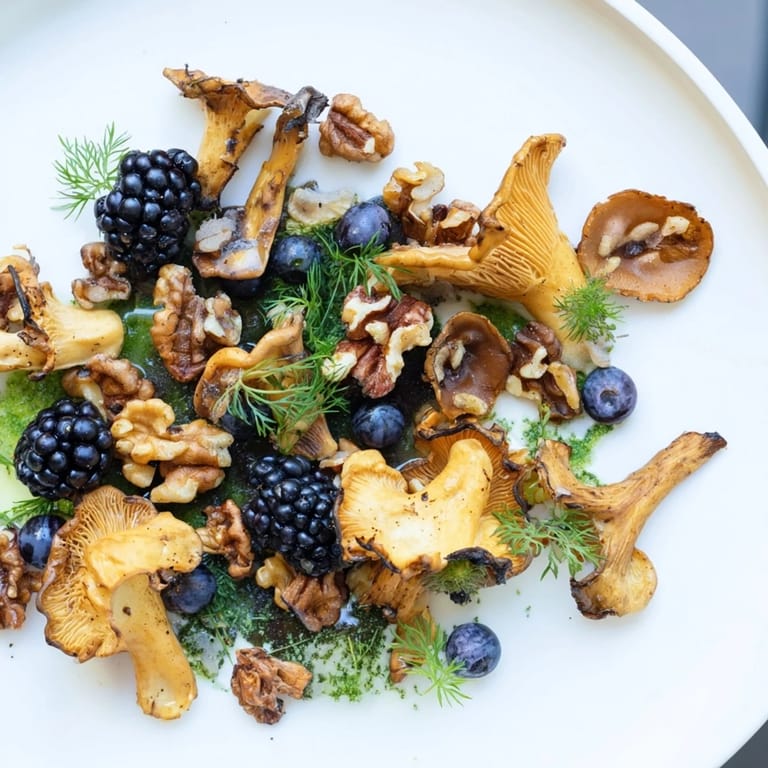
- Scatter the roasted mushrooms in dense clusters between your nut and berry groupings, creating that sense of organic abundance. Spoon or drizzle the dressing lightly over the salad, focusing on the mushroom and nut clusters so they get maximum flavor. Serve right away without tossing—the whole point is preserving that forest floor arrangement and keeping the textures distinct and surprising. Each bite should be a discovery.
 Pin
Pin 
I remember serving this to my grandmother, who had spent her whole life in Seattle and always said the forest was her favorite place to be. The way she looked at the plate before tasting it—how she smiled at how it captured something she loved about the landscape—that's when I realized food can be about so much more than nourishment. It can be memory and place and gratitude all on one plate.
Why This Salad Feels Alive
There's something about the Pacific Northwest that makes you want to cook with what's growing around you. This salad celebrates that impulse—it's not trying to be complicated or refined in a formal way. Instead, it's refined in its simplicity and restraint, letting each ingredient show what it naturally offers. The berries aren't cooked down into submission; the mushrooms aren't hidden under a heavy sauce. Everything stays true to itself, which is why it feels so satisfying to eat and so beautiful to serve.
Building Layers of Flavor
The magic of this salad lives in the contrast between warm and cool, soft and crisp, earthy and bright. When you bite into a warm roasted mushroom followed by a cool, crisp herb leaf and then a burst of tart berry, you're experiencing the forest in miniature. That's why the arrangement matters so much—you want each component distinct rather than mixed together, so your palate gets to experience that full range of sensation and flavor on every single bite.
Making It Your Own
This recipe is a framework, not a formula. If you can't find chanterelles, use cremini. If blackberries aren't in season, reach for raspberries or huckleberries. If you don't have chervil, parsley and dill are enough. What matters is the spirit of the thing—celebrating fresh, quality ingredients prepared simply and arranged with intention. That spirit stays the same even when the specific ingredients shift with the seasons and what's available at your market.
- Make this vegan by swapping maple syrup for honey in both the nut clusters and the dressing; it deepens the forest floor feeling beautifully.
- Leftover components keep separately in the refrigerator for up to two days, so you can assemble this salad quickly even on a busy evening.
- If you have mushrooms and nuts left over, gently reheat them in a skillet the next day—they're wonderful tossed with pasta or scattered over roasted vegetables.
 Pin
Pin When you set this salad on the table, you're not just serving food—you're inviting people into a moment, a place, a memory of what it feels like to walk through a forest after rain. That's worth the care it takes to prepare.
Recipe Questions & Answers
- → How should wild mushrooms be cleaned?
Use a damp brush or cloth to gently remove dirt. Avoid soaking mushrooms as they absorb water and lose flavor.
- → Can the nuts be substituted?
Yes, pecans or almonds can replace hazelnuts and walnuts to suit taste or availability.
- → What is the best way to assemble the salad?
Arrange the mossy herbs first, then cluster the toasted nuts and fresh berries atop, followed by roasted mushrooms. Avoid tossing to preserve textures and presentation.
- → How can this salad be made vegan?
Replace honey with maple syrup in both the nut and berry clusters as well as in the dressing.
- → How long can components be stored before serving?
Keep undressed parts in airtight containers for up to 2 days and assemble just before serving to avoid wilting.
- → What flavors does the dressing bring to the dish?
The dressing offers a tangy, subtly sweet balance that enhances the earthy and nutty flavors without overpowering them.