 Pin
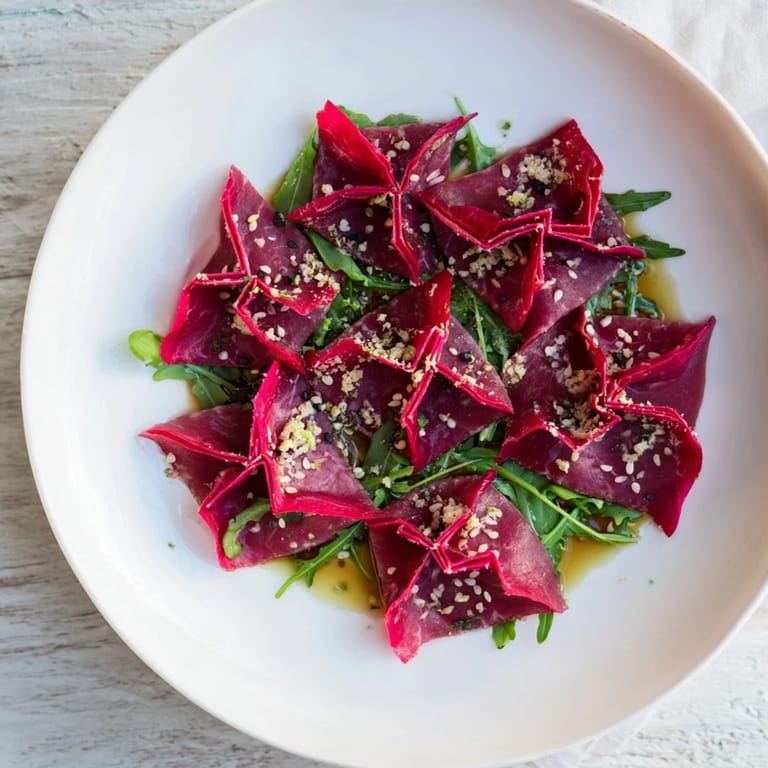
Pin I was plating appetizers for a dinner party when I realized our beef carpaccio looked a little flat on the platter, honestly forgettable. That's when I started folding a slice just to see what would happen, and suddenly it caught the light differently, looked almost sculptural. One fold led to another, and by the time my friend walked into the kitchen, I had this little collection of geometric shapes that made her stop and stare. That moment changed how I think about presentation, how something as simple as a fold can transform the ordinary into something that feels intentional and special.
My sister brought her new partner to dinner, and he was the type who documented everything on his phone. But when I set down the platter of folded beef, he actually put the phone away and just looked. We ended up talking for twenty minutes about why certain shapes appeal to us, why presentation matters, what makes food feel like an experience instead of just sustenance. That's when I knew this appetizer was doing something right.
What's for Dinner Tonight? 🤔
Stop stressing. Get 10 fast recipes that actually work on busy nights.
Free. No spam. Just easy meals.
Ingredients
- Beef carpaccio or very thinly sliced roast beef: Start with 300 g of genuine quality, since there's nowhere for mediocrity to hide here—the beef is the main event, so ask your butcher to slice it paper-thin and keep it cold.
- Extra virgin olive oil: Use something you actually like the taste of, 2 tbsp of it, because you'll taste every drop in the marinade.
- Soy sauce: 1 tbsp, and if gluten matters at your table, seek out tamari or a certified gluten-free option.
- Lemon juice: 2 tsp fresh-squeezed if possible, because bottled misses those bright top notes.
- Dijon mustard: 1 tsp adds a subtle tang that makes your mouth water in the best way.
- Freshly ground black pepper: 1/2 tsp ground just before using, because pre-ground tastes like dust after a while.
- Sea salt: 1/4 tsp, the kind you can feel between your fingers.
- Baby arugula: 40 g for the bed, peppery and tender, a perfect foundation that doesn't fight for attention.
- Toasted sesame seeds: 2 tbsp adds a subtle crunch and nuttiness that lingers on your palate.
- Finely chopped chives: 1 tbsp brings brightness and can even hold a fold together if you use a whole stem.
- Shaved Parmesan cheese: 50 g, shaved thin so it melts on your tongue like it was never meant to be solid.
Instructions
- Make the marinade:
- Whisk together the olive oil, soy sauce, lemon juice, Dijon mustard, pepper, and salt in a small bowl until it tastes alive, balanced between the savory umami and the bright acid. You'll know it's right when you taste it and think, yes, that's exactly what beef needs.
- Brush and prep the beef:
- Lay your beef slices flat on a clean, dry surface, and brush each one gently with the marinade, saving about a tablespoon for drizzling later. The beef should glisten but not be drenched—you're flavoring it, not drowning it.
- Fold into geometric shapes:
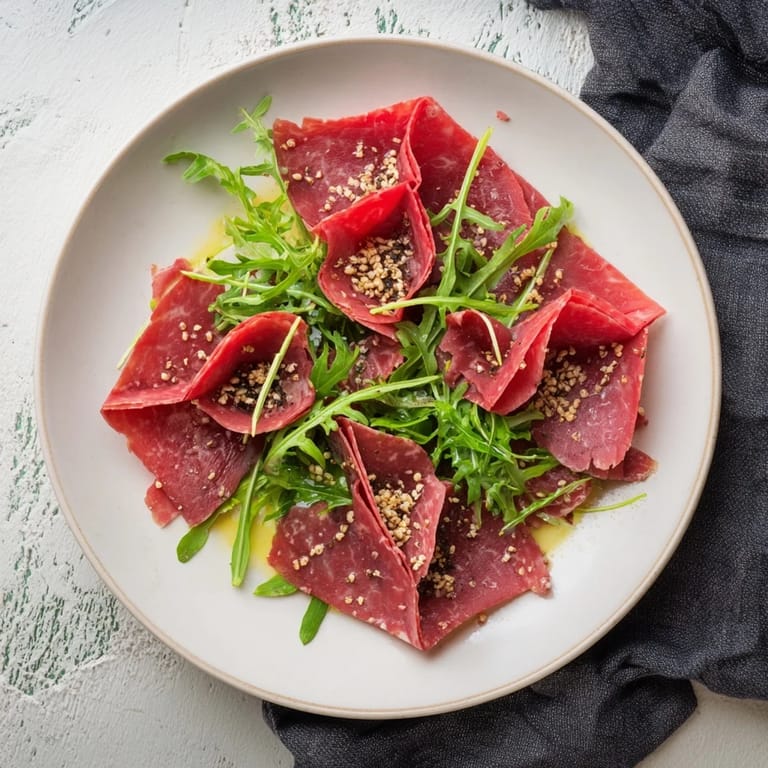
- This is where the magic happens—take each slice and fold it into triangles, squares, or origami fans, using gentle pressure so the beef stays intact. If a fold wants to fall apart, slip a chive stem underneath or use a cocktail pick to hold it steady, then remove it just before serving.
- Build the platter:
- Arrange your folded beef pieces on a bed of baby arugula, letting each fold lean against the next so they support each other. The arugula keeps everything cool and adds a peppery whisper underneath.
- Finish with garnishes:
- Sprinkle the toasted sesame seeds over everything, scatter the chives, and use a vegetable peeler to shave the Parmesan directly onto the platter. The cheese should be delicate enough to break with your teeth.
- Final drizzle:
- Just before serving, drizzle that reserved marinade around the platter, not over it—the arugula will catch some of it, and people can taste the full flavor as they eat.
 Pin
Pin 
I made this for a potluck once, nervous it was too fancy for a casual gathering. A quiet colleague took one bite, looked at the fold, and said it was the most thoughtful thing anyone had brought—not because it was complicated, but because someone had paid attention to how it looked and tasted. That's the real gift of this dish, actually.
On Choosing Your Beef
The beef is everything here, so don't skimp on quality or slicing technique. A great butcher will slice it on a meat slicer so thin it's almost translucent, and they'll keep it on a cold surface so it doesn't stick to itself. If you're buying pre-sliced carpaccio, make sure it hasn't been sitting out—ask when it was sliced and buy it the same day if you can. The thinner the beef, the easier it folds and the more delicate the final dish feels on your tongue.
Mastering the Fold
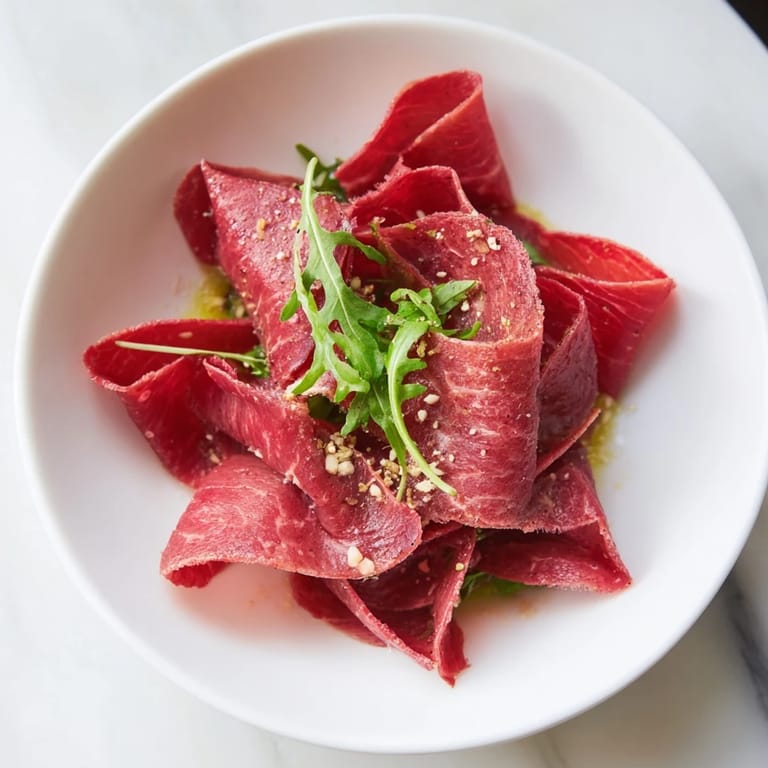
The fold is really a meditation, a moment to slow down and think about geometry and balance. Each fold should be intentional—a triangle with crisp corners, a fan that unfolds slightly to show the marbling, a square that stands on edge. If you're nervous, practice folding a paper napkin first to get a feel for the motion, then translate that to the beef. The confidence matters, because hesitant folds look uncertain, while clean folds look intentional. And if a fold tears, that's just a story about how you learned something—lay it down slightly overlapped so no one notices, or frame the tear as part of the design.
Flavor Variations and Serving Ideas
This recipe works beautifully with the marinade as written, but there's room for your own voice here. A drop of truffle oil adds luxury if you're feeling it, or a whisper of wasabi if you want heat. Some people swap the beef for thinly sliced tuna or salmon and suddenly it's a pescatarian moment, or even a vegetarian version if you fold thin slices of beet root or eggplant that you've grilled and marinated the same way. Serve it with thin-sliced baguette if your guests want to add substance, or with rice crackers for a gluten-free option, and pair it with a crisp Sauvignon Blanc or a dry rosé that won't overpower the delicate beef.
- Trust your instinct when it comes to folding—there's no single right way, just the way that feels right to you.
- Assemble everything as close to serving time as possible so the beef stays cold and the arugula stays crisp.
- Remember that this dish is as much about the conversation around it as it is about the taste, so take a moment to watch people's reactions when they see it.
 Pin
Pin This appetizer is a reminder that sometimes the most impressive dishes come from paying attention to small details and trusting yourself to try something unexpected. Serve it with presence, and let your guests discover why a fold can change everything.
Recipe Questions & Answers
- → What cut of beef works best?
Very thin slices like carpaccio or roast beef provide the ideal texture and pliability for folding.
- → How do I keep the folded shapes intact?
Gently press the folds and secure with chive stems or cocktail picks if needed to maintain shapes.
- → Can I replace beef with other proteins?
Yes, thinly sliced tuna or salmon can be used for a pescatarian alternative.
- → What garnishes complement the flavors?
Baby arugula, toasted sesame seeds, chopped chives, and shaved Parmesan enhance both texture and taste.
- → How should this dish be served?
Arrange on a platter with garnishes and drizzle remaining marinade before serving to retain freshness.