
 Pin
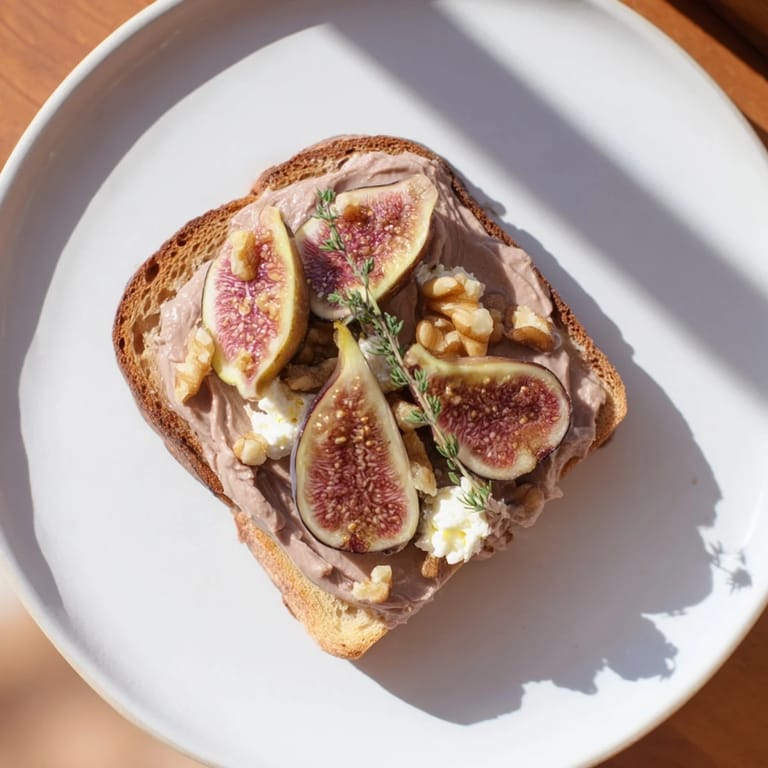
Pin I discovered this arrangement at a small bistro in Lyon, tucked between a silk shop and a florist, where the owner—a woman with silver hair and knowing eyes—served it on a slate board that looked like it had traveled decades. She explained that the name came from the way the ingredients layered together, each one telling its own story. I watched guests lean in, drawn by the jewel-like figs and the earthy richness, and realized this wasn't just food; it was an invitation to slow down and taste each component as its own moment.
Last summer, I made this for my sister's book club, and I remember standing in my kitchen at dawn, carefully toasting the walnuts and watching the brioche turn golden. When they arrived, no one touched it for a full minute—they just stared. Then someone broke the silence by saying it looked too pretty to eat, which of course meant they immediately grabbed three pieces.
What's for Dinner Tonight? 🤔
Stop stressing. Get 10 fast recipes that actually work on busy nights.
Free. No spam. Just easy meals.
Ingredients
- Duck or chicken liver pâté (200g): This is your anchor, the silky base that holds everything together; buy it from a good charcuterie counter or make your own if you're feeling ambitious, and let it soften to room temperature so it spreads like butter.
- Dried figs (120g), thinly sliced: These provide sweetness and chewiness that contrast beautifully with the pâté, and they're forgiving enough that slightly uneven slices still look intentional.
- Soft goat cheese (80g): Creamy and tangy, this breaks up the richness and adds a unexpected brightness; make sure it's truly soft or it becomes impossible to portion.
- Toasted brioche or gluten-free crackers (12 slices): The structure matters here, so choose brioche thick enough to hold toppings without becoming soggy, or use sturdy crackers.
- Toasted walnuts (40g), roughly chopped: Toast them yourself just before assembling for a nuttiness that makes people pause mid-bite and actually taste them.
- Fresh thyme sprigs: A whisper of herb that ties everything together and makes it smell like you've been cooking all day.
- Fig jam (2 tbsp, optional): This is your secret weapon if you want to deepen the sweetness and add visual richness.
Instructions
- Arrange your foundation:
- Lay the toasted brioche or crackers on your platter in an overlapping pattern that reminds you of roof shingles or fallen leaves—this isn't geometry, so let them overlap naturally and fill the space like you're creating texture.
- Spread the pâté:
- Using a small spatula or butter knife, cover each piece generously with pâté, working quickly before it firms up if your kitchen is cool. Don't overthink the coverage; rustic is more appealing than perfect.
- Layer the figs:
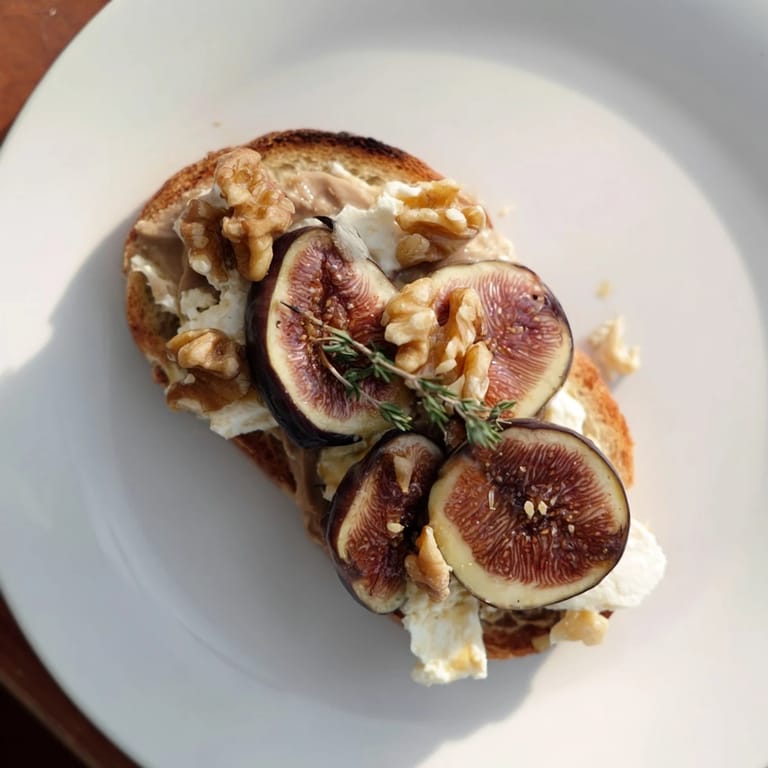
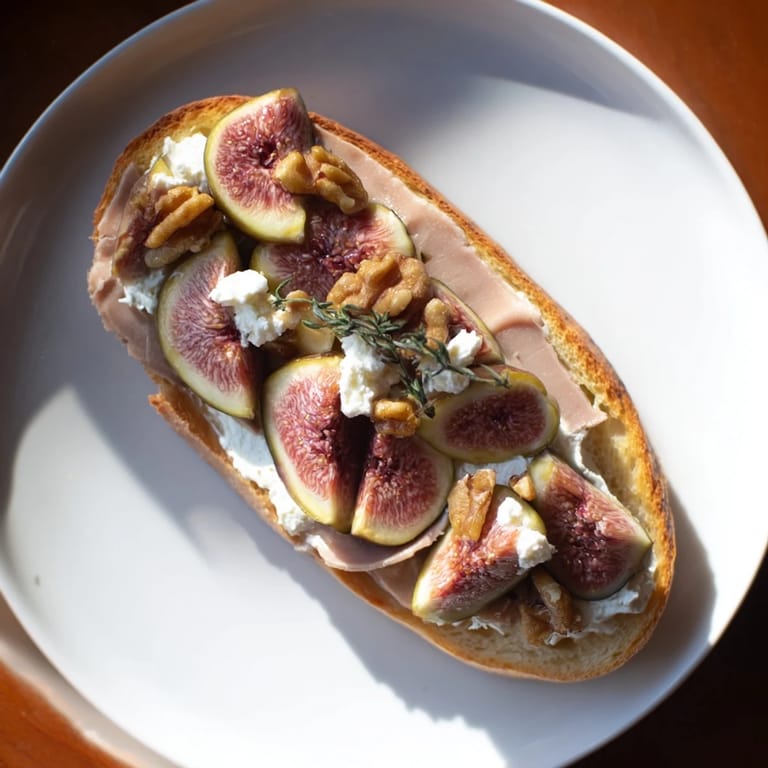
- Arrange the sliced figs in a pattern that feels balanced to your eye, letting them overlap slightly so you see their jewel-like color and the subtle pattern of their interior.
- Add the goat cheese:
- Drop small spoonfuls across the platter, nestling them among the figs so they catch the eye and break up the monotony of color.
- Scatter the walnuts:
- Sprinkle them generously so you get a bit of crunch with every bite, letting some fall into the gaps between pieces.
- Final touches:
- Drizzle fig jam in thin streams if using, add thyme sprigs for color and aroma, and step back to admire your work before serving.
 Pin
Pin 
I remember my grandmother's dinner parties, where she'd arrange food on platters with the same care someone might arrange flowers, and I understood then that presentation isn't vanity—it's respect for the people you're feeding and the time they're spending with you.
Building Layers Like You Mean It
The magic of this dish lives in the conversation between textures and flavors. Each ingredient should feel distinct when you bite into it, not muddled or confused. Think of it like stacking: pâté is your canvas, figs are your color, cheese is your unexpected detail, and walnuts are the final punctuation. The arrangement matters because we eat with our eyes first, and when something looks intentional—even if it's loosely arranged—people taste it differently.
Wine Pairings and Serving Moments
Serve this when you want to feel sophisticated but not stressed, maybe at the start of a dinner party or as part of a grazing board with crusty bread and olives nearby. A chilled glass of Sauternes is the classic choice because its sweetness echoes the figs, but a dry Champagne works beautifully too if you want something more celebratory. I've also paired it with a light Pinot Noir, which sounds odd until you taste how the wine's acidity cuts through the richness and makes everything taste fresher.
Variations and Personalization
This recipe is a template, not a rule book, so feel free to rearrange the elements based on what's in your pantry and what you're in the mood for. I once substituted blue cheese for the goat cheese because I was out of the latter, and it became almost aggressively elegant—better with a bolder wine but absolutely memorable. The vegetarian swap with mushroom pâté is seamless if that's what your guests eat, and the gluten-free crackers work equally well for anyone avoiding grains.
- Try candied walnuts instead of plain toasted ones for a sweeter version, or swap the walnuts for toasted hazelnuts if you prefer their buttery flavor.
- Add a thin layer of Dijon mustard under the pâté if you like a subtle kick that plays against the sweetness of the figs.
- Experiment with different nut butters drizzled on top, or scatter fresh pomegranate seeds for tartness and visual surprise.
 Pin
Pin This dish taught me that the most elegant meals are often the simplest ones, built from a few excellent ingredients that respect each other. Make it when you want to impress without exhaustion.
Recipe Questions & Answers
- → What type of pâté works best for this dish?
Duck or chicken liver pâté provides a smooth, rich flavor that complements the sweetness of dried figs, but mushroom pâté is a good vegetarian alternative.
- → Can I use gluten-free options in this preparation?
Yes, gluten-free crackers can replace toasted brioche to accommodate dietary needs while maintaining texture and flavor.
- → What cheeses pair well with this appetizer?
Soft goat cheese (chèvre) adds creaminess, but blue cheese can be substituted for a more intense, tangy profile.
- → Is fig jam necessary in this layering?
Fig jam is optional but enhances sweetness and depth, balancing the savory pâté and tangy cheese.
- → How should this appetizer be served?
Arrange layers on a platter and serve immediately, encouraging guests to enjoy combined textures and flavors in each bite.