
 Pin
Pin I discovered the magic of a proper Italian antipasto board during a lazy summer afternoon in Tuscany, sitting under the shade of an old oak tree at my cousin's farmhouse. She didn't fuss or worry about perfection—she simply gathered the best cheeses, meats, and bread from the local markets, arranged them with her hands on a weathered wooden board, and let everyone reach for what called to them. That board taught me that the most memorable meals aren't about precision; they're about abundance, generosity, and the joy of sharing without restraint.
I made this board for my partner's birthday dinner, and I'll never forget how their face lit up when they saw it. The casual abundance of it all—the way the cheeses caught the candlelight, how the bread's crust crackled between our fingers, the richness of the prosciutto melting on our tongues—turned an ordinary evening into something we still talk about years later.
What's for Dinner Tonight? 🤔
Stop stressing. Get 10 fast recipes that actually work on busy nights.
Free. No spam. Just easy meals.
Ingredients
- Parmigiano-Reggiano, 200 g: This is the backbone of any Italian board. Break it into large, uneven chunks so you can see those beautiful crystalline shards. The aged funk of it is worth every penny—it's the one ingredient where quality truly shines.
- Aged Pecorino, 200 g: Sharper and more intense than Parmigiano, pecorino adds complexity and a salty bite. I learned to crumble it roughly rather than slice it—the broken edges catch more of the light and feel more rustic.
- Taleggio, 200 g: This is the creamy, funky one that surprises people. Cut it into thick wedges so it doesn't collapse. It's the cheese that makes guests say, 'What is this? I want more.'
- Fresh mozzarella, 200 g: Hand-tear it just before serving—those jagged edges are part of the charm, and they hold onto olive oil and herbs beautifully.
- Prosciutto, 150 g: Loosely pile it so the layers stay separate and silky. Tightly rolled prosciutto becomes tough and rubbery—let it breathe.
- Hot soppressata, 150 g: Thickly slice it to show off its texture and let the heat linger on your palate. This is the meat that adds personality to the board.
- Finocchiana salami, 150 g: Cut into irregular chunks—the fennel notes make it distinctly Italian and add an unexpected warmth.
- Coppa, 100 g: Fold it loosely into large pieces. Its marbling is stunning, and you want guests to see it.
- Rustic Italian bread, 1 large loaf: Choose something with real structure—ciabatta or pane di casa, not something soft and pillowy. You need that crust to hold up to cheese and oil.
- Extra-virgin olive oil: A good one matters here. Drizzle it sparingly over the bread for sheen and flavor—this is the finishing touch that makes everything taste like Italy.
- Castelvetrano olives, 1 cup: These buttery, mild green olives are the gentle voice on the board. They balance the assertive cheeses and meats.
- Oil-cured black olives, 1 cup: Rich, briny, and intense—they anchor the board with deep flavor and dark color.
- Cherry tomatoes, 2 cups: Halve them just before arranging. Their bright acidity cuts through the richness and adds sunshine to the board.
- Artichoke hearts, 1 cup: Quarter them so they're easy to grab. They add an earthy, slightly tart note that feels gourmet without being fussy.
- Marinated roasted red peppers, 1 cup: Slice them thick so they stay substantial. They're sweet and silky—the comfort food of the board.
- Cornichons or Italian pickles, 1 cup: These are your palate cleansers. The sharp, vinegary snap resets your taste buds between bites of rich cheese and meat.
- Fresh rosemary and basil: These aren't just garnish—they're flavor and aroma. Tuck them into the board so their scent drifts up as guests lean in.
- Flaky sea salt and cracked black pepper: Finish the tomatoes with these just before serving. Salt brings out their sweetness; pepper adds a gentle kick.
Instructions
- Choose and prep your board:
- Find a large wooden board or platter—at least 18 inches wide if you can. Wipe it completely dry. Any moisture lurking on the surface will make your bread soggy and your cheeses weep. Think of the board as a stage; it needs to be clean and ready for its stars.
- Bring your cheeses to life:
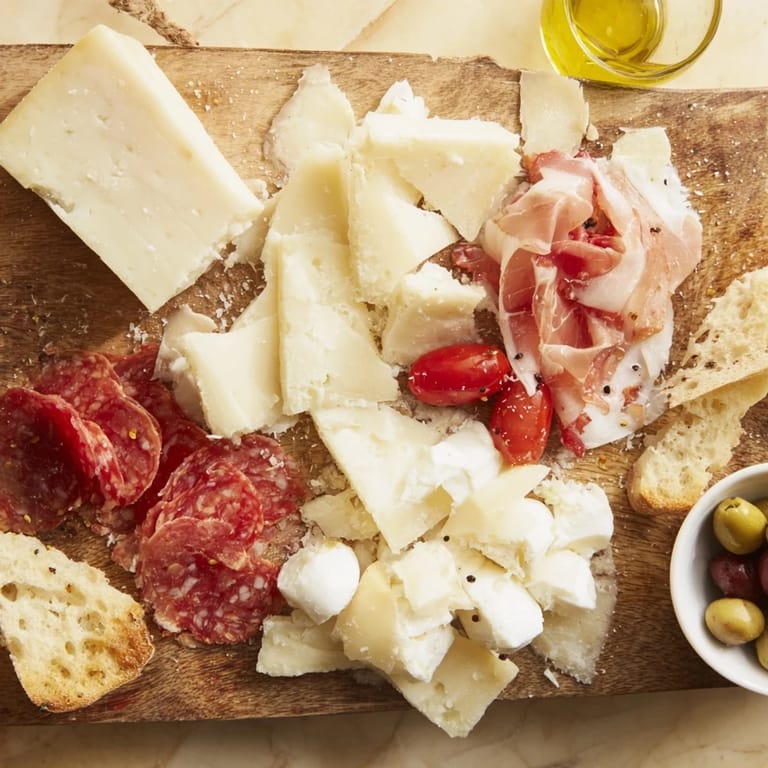
- Pull your cheeses out of the fridge 30 to 45 minutes before you arrange them. Cold cheese is tight and closed off; room-temperature cheese blooms with flavor and aroma. Break and tear them into large, uneven pieces—the raggedness matters. Parmigiano and Pecorino go in opposite corners like anchors. Taleggio lives in the center where its creaminess can shine. Mozzarella gets scattered in one generous, pillowy pile with those hand-torn edges showing.
- Compose your meats:
- Here's where your hands become your best tool. Loosely fold prosciutto and coppa into mounds—imagine you're cradling them gently, not compressing them. Scatter soppressata and finocchiana in thick, irregular chunks. Place the meats near the cheeses but not directly on top; you want them to stay distinct, to let each ingredient announce itself. The meats should glisten slightly and feel pliable when you touch them.
- Tear and position the bread:
- Hold the loaf and tear it by hand into large, rough pieces—about 2 to 3 inches each. The irregular edges catch olive oil and make the bread taste better somehow. Arrange these pieces around the board's perimeter in overlapping piles, letting some lean against a cheese wedge or stack of meat for visual depth. If you like, drizzle a whisper of extra-virgin olive oil over a few pieces—this adds sheen and flavor.
- Build your accompaniments layer:
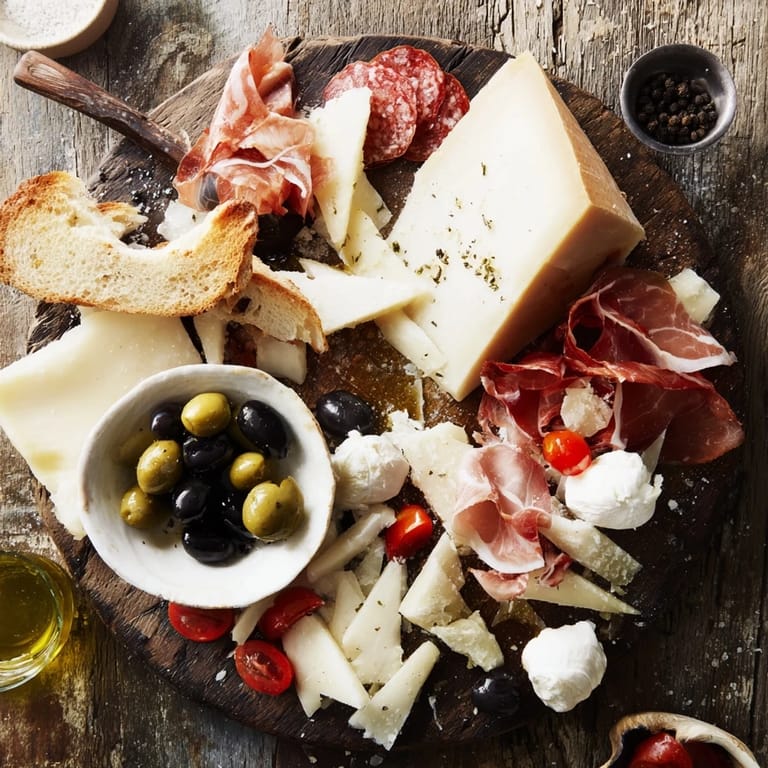
- This is where color and brightness enter. Place olives in small, overflowing piles or nestle them in rustic bowls right on the board. Scatter halved cherry tomatoes in generous heaps. Arrange quartered artichoke hearts and thick strips of roasted red peppers without worrying about symmetry—chaos looks better than grid patterns. Scatter the cornichons for their sharp, tangy bite. Tuck fresh rosemary sprigs and basil leaves between everything; they add aroma and that farmhouse charm.
- Season and step back:
- Lightly season those cherry tomatoes with flaky sea salt and cracked black pepper. Now take a breath and look at what you've made. The board should feel abundant, with clear contrasts in color, height, and texture. Every ingredient should be easily reached from all sides. If you see gaps, nudge things around gently. This isn't about perfection; it's about generosity and ease.
- Serve with joy:
- Bring the board to the table and let everyone tear, share, and mingle flavors exactly as they wish. Encourage people to try combinations they might not have thought of. Watch how a piece of Taleggio on warm bread becomes a moment of quiet happiness.
 Pin
Pin 
There's a moment that happens every time I make this board: someone who walks in skeptical—someone who says, 'Oh, it's just cheese and meat'—ends up lingering by the table, making unexpected flavor combinations, and having one of those conversations that matters. Food isn't always about the cooking; sometimes it's about creating a reason for people to slow down and be together.
The Art of Arrangement
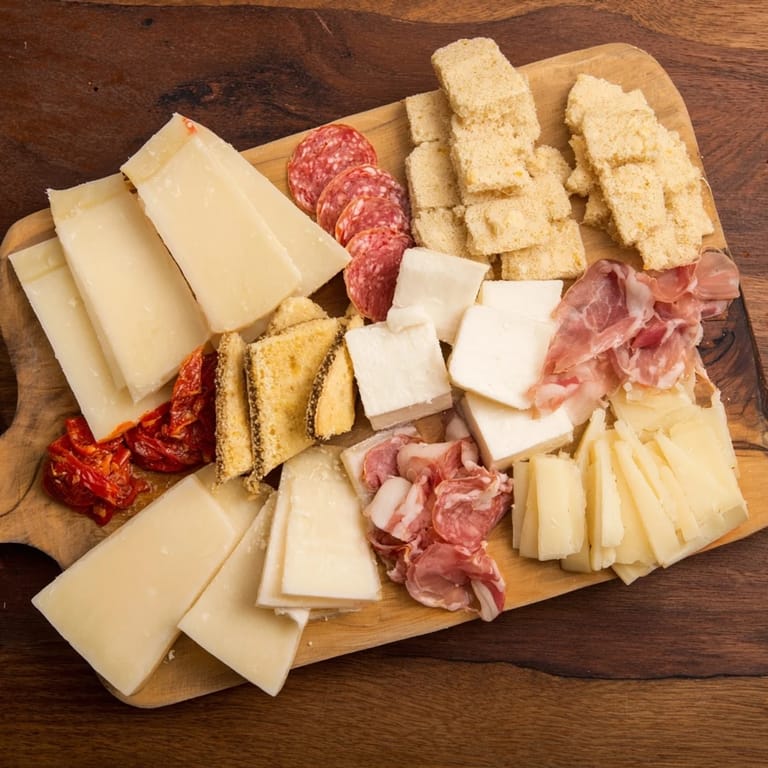
The beauty of an Italian farmhouse board lies in its intentional casualness. Don't aim for a perfectly balanced grid or symmetrical sections. Instead, think in piles and heaps. Create two or three focal points—maybe a large mound of cheese here, a cascade of prosciutto there—and build around them. Leave some breathing room, but fill the spaces with color and texture. The imperfection is what makes it feel real, lived-in, and hospitable.
Variations and Substitutions
Italian boards are forgiving canvases. If you can't find Taleggio, try Fontina or a mild blue cheese. Don't have finocchiona? Bresaola or mortadella work beautifully. Love fruit? Scatter fresh figs or grapes across the board—their sweetness plays wonderfully against salty cheese and meat. In autumn, add dried apricots or chestnuts. The core principle stays the same: contrast, generosity, and letting each ingredient shine.
Storage and Leftovers
After the gathering ends, refrigerate your leftovers thoughtfully. Store meats and cheeses separately in airtight containers—they'll keep for up to three days, though their flavor fades slightly each day. Bread is best eaten fresh, but you can wrap it and keep it for one day. Roasted vegetables, olives, and pickles last longest. If bread loses its crackle, refresh it in a 350°F oven for five minutes. Never reheat the cheese or cured meats; their silky texture and delicate flavors can't survive heat.
- Store each ingredient type separately to prevent flavors from bleeding into each other.
- Let leftovers come to room temperature for 15 minutes before eating them again—cold cheese from the fridge always tastes less vibrant.
- If you're clever, plan for leftover cheese to go into tomorrow's lunch with some crusty bread and a simple tomato salad.
 Pin
Pin An Italian farmhouse board is an invitation—to slow down, to taste deliberately, to share stories between bites. It says, 'I care about you enough to gather these good things.' That's the real recipe here.
Recipe Questions & Answers
- → How should the cheeses be prepared for this board?
Cheeses should be broken or cut into large, uneven chunks rather than perfect slices, enhancing rustic texture and visual appeal.
- → What type of bread works best for this arrangement?
A large rustic Italian loaf like ciabatta or pane di casa, torn into large, uneven pieces by hand, offers the best texture and absorbency.
- → How can I maintain the fresh appearance of the meats and cheeses?
Allow cheeses to come to room temperature before serving and arrange cured meats loosely to keep them pliable and visually appealing.
- → What accompaniments enhance the flavor profile of the board?
Olives, cherry tomatoes, artichoke hearts, roasted red peppers, pickles, and fresh herbs like rosemary and basil add vibrant flavor contrasts and aroma.
- → How should the board be assembled for the best presentation?
Arrange cheeses and meats in separate piles with some spacing for contrast, surround with torn bread pieces, and scatter accompaniments in colorful, irregular heaps for an inviting look.
- → Can leftovers be stored for later enjoyment?
Store leftover meats and cheeses in airtight containers refrigerated for up to 3 days; bread is best eaten fresh or kept for 1 day wrapped.