 Pin
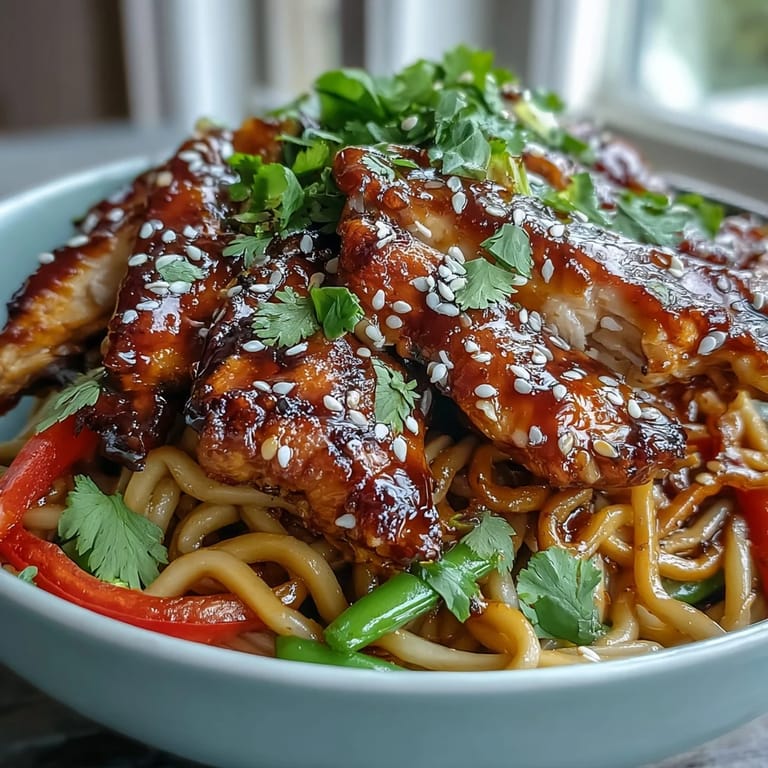
Pin The smell of toasted sesame oil hit me before I even opened the bottle. I was standing at my cluttered kitchen counter, trying to throw together something quick after a long day, and I remembered a noodle bowl I had at a tiny spot downtown months earlier. I didn't have a recipe, just a vague memory of sweet, savory sauce clinging to chewy noodles and crisp vegetables. That night, I winged it, and somehow it worked. Now it's the meal I turn to when I want something that feels like a treat but doesn't ask much of me.
I made this for my sister once when she came over unannounced, hungry and impatient. She watched me chop and stir, skeptical that anything good could happen this fast. When she took her first bite, she went quiet, then asked if I'd been hiding cooking skills from her. I hadn't, I'd just learned that a few bold flavors and high heat can make you look like you know what you're doing.
What's for Dinner Tonight? 🤔
Stop stressing. Get 10 fast recipes that actually work on busy nights.
Free. No spam. Just easy meals.
Ingredients
- Boneless, skinless chicken breast or thighs, thinly sliced: Thighs stay juicier and are more forgiving if you overcook them slightly, but breasts work beautifully if you slice them thin and don't walk away from the pan.
- Dried udon, soba, or rice noodles: Udon gives you chew, soba adds a nutty depth, and rice noodles keep things light and gluten-friendly if that's what you need.
- Red bell pepper, thinly sliced: It sweetens as it cooks and adds a pop of color that makes the bowl feel alive.
- Carrot, julienned: Thin strips cook fast and give you little bursts of earthy sweetness in every bite.
- Sugar snap peas, trimmed: They stay crisp and bright green if you don't overcook them, and that crunch is what keeps the bowl interesting.
- Spring onions, sliced: They add a mild bite and a fresh finish, especially if you save some raw pieces for the top.
- Low-sodium soy sauce: You can always add salt, but you can't take it away, and low-sodium gives you control without sacrificing flavor.
- Brown sugar: It balances the saltiness and gives the sauce a subtle caramel note that makes everything taste richer.
- Toasted sesame oil: A little goes a long way, this is the ingredient that makes the whole dish smell like something special.
- Rice vinegar: It brightens the sauce and keeps it from tasting heavy or one-note.
- Fresh ginger, grated: The sharpness cuts through the sugar and oil, and fresh ginger tastes nothing like the powdered kind.
- Garlic, minced: It mellows in the sauce and adds warmth without overwhelming the other flavors.
- Cornstarch (optional): If you like your sauce to cling to the noodles instead of pooling at the bottom of the bowl, this does the job.
- Toasted sesame seeds: They add a nutty crunch and make the bowl look finished, like you put thought into it.
- Fresh coriander or cilantro, chopped: It's polarizing, but if you like it, it adds a bright, herbal note that wakes everything up.
- Lime wedges (optional): A squeeze at the end adds acidity and makes the flavors pop even more.
Instructions
- Cook the noodles:
- Boil them according to the package, then drain and rinse them under cold water to stop the cooking and keep them from turning gummy. Set them aside while you get everything else ready.
- Make the sauce:
- Whisk together soy sauce, brown sugar, sesame oil, rice vinegar, ginger, garlic, and cornstarch if you want it thicker. The sugar will dissolve as you whisk, and the whole thing should smell bright and a little sweet.
- Cook the chicken:
- Heat a large skillet or wok over medium-high heat with a splash of neutral oil. Add the sliced chicken in a single layer and let it brown for 4 to 5 minutes, stirring occasionally until it's cooked through and golden at the edges.
- Stir-fry the vegetables:
- Remove the chicken and add a bit more oil if the pan looks dry. Toss in the bell pepper, carrot, and snap peas, stirring constantly for 2 to 3 minutes until they're tender but still have bite.
- Bring it together:
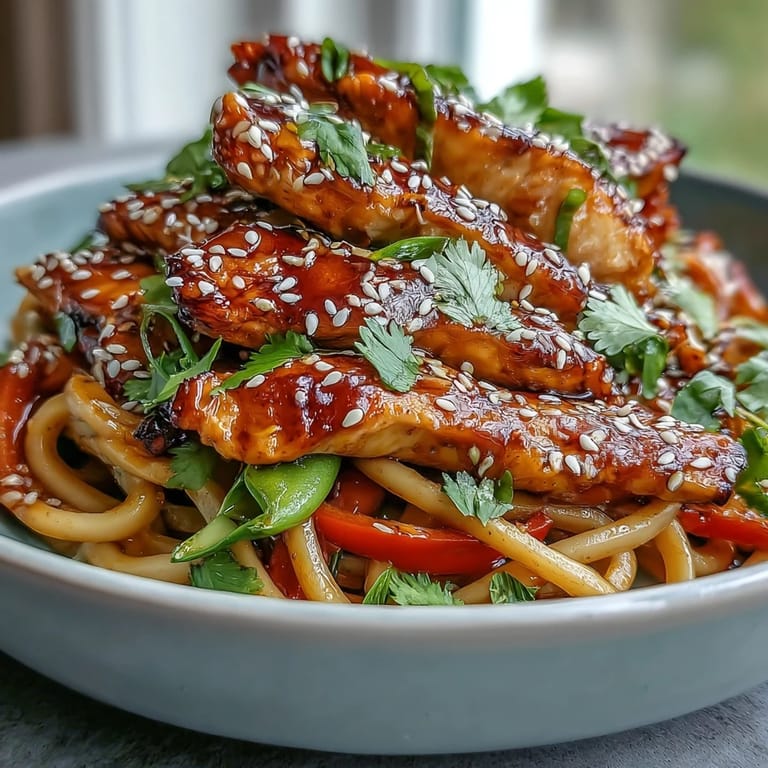
- Return the chicken to the pan, pour in the sauce, and toss everything to coat. Let it simmer for 1 to 2 minutes until the sauce thickens and clings to the chicken and vegetables.
- Add the noodles:
- Toss in the cooked noodles and most of the spring onions, stirring well so everything gets coated in that glossy sauce. Heat through for another minute or so.
- Serve:
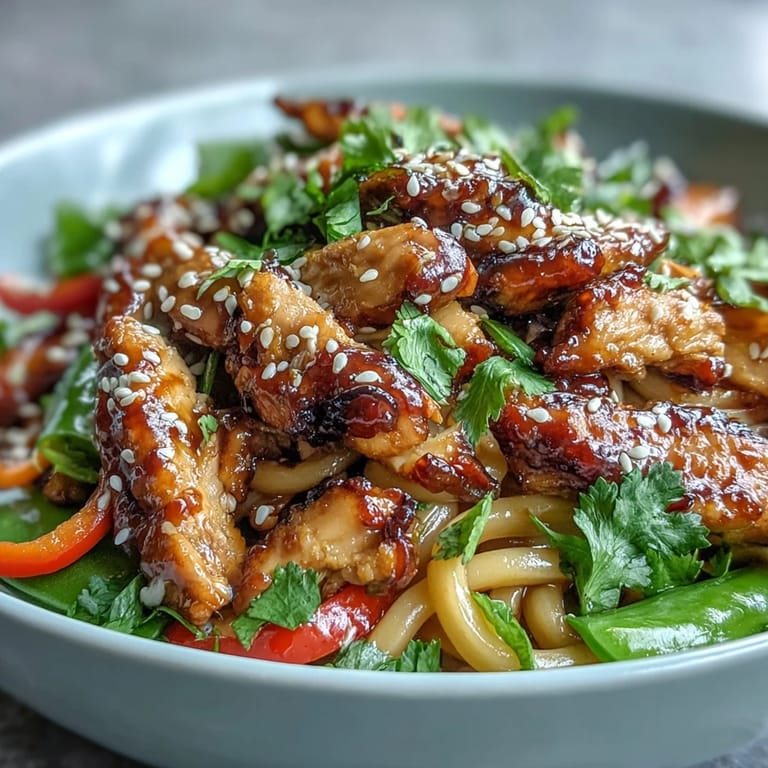
- Divide the noodle mixture among bowls and top with sesame seeds, fresh coriander, and lime wedges if you're using them. Serve it hot and eat it while the vegetables are still vibrant.
 Pin
Pin 
One evening, I made this for a friend who'd been having a rough week. We sat on my couch with our bowls, slurping noodles and laughing at nothing in particular. She told me later that it wasn't just the food, it was the act of someone cooking for her when she didn't have the energy to do it herself. That's when I realized this recipe wasn't just easy, it was generous.
Making It Your Own
This bowl is endlessly adaptable. If you don't eat chicken, swap it for firm tofu that you've pressed and cubed, it soaks up the sauce beautifully. Broccoli florets, sliced mushrooms, or baby corn all work well in place of or alongside the vegetables listed. If you like heat, add a pinch of chili flakes to the sauce or drizzle some sriracha over the top before serving. The base stays the same, but the bowl can shift to match your mood or what's in your fridge.
Timing and Texture
The key to this dish is speed and high heat. Your vegetables should still have snap when they come off the stove, not sad and limp. If you're working with a smaller pan, cook the vegetables in batches so they sear instead of steam. The noodles should be just al dente when you boil them because they'll soften a bit more when you toss them in the hot pan with the sauce. Don't let anything sit too long or the textures will go soft and the dish will lose its energy.
Serving and Storing
This is best eaten fresh, right out of the pan when everything is hot and glossy. If you have leftovers, store them in an airtight container in the fridge for up to two days. The noodles will soak up some of the sauce as they sit, so when you reheat, add a splash of water or a bit more soy sauce to loosen everything up. A quick toss in a hot pan brings it back to life better than the microwave ever will.
- Taste the sauce before you add it to the pan, you might want it sweeter or saltier depending on your soy sauce brand.
- If you're meal prepping, keep the noodles and the chicken-vegetable mixture separate until you're ready to eat.
- Lime juice added at the very end brightens everything and makes each bite feel lighter.
 Pin
Pin This bowl has pulled me through busy weeknights, surprise guests, and moments when I just needed something warm and satisfying without a lot of fuss. I hope it does the same for you.
Recipe Questions & Answers
- → What type of noodles work best?
Udon, soba, or rice noodles all work beautifully. Udon offers a chewy texture that holds sauce well, soba adds a nutty buckwheat flavor, and rice noodles provide a lighter gluten-free option when combined with tamari.
- → Can I make this vegetarian?
Absolutely. Substitute the chicken with firm tofu, pressed and cubed, or use tempeh. The sauce and vegetables provide plenty of flavor, and the protein alternatives absorb the sesame-ginger sauce wonderfully.
- → How do I prevent the sauce from becoming too salty?
Use low-sodium soy sauce as called for, and taste the sauce before adding it to the pan. You can always adjust with a bit more brown sugar or water. Remember the sauce reduces slightly as it simmers, concentrating the flavors.
- → What other vegetables can I add?
Broccoli florets, sliced mushrooms, baby corn, snow peas, or bok choy all work great. Just add harder vegetables like broccoli earlier so they cook through, and delicate greens like bok choy in the last minute of cooking.
- → Can I prepare components ahead?
You can slice the vegetables and chicken up to a day in advance, storing them separately in the refrigerator. The sauce can be whisked together several hours ahead. Cook the noodles just before serving for the best texture.
- → How do I store leftovers?
Store in an airtight container in the refrigerator for up to 3 days. The noodles will absorb more sauce over time, so you may want to add a splash of water or extra soy sauce when reheating. Reheat gently in a skillet or microwave.