 Pin
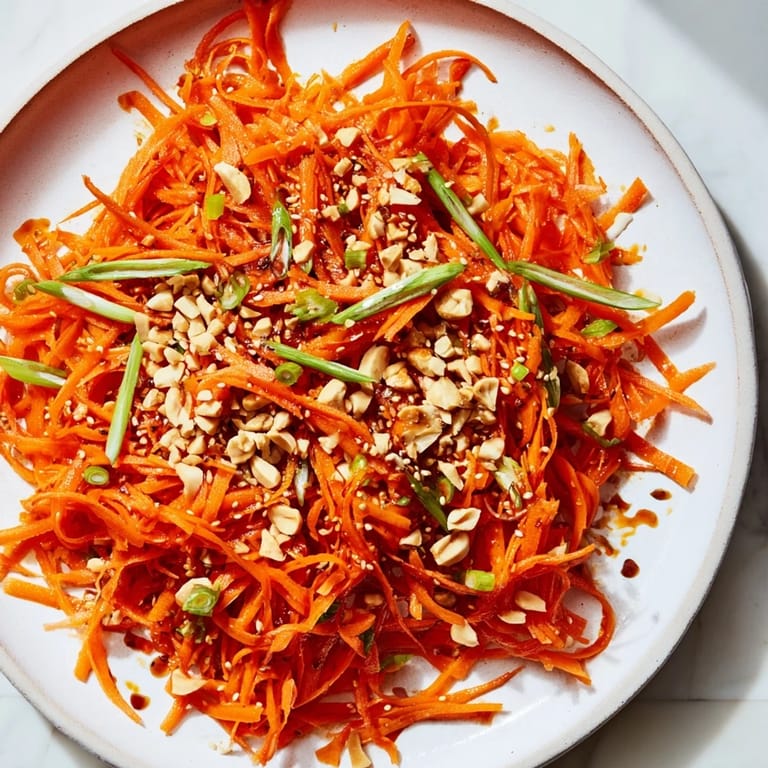
Pin My partner came home one evening with a bag of carrots from the farmers market, their orange so bright they practically glowed on the counter. I'd been craving something fresh and alive, and within minutes I was shredding them into thin ribbons and whisking together a dressing that smelled like the takeout place around the corner—spicy, gingery, alive. That first bite was a revelation: the carrots stayed crisp, the dressing clung to every strand, and there was this heat that built gently instead of attacking. It became the salad I made when I wanted something that felt both comforting and exciting.
I served this at a casual dinner party once, unsure if it would compete with the other sides on the table. What surprised me was watching people come back for seconds, spooning extra peanuts on top, asking for the recipe before they'd even finished their main course. It became the thing I made whenever someone said they wanted to eat lighter but not sacrifice flavor.
What's for Dinner Tonight? 🤔
Stop stressing. Get 10 fast recipes that actually work on busy nights.
Free. No spam. Just easy meals.
Ingredients
- Carrots (4 large, shredded): The sweetness here is your foundation—raw carrots have a brightness that cooked ones can't touch, and shredding them by hand gives you better control over thickness than a food processor.
- Spring onions (2, thinly sliced): These add a sharp, fresh note that keeps the salad from feeling one-dimensional.
- Fresh cilantro (2 tablespoons, chopped): Optional, but it's your secret weapon if you want the dish to taste more restaurant-quality.
- Soy sauce (2 tablespoons): Use tamari if you're cooking gluten-free—the umami depth matters here.
- Toasted sesame oil (1 tablespoon): Regular sesame oil tastes thin and watery by comparison; toasted is essential.
- Rice vinegar (2 teaspoons): The gentler acidity won't overpower the vegetables like white vinegar would.
- Honey or maple syrup (1 teaspoon): This balances the heat and salt with a whisper of sweetness.
- Chili garlic sauce or sriracha (1–2 teaspoons): Start with one teaspoon and taste; the heat builds as it sits.
- Fresh ginger (1 teaspoon, grated): Grate it right before use so you catch all that sharp, warm flavor.
- Garlic (1 small clove, minced): One clove is plenty—garlic punches through in a dressing.
- Sesame seeds (1 teaspoon): These go into the dressing itself, then a sprinkle goes on top.
- Roasted peanuts or cashews (2 tablespoons, chopped): Optional, but they add textural contrast that makes the salad feel complete.
Instructions
- Get your vegetables ready:
- Peel and shred the carrots into a large bowl—if you're shredding by hand with a box grater, go lengthwise down the carrot so the shreds stay long and don't crumble. Toss in the spring onions and cilantro and set aside.
- Whisk the dressing:
- In a small bowl, whisk soy sauce, sesame oil, rice vinegar, honey, chili garlic sauce, ginger, garlic, and sesame seeds until everything is emulsified and the honey dissolves. Taste the spoon—you want heat but not pain.
- Dress and toss:
- Pour the dressing over the carrot mixture and toss thoroughly, making sure every strand gets coated. The salad will soften slightly as it sits, which is fine—it actually helps the flavors marry.
- Season to taste:
- Take a bite raw before you plate it—trust your palate more than the recipe. If it needs more spice, drizzle more chili sauce; if it needs more salt, add soy sauce a splash at a time.
- Plate and garnish:
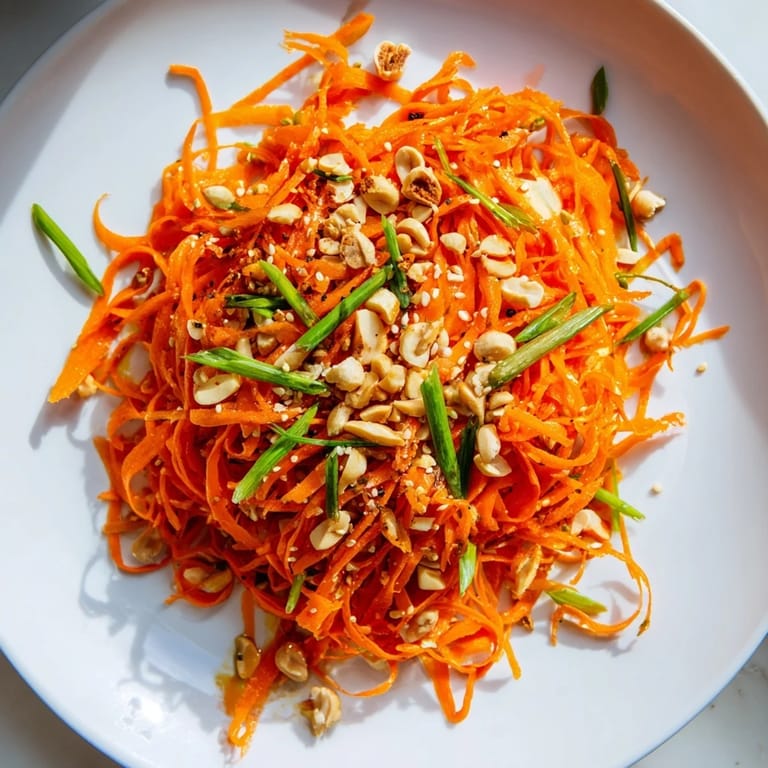
- Transfer to a serving platter and scatter roasted peanuts and extra sesame seeds over the top right before serving, or cover and chill for 10–15 minutes if your guests aren't quite ready.
 Pin
Pin 
One quiet morning, I made this salad for just myself and sat with it in the garden, watching the sun hit the orange shreds so they glowed like small flames on the plate. That's when it clicked for me—this wasn't just a side dish or a way to use up carrots. It was meditation in a bowl: something to look at, something alive to eat, a moment to slow down.
When to Serve This
This salad shines as a starter before heavier mains because it awakens your palate without weighing it down. It's equally at home as a lunch on its own, bulked up with protein like grilled tofu or chickpeas, or tucked onto a plate beside roasted salmon or chicken. The bright, spicy notes cut through rich foods beautifully, which is why it pairs so naturally with Asian-inspired menus.
Flavor Building and Customization
The base dressing is a template, not a law. If you love sesame, add more sesame oil and seeds. If cilantro isn't your thing, swap it for mint or basil—both work. Some people add cucumber for extra crunch, others throw in thinly sliced bell peppers or even a handful of grated daikon radish for a peppery kick. I've made versions with lime juice instead of rice vinegar, with almond butter stirred into the dressing for richness, with sliced jalapeños for someone who wanted it hotter. The carrots anchor everything, so once you have those and the soy-sesame-chili core, you're free to improvise.
Make-Ahead and Storage
This salad is one of the best dishes for meal prep because it actually improves slightly as it sits, the dressing soaking deeper into the carrots and the flavors becoming more cohesive. You can make it up to 24 hours ahead and store it in an airtight container in the fridge. If it loses crispness—which it will over time—stir it up and serve it slightly chilled, or toss it with a tiny splash of fresh rice vinegar and sesame oil just before serving.
- Shred your carrots and chop your aromatics the night before and keep them in separate containers so everything stays fresh.
- Make the dressing in a small jar you can shake, so you can quickly re-dress the salad if you're serving it after a few hours.
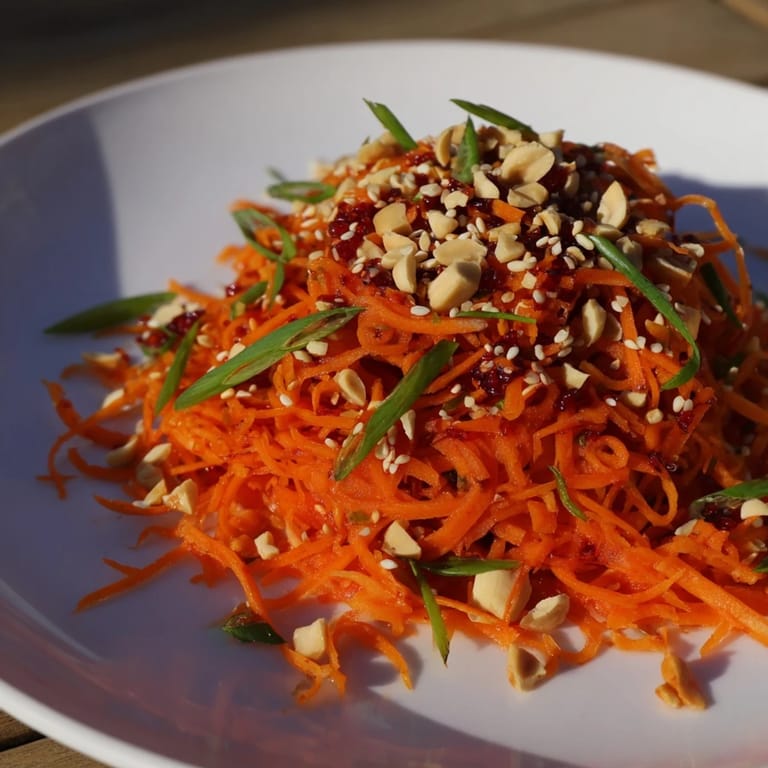
- Always add the nuts and extra sesame seeds right before serving so they stay crispy.
 Pin
Pin This salad taught me that the simplest dishes—the ones with just vegetables and dressing—demand the most attention to quality and technique. It's become one of my go-to reminders that you don't need fancy equipment or rare ingredients to cook something people want to eat.
Recipe Questions & Answers
- → What gives the salad its spicy flavor?
The heat comes from chili garlic sauce or sriracha, which can be adjusted to taste for mild or bold spice levels.
- → Can I make this gluten-free?
Yes, substitute regular soy sauce with tamari to keep the dressing gluten-free without compromising flavor.
- → What ingredients add crunch and texture?
Shredded carrots provide a crisp base, while roasted peanuts or cashews add a delightful nutty crunch as garnish.
- → How should I prepare the carrots?
Peel and shred the carrots finely using a box grater or peeler to achieve the best texture for mixing.
- → Can I customize the dressing?
Absolutely, you can adjust the balance by adding more honey for sweetness or extra rice vinegar for tanginess.
- → How long can the salad be stored?
It can be refrigerated for up to 24 hours, allowing flavors to meld while maintaining freshness.