
 Pin
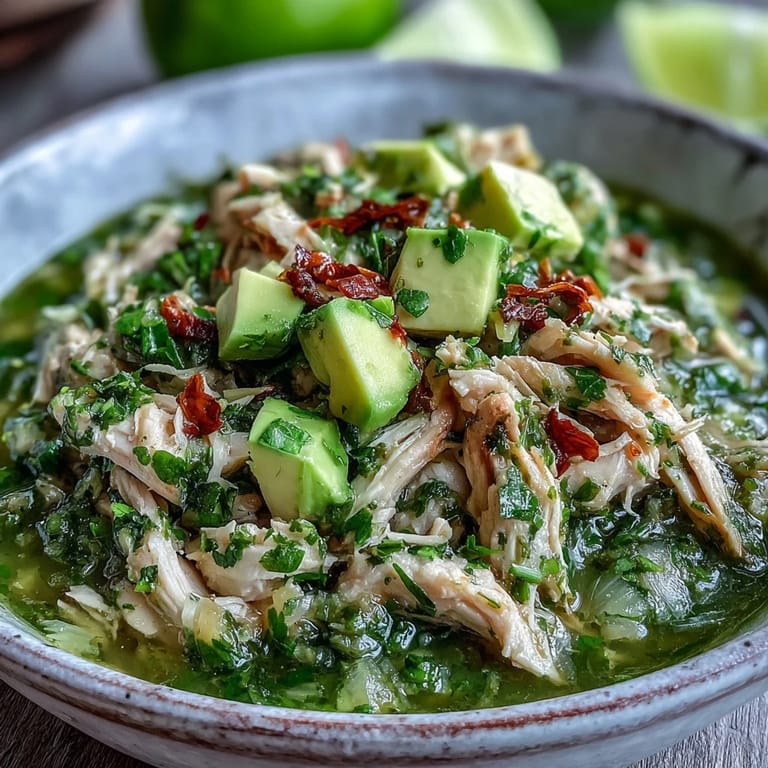
Pin My neighbor Maria showed up one afternoon with a bag of poblanos from her garden, insisting I needed to learn how to make proper chili verde. I'd had the canned stuff before—thin, forgettable—but watching her char those peppers under the broiler changed everything. The kitchen filled with this smoky, almost spicy perfume, and I realized I'd been missing out on one of those dishes that tastes like both comfort and celebration at once.
I made this for a potluck last spring, and someone actually asked for the recipe before finishing their first bowl. That doesn't happen often, and it stuck with me—not because of the compliment, but because I watched people slow down while eating it, like the flavors demanded their full attention.
What's for Dinner Tonight? 🤔
Stop stressing. Get 10 fast recipes that actually work on busy nights.
Free. No spam. Just easy meals.
Ingredients
- Boneless, skinless chicken thighs or breasts (2 lbs): Thighs stay more tender through the long simmer, but breasts work fine if that's what you have—just watch them so they don't dry out.
- Tomatillos (1 1/2 lbs): These are the backbone of the sauce, giving it that bright, slightly tart edge that makes everything sing.
- Poblano peppers (2): Milder than jalapeños, they add depth and a subtle smokiness when charred.
- Jalapeño peppers (2): Seed them if you prefer gentler heat, or leave the seeds in if you like a little kick.
- Fresh cilantro (1 bunch): Don't skip this—it's what makes the sauce taste fresh rather than flat.
- Vegetable oil (2 tbsp): Just enough to sear the chicken and build those flavorful browned bits at the bottom of the pot.
- Chicken broth (1/2 cup): Use low-sodium if you can, so you control the salt level.
- Ground cumin and dried oregano (1 tsp each): These spices anchor the sauce with warmth without overpowering the fresh peppers.
- Fresh lime juice (1 tbsp): Squeeze it yourself right before adding—bottled just doesn't have the same brightness.
Instructions
- Char everything under the broiler:
- Arrange your tomatillos, poblanos, jalapeños, onion quarters, and unpeeled garlic on a baking sheet and slide it under a high broiler for 8 to 10 minutes, turning things around with tongs as they blacken. You want real char—the dark spots are where the flavor happens. Once cool enough to handle, peel the garlic and remove the stems and seeds from the peppers.
- Blend the sauce smooth:
- Throw the charred vegetables, peeled garlic, cilantro, broth, cumin, oregano, and lime juice into a blender and run it until completely smooth. This is where the magic happens—you're not just mixing, you're creating something entirely new.
- Sear the chicken until golden:
- Season your chicken with salt and pepper, then heat oil in a large Dutch oven or heavy pot over medium-high heat. Sear the chicken 3 to 4 minutes per side until it picks up a light golden crust, then transfer to a plate.
- Build the sauce and simmer:
- Reduce heat to medium, pour the blended green sauce into the pot, and scrape up all those browned bits stuck to the bottom—they're pure flavor. Bring it to a gentle simmer, then nestle the chicken back in, cover, and let it cook for 45 to 50 minutes until the chicken is fall-apart tender.
- Shred and finish:
- Once the chicken is cooked through, remove it from the pot and shred it with two forks, then stir it back into the sauce. Let it simmer uncovered for another 5 minutes if you want the sauce a bit thicker, then taste and adjust the seasoning.
 Pin
Pin 
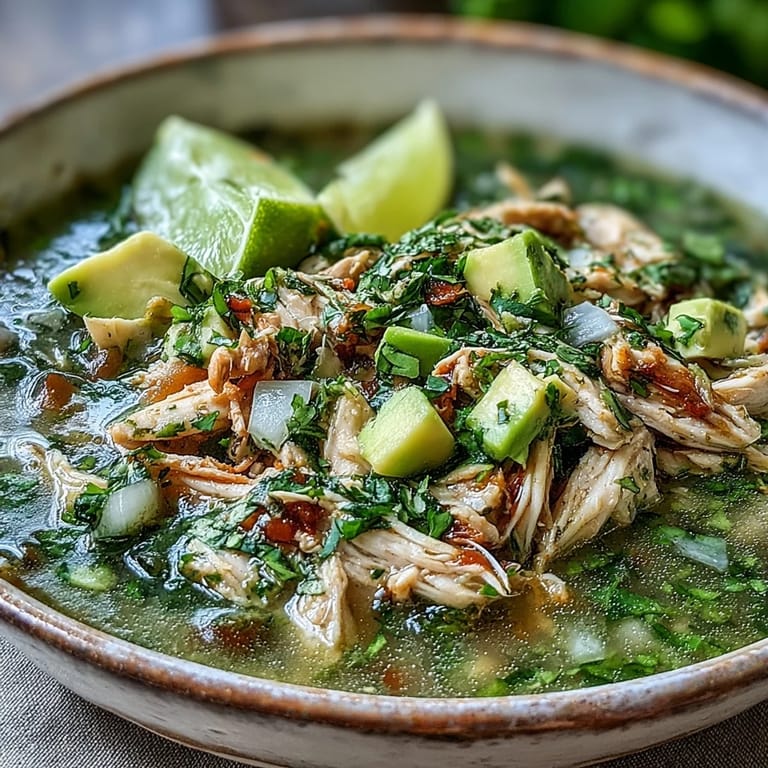
There's something about feeding people a bowl of something you made from scratch that shifts the whole energy of a gathering. My sister took a photo of hers that day and sent it to me later, just the bowl catching the light, and I knew this was the kind of recipe worth keeping close.
The Magic of Charred Vegetables
Charring peppers and tomatillos under high heat transforms them from raw, vegetal ingredients into something with real character and depth. The blackened spots aren't burnt—they're caramelized, where the natural sugars concentrate and develop new flavors. The first time I did this intentionally rather than nervously watching to make sure nothing caught fire, I understood why Maria was so particular about the broiler temperature.
Building Flavor in Layers
This dish teaches you something important about cooking: every step matters, and some steps matter more than others. Searing the chicken isn't just about making it look nice—it creates those browned bits, called fond, that stick to the pot and dissolve into the sauce, adding savory depth. The cilantro blended directly into the sauce keeps it from tasting like an afterthought. Even the lime juice, added before blending, becomes integrated rather than tasting tacked on at the end.
Serving and Variations
Chili verde is endlessly forgiving because its bright, tangy sauce makes almost any accompaniment work beautifully. Serve it over rice, with warm tortillas folded alongside, or nestled in a bowl of beans for something more substantial. The garnishes aren't just decoration—they add texture and freshness that complete the dish. Consider adding roasted pumpkin seeds (pepitas) to the blender if you want earthier complexity, or a handful of fresh epazote if you can find it for a truly authentic touch.
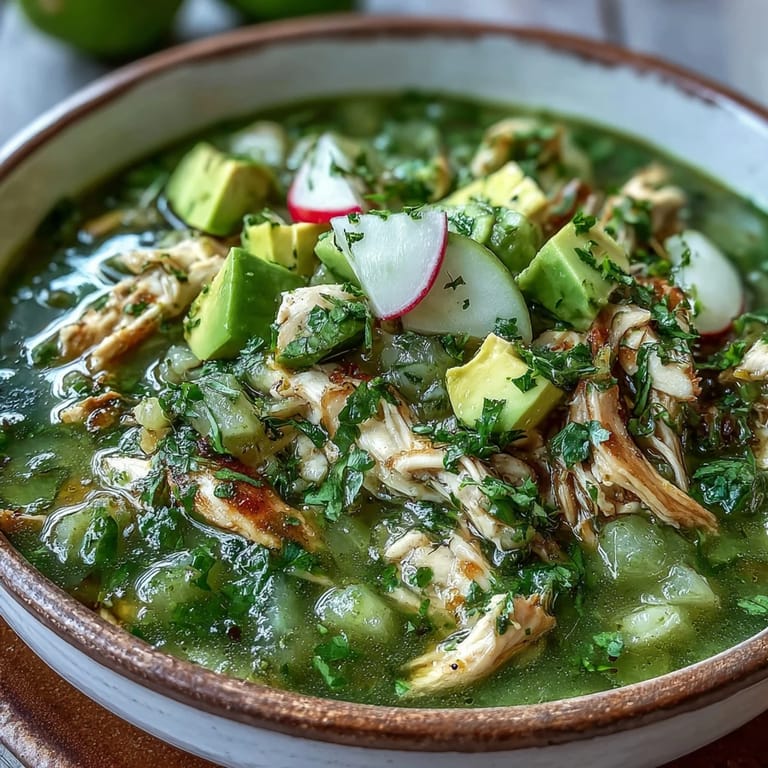
- Let people build their own bowls with cilantro, avocado, radishes, and lime on the side so everyone gets exactly what they want.
- Leftovers actually improve the next day as the flavors continue to meld, so this is perfect for meal prep.
- If you make it ahead, store it in the refrigerator and gently reheat on low heat so the chicken doesn't toughen.
 Pin
Pin This is the kind of recipe that sits in your kitchen rotation and just keeps getting better each time you make it, because you understand it a little more. It's become one of my go-to dishes for people I want to feed well.
Recipe Questions & Answers
- → What makes the green sauce so flavorful?
The sauce develops its signature taste through charred vegetables including tomatillos, poblano peppers, and jalapeños. The high-heat broiling process caramelizes natural sugars while fresh cilantro and lime juice add brightness. Ground cumin and dried oregano contribute earthy undertones that balance the tanginess.
- → Can I make this dish less spicy?
Absolutely. Simply reduce the number of jalapeños or remove all seeds and membranes from the peppers before blending. The poblano peppers provide flavor without significant heat, so you can maintain the sauce's rich character while adjusting spiciness to your preference.
- → What cuts of chicken work best?
Boneless, skinless chicken thighs are ideal because they remain moist and tender during long simmering. Chicken breasts work well too but may dry out slightly. Both become perfectly shreddable after cooking, creating texture that absorbs the vibrant green sauce beautifully.
- → How should I serve chicken chili verde?
This versatile dish pairs wonderfully with warm corn or flour tortillas for making tacos. Serve over steamed white rice, alongside refried beans, or simply enjoy in bowls as a stew. Top with diced avocado, sliced radishes, fresh cilantro, and lime wedges for added freshness and contrast.
- → Can I prepare this ahead of time?
The flavors actually improve after resting. Prepare everything up to two days in advance, then reheat gently over low heat. The sauce thickens and the chicken absorbs more flavor overnight. Store in an airtight container in the refrigerator and add fresh garnishes just before serving.
- → What if I can't find tomatillos?
Tomatillos provide essential tangy acidity that's difficult to replicate. You can substitute with green tomatoes plus extra lime juice, though the flavor profile will shift slightly. Look for tomatillos in the produce section of most grocery stores, often near the peppers or in Latin American food aisles.