 Pin
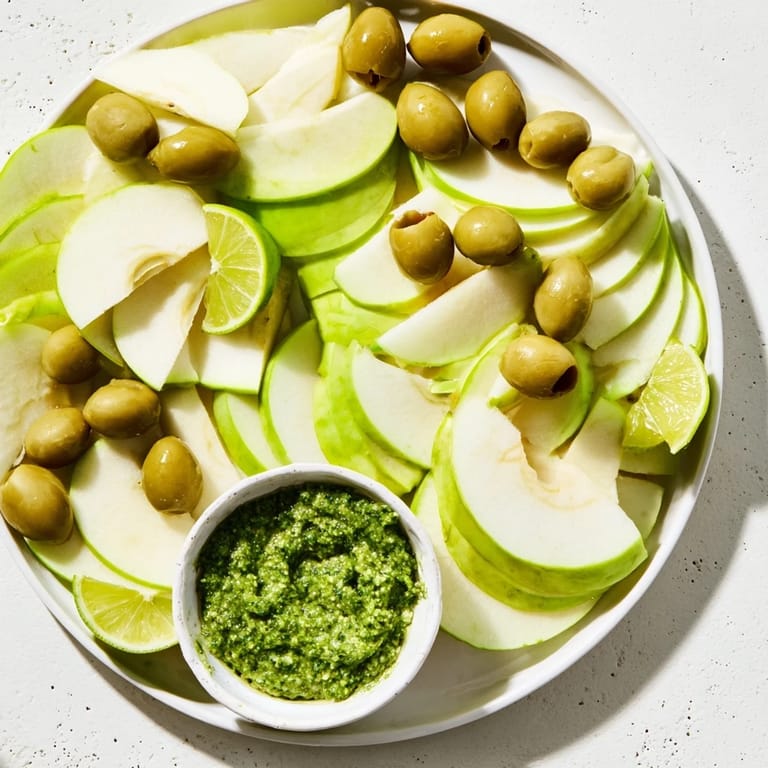
Pin I wasn't planning to host that dinner party until my friend texted me the morning of, but somehow a board of all green things felt like the only answer. It started as a joke—what if everything on the table was actually green?—and by the time my guests arrived, I'd arranged Granny Smiths, limes, pesto, and briny olives into something that made people actually pause before eating. The board looked like a jeweled landscape, and suddenly I realized I'd stumbled onto something people actually wanted to gather around.
My sister still talks about how she grabbed an apple slice with pesto and lime all at once, then asked where I'd learned to do this. I hadn't learned it anywhere—it was pure accident born from running out of time and having three green things in my kitchen. But watching her experience unfold made me realize this board isn't just about the ingredients; it's about creating a moment where people slow down and actually taste things.
What's for Dinner Tonight? 🤔
Stop stressing. Get 10 fast recipes that actually work on busy nights.
Free. No spam. Just easy meals.
Ingredients
- Granny Smith apples: Their tartness cuts through rich pesto beautifully, and they stay crisp longer than softer varieties; slice them just before serving to keep them bright.
- Limes: Both sliced for the board and used to brush apple surfaces—they're your weapon against browning and they add a visual pop.
- Pesto: Use basil or arugula to keep the monochromatic green theme alive; the nuttiness anchors the whole board.
- Green olives: Castelvetrano or Manzanilla are buttery and mild, perfect for eating straight without that aggressive brine.
Instructions
- Set up your stage:
- Wash everything and dry it completely—water spots break the jeweled effect you're going for. Clear your serving board of anything else and let it be your canvas.
- Build the apple base:
- Slice your apples thin on a mandoline if you have one; arrange them in overlapping rows or a scattered pattern, whichever feels more natural. The moment they hit the board, brush them lightly with lime juice to keep them pristine.
- Add lime architecture:
- Tuck lime slices and wedges between the apples; they should look like little gems studding a landscape. Don't worry about perfect geometry—intentional chaos reads more beautiful.
- Anchor with pesto:
- Spoon pesto into a small bowl and nestle it somewhere the board has room, letting it become its own focal point. The white of the bowl against green creates unexpected contrast.
- Scatter the olives:
- Distribute olives across gaps and edges like you're finishing a painting. They should feel abundant, not sparse.
- Serve immediately:
- This board is best within twenty minutes of assembly, while everything is still crisp and the colors haven't started their fade.
 Pin
Pin 
Someone at that dinner party told me the board felt like something from a magazine, and I almost didn't correct them. The truth is simpler: it's just things that taste good together, arranged so you actually see them before you eat them. That shift—from invisible ingredient to visible, celebrated thing—changes how people experience food.
The Apple Slicing Moment
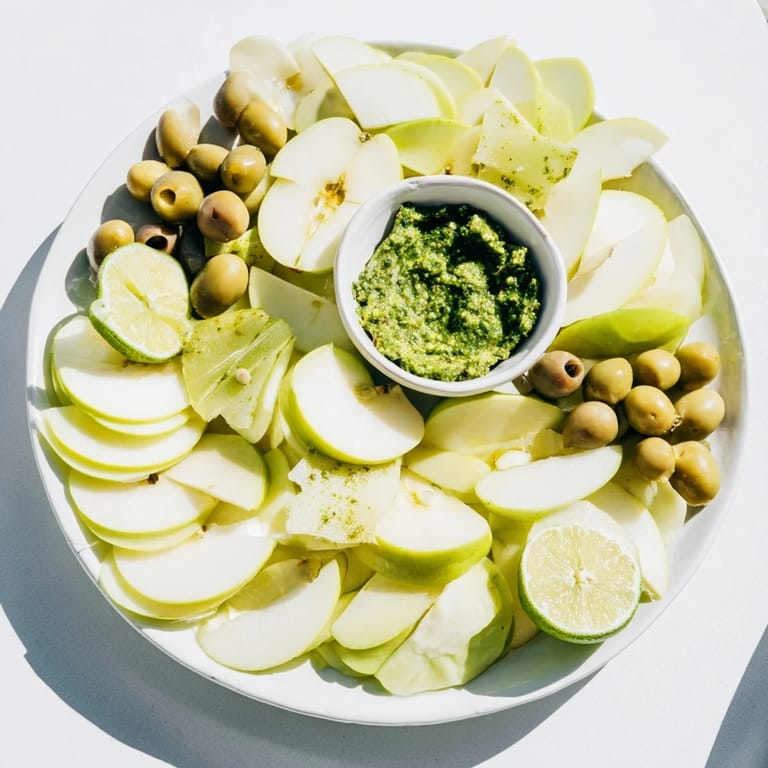
The mandoline changed everything for me with this board. Before I had one, I'd slice apples with my knife and they'd come out uneven, some thick enough to be stuffy, others paper-thin and fragile. Once I learned to use the mandoline (carefully, always carefully), the apples became uniform enough to layer like roof shingles, but not so thin they fell apart. That consistency is what makes the board look intentional rather than thrown together.
Pesto as Anchor
I realized halfway through a second board that pesto does more than taste good here—it provides the visual and textural anchor that stops this from feeling like a fruit plate. Without it, you're just slicing things. With it, you've created a reason to eat apples and olives together, a moment where flavors combine instead of just sitting next to each other. Arugula pesto brings a slight peppery edge that wakes everything up; basil is softer and more familiar.
Small Touches That Matter
The details here are where the board transforms from snack to experience. A slightly damp kitchen towel under your board keeps it from sliding around. Choosing a neutral-colored board lets the green ingredients become the show instead of competing with the surface. Serving this with crisp white wine or sparkling water makes it feel like a deliberate moment, not an accident. If you're feeding people with dairy concerns, verify your pesto or make it with seeds instead of pine nuts and skip the cheese entirely.
- Pat everything dry before assembly so nothing feels clammy or sad.
- Chill your serving board in the fridge for five minutes before building if you have time—it keeps the apple slices crisp longer.
- Don't assemble more than twenty minutes ahead unless you're willing to watch the magic fade.
 Pin
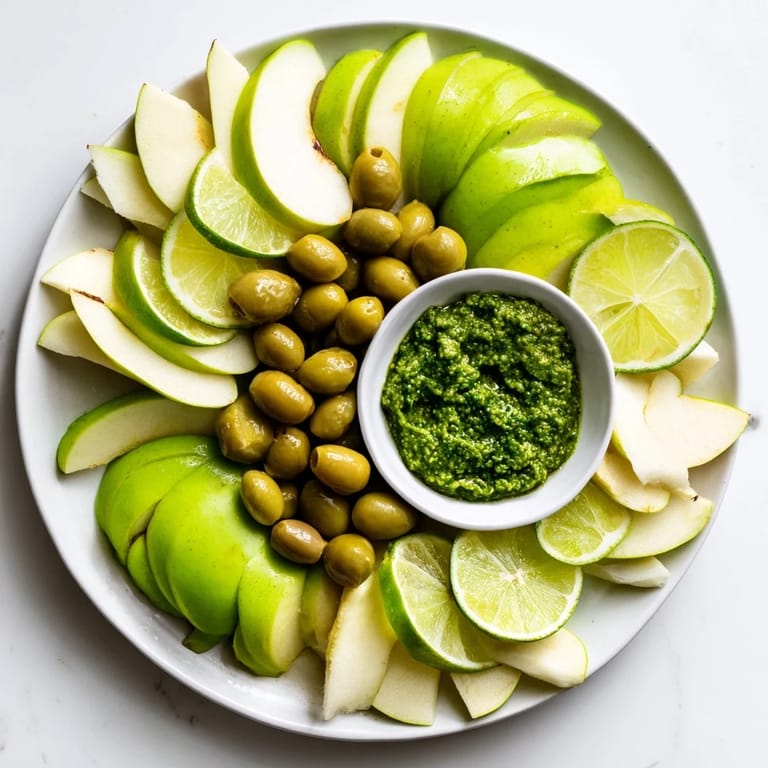
Pin This board proved to me that the simplest food—just good ingredients arranged with intention—often means the most. It's become my go-to whenever I want to feel prepared but unhurried, whenever I want to turn an ordinary moment into something people actually remember.
Recipe Questions & Answers
- → What type of apples work best for this snack board?
Granny Smith apples are ideal due to their crisp texture and tart flavor, which complement the other green ingredients well.
- → Can I use homemade pesto for this board?
Yes, homemade basil or arugula pesto is recommended for freshness and vibrant green color, though store-bought pesto also works well.
- → How can I keep the apple slices from browning?
Lightly brushing the apple slices with lime juice before arranging them helps prevent browning and maintains their fresh appearance.
- → Are there suitable alternatives for green olives?
Castelvetrano or Manzanilla olives are preferred for their bright color and mild flavor, but other green olives can be used depending on taste.
- → What are some good beverage pairings for this board?
Crisp white wine or sparkling water with lime pairs beautifully, enhancing the fresh and zesty notes of the board.