
 Pin
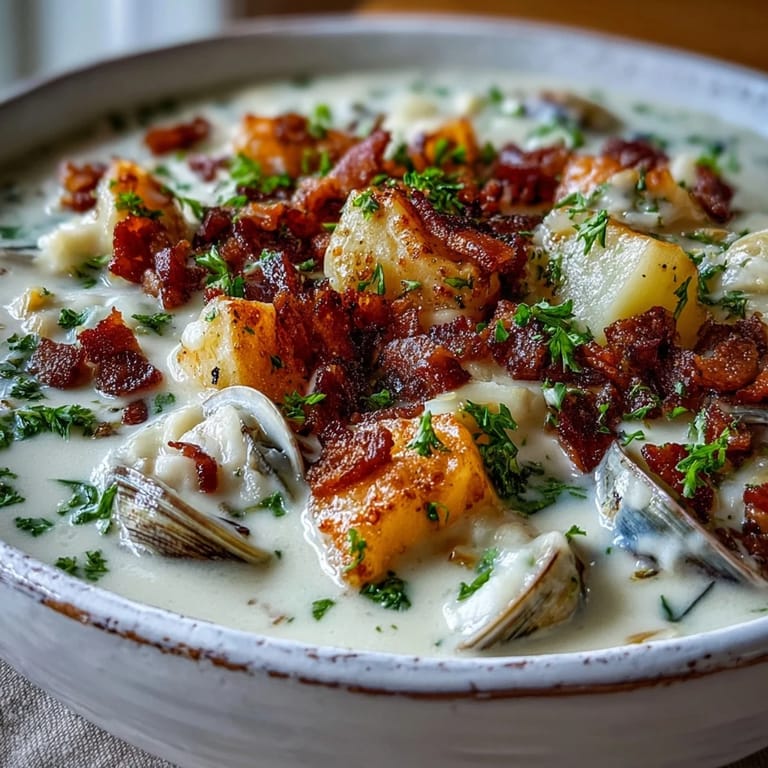
Pin My grandmother kept a blue ceramic pot just for clam chowder, and somehow that pot knew exactly what to do. Years later, I stood in her kitchen on a foggy October morning, watching steam rise from that same vessel while the smell of butter and briny clams filled the air in a way that made everything else fade away. She never wrote down the recipe, just worked with her hands and instinct, so I had to learn by watching, by tasting, by failing spectacularly the first time I tried it alone. Now when I make this soup, I'm not just cooking dinner, I'm holding onto something that mattered to her.
I made this for my sister's birthday dinner during a snowstorm when the roads nearly closed, and somehow the chowder turned into the whole event. People crowded into the kitchen, bowls in hand, asking for second helpings while the windows fogged over completely. That night it wasn't about technique or perfection, just about feeding people something that made them feel seen and cared for. The soup does that naturally if you let it.
What's for Dinner Tonight? 🤔
Stop stressing. Get 10 fast recipes that actually work on busy nights.
Free. No spam. Just easy meals.
Ingredients
- Fresh clams (2 pounds) or canned chopped clams (2 cups): Fresh clams taste brighter and their steaming liquid becomes liquid gold for your broth, but canned clams work beautifully when life gets busy and you need dinner without the extra step.
- Yukon Gold or russet potatoes (2 medium, diced): Yukon Golds stay creamy and almost buttery, while russets break down slightly to thicken the chowder naturally, so choose based on the texture you want.
- Salt pork or bacon (4 ounces, diced): The rendered fat is your flavor foundation, so don't skip this even if it seems excessive, because that's where the deep savory notes come from.
- Unsalted butter (4 tablespoons): Use real butter here because it carries the flavor in ways margarine simply cannot.
- Heavy cream and whole milk (1 cup each): This combination avoids the heaviness of using only cream while keeping the soup luxurious and approachable.
- Clam juice (2 cups): Bottled clam juice is consistent and reliable, but if you steamed fresh clams, use that liquid instead because it's pure briny magic.
- All-purpose flour (2 tablespoons): This creates a roux that thickens the chowder gracefully without making it gluey or strange.
- Bay leaf and dried thyme: These aromatics are subtle but essential, whispering in the background without announcing themselves loudly.
- Fresh parsley (2 tablespoons, chopped): Add this at the very end so its fresh, green brightness doesn't disappear into the heat of the pot.
Instructions
- Prepare the clams if using fresh:
- Scrub them under cold water to remove any sand or grit, then combine them with 1 cup water in a large pot. Cover and steam over medium heat until they open, which usually takes 6 to 8 minutes, then discard any stubborn ones that refused to cooperate. Remove the opened clams, strain the liquid carefully to keep it clean, chop the meat, and set everything aside for later.
- Render the salt pork for its golden fat:
- Place diced salt pork or bacon in your Dutch oven and cook it over medium heat until the fat turns translucent and the meat becomes crispy and brown. Use a slotted spoon to remove the meat but leave all that precious fat behind in the pot, because that's the flavor foundation you're building on.
- Build the aromatic base with butter and vegetables:
- Add butter to the pot and let it melt into the rendered pork fat, then add diced onion and celery. Sauté for about 5 minutes until they soften and turn slightly translucent, stirring occasionally so nothing sticks or browns, then add minced garlic and cook for one more minute until it perfumes the air.
- Create a roux to thicken without lumps:
- Sprinkle flour over the vegetables and stir constantly for about 2 minutes, cooking out the raw flour taste and creating a paste that will thicken your broth. This small step prevents the grainy texture that happens when you add liquid to raw flour.
- Whisk in the liquids slowly to avoid lumps:
- Slowly pour in the clam juice while whisking continuously, then add milk and cream in the same gentle way, stirring well to ensure everything combines smoothly. Rushing this step is where things go sideways, so take your time even though it feels like you're moving slowly.
- Simmer the potatoes until they soften:
- Add diced potatoes along with bay leaf and thyme, then let everything simmer uncovered for 12 to 15 minutes, stirring occasionally to make sure nothing sticks to the bottom. The potatoes should be tender enough to break apart with a spoon, and the broth should smell like something you dreamed about.
- Add the clams gently to finish:
- Stir in the chopped clams along with the reserved cooking liquid and the crispy salt pork, then simmer very gently for 3 to 5 minutes without letting it boil. Boiling clams makes them tough and rubbery, so keep the heat low and watch the surface carefully.
- Season and serve with confidence:
- Remove the bay leaf, stir in fresh parsley, then taste and adjust the salt and pepper to your liking. Ladle into bowls and serve with oyster crackers or crusty bread alongside.
 Pin
Pin 
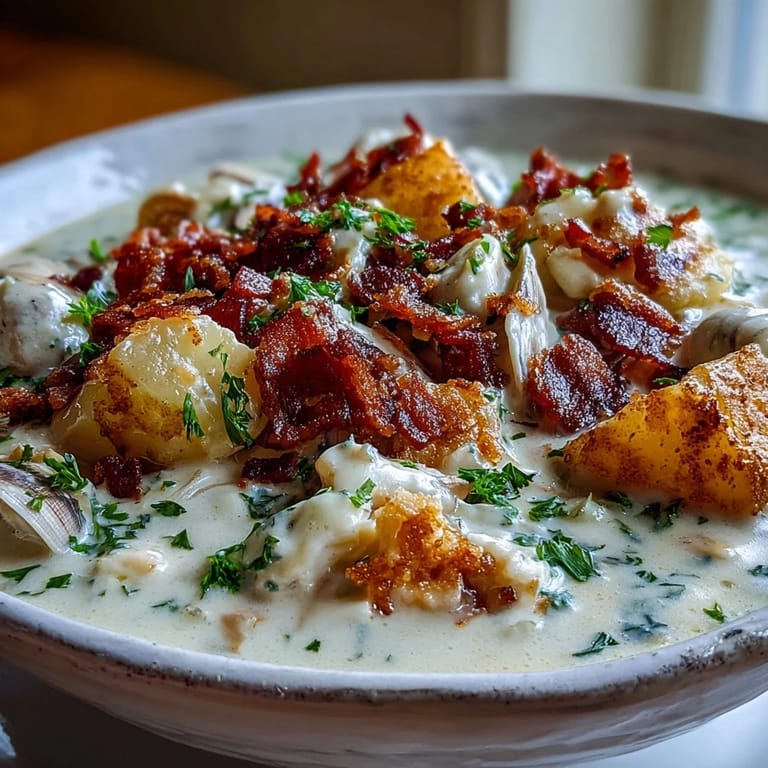
Once my friend took a spoonful and closed his eyes, and without opening them said quietly, This tastes like memory. That sentence stayed with me because it captured something I couldn't explain before then, which is that food like this connects us to moments and people, not just flavors.
The Beauty of Using What You Have
One winter I made this soup with canned clams because the fishmonger had closed for the holiday, and I was convinced it would be disappointing compared to the fresh version. Instead, it turned out perfectly, just in a different way, which taught me that rigidity about ingredients is sometimes just perfectionism wearing a chef's hat. The canned clams were already tender, the juice was consistent, and the soup came together in less time, which meant I could actually relax instead of rushing through the cooking.
Why This Recipe Rewards Patience
Clam chowder is not a dish that hurries, and honestly that's one of its best qualities because the slow simmering lets the flavors meld into something greater than their individual parts. Trying to rush it by cranking the heat high only makes the clams tough and the potatoes fall apart into mush instead of staying tender and distinct. There's something grounding about standing at the stove for thirty minutes, stirring occasionally, watching the cream turn from white to a gorgeous pale gold as everything comes together.
Customizing Your Chowder Without Losing Its Soul
This soup is forgiving enough to adapt to what you have and what you love, whether that means using half and half instead of heavy cream for something lighter, or adding a splash of white wine during the cooking process if you want a subtle sophistication in the background. I've added corn in summer and roasted red peppers just because they were in my refrigerator, and the chowder welcomed them like old friends. The one thing I never skip is the salt pork or bacon, because that rendered fat is truly the foundation that makes everything else sing.
- Swap the heavy cream for half and half or even whole milk if you want something less rich but still deeply comforting.
- Add a handful of fresh corn or diced roasted red pepper if you want to introduce another flavor without disrupting the chowder's essential identity.
- Garnish with extra parsley, chives, or a sprinkle of smoked paprika to give each bowl a personalized touch when you serve it.
 Pin
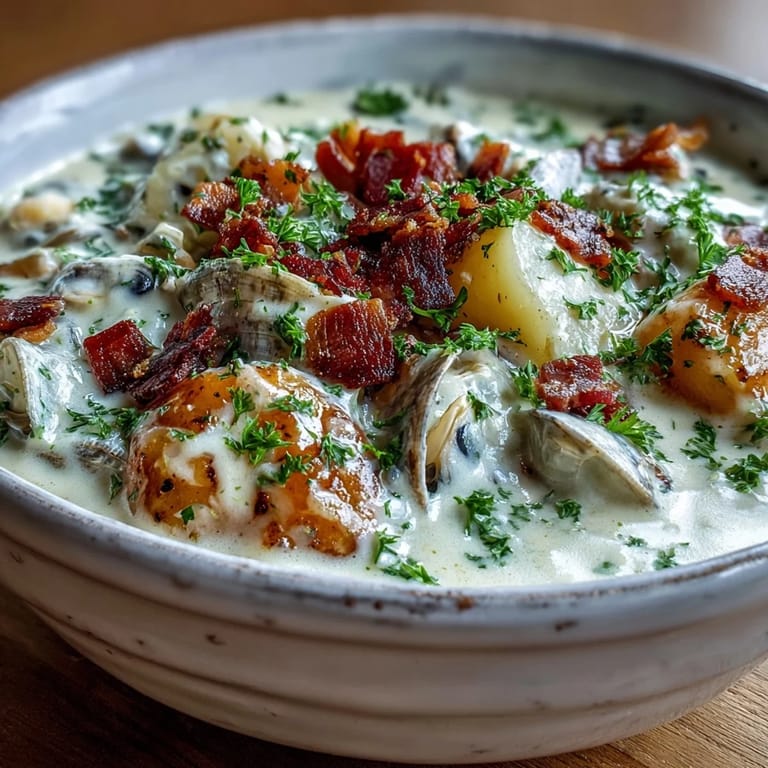
Pin This is the soup that reminds you why cooking matters, why gathering people around food is its own kind of prayer. Make it on a cold day and watch what happens.
Recipe Questions & Answers
- → What's the difference between New England and Manhattan clam chowder?
New England chowder features a rich, creamy milk-based broth with potatoes, while Manhattan version uses tomatoes and has a reddish, broth-like consistency. The white creamy style is the traditional New England preparation that most people expect when ordering clam chowder.
- → Can I use canned clams instead of fresh?
Absolutely. Canned chopped clams work well and significantly reduce prep time. Use the juice from the can as part of your clam liquid. Fresh clams provide a slightly sweeter flavor and require steaming, shucking, and chopping before adding to the pot.
- → Why does my chowder separate or curdle?
Boiling dairy products can cause separation. Once you add the milk and cream, keep the heat at a gentle simmer rather than a rolling boil. If reheating, do so slowly over low heat while stirring constantly to maintain the smooth, creamy texture.
- → How do I store and reheat leftover chowder?
Store in an airtight container in the refrigerator for up to 3 days. The chowder will thicken considerably as it cools. When reheating, add a splash of milk or cream to restore the consistency. Warm gently over low heat, stirring occasionally.
- → What can I substitute for salt pork?
Thick-cut bacon makes an excellent substitute and provides similar smoky flavor and fat content. For a lighter version, use pancetta or omit the pork entirely and increase the butter slightly. The salt pork is traditional but not strictly necessary.
- → How do I know when fresh clams are cooked properly?
Steam fresh clams until their shells open completely, typically 6-8 minutes. Discard any clams that remain closed after cooking as they may be dead and unsafe to eat. Once shelled, chop the meat into bite-sized pieces before adding to the chowder.