 Pin
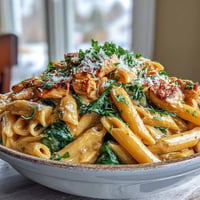
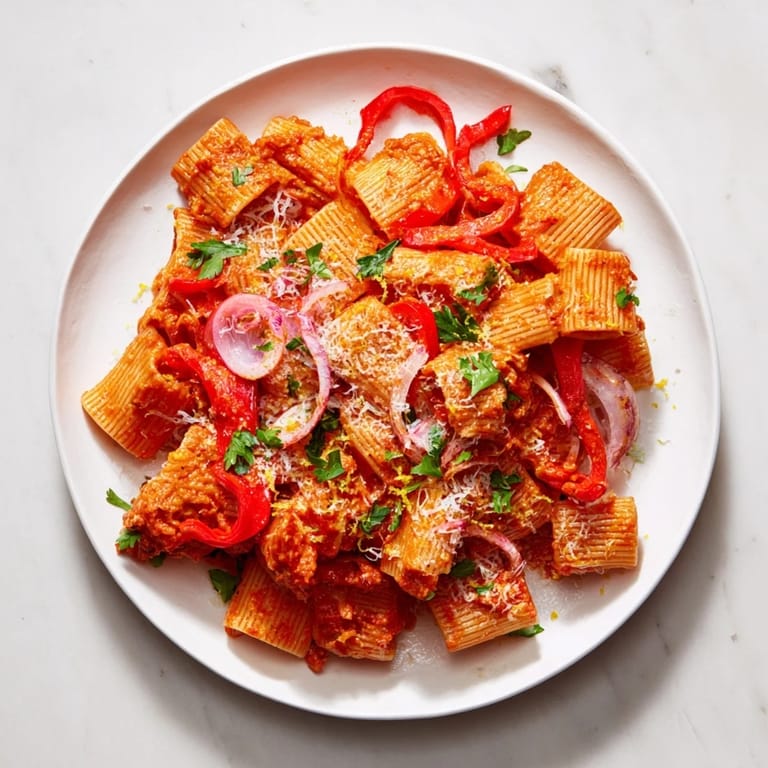
Pin The first time I made this, my kitchen filled with such an aggressive cloud of red pepper heat that my eyes watered before the pasta even hit the pot. I'd been craving something bold and uncomplicated, and a one-pot dinner seemed like the answer to my weeknight exhaustion. What surprised me most wasn't just how quickly it came together, but how the flavors deepened as everything simmered together—the tomatoes breaking down, the spices marrying into something that tasted far more complex than the simple ingredients suggested.
I served this to my neighbor on a particularly chaotic Tuesday when she'd just moved in, and watching her face light up when she tasted it—that exact moment of surprise and satisfaction—made me realize this pasta does something almost magical. It's the kind of dish that makes people feel cared for without any fuss.
What's for Dinner Tonight? 🤔
Stop stressing. Get 10 fast recipes that actually work on busy nights.
Free. No spam. Just easy meals.
Ingredients
- Pasta (penne or rigatoni): Choose a shape that catches sauce; the tubes trap those fiery flavors inside.
- Water or vegetable broth: Broth adds a subtle depth that plain water can't match.
- Red onion: It softens into almost nothing but carries sweetness that balances the heat.
- Garlic: Minced fine so it melts into the sauce rather than sitting as chunks.
- Red bell pepper: Adds sweetness and color; slice it thin so it cooks evenly with the pasta.
- Canned diced tomatoes: Quality matters here since it's your sauce base; San Marzano if you can find them.
- Olive oil: Good oil makes a difference in one-pot cooking where it's a primary flavor.
- Italian seasoning: The backbone of the dish; don't skip or substitute.
- Crushed red pepper flakes: Start conservatively—you can always add more heat, but you can't take it back.
- Smoked paprika: Gives a subtle warmth that plain paprika won't deliver.
- Salt and black pepper: Taste as you go; canned tomatoes vary in saltiness.
- Parmesan cheese: Freshly grated melts better than the pre-shredded kind.
- Fresh parsley or basil: A handful at the end brightens everything; it's worth it.
- Lemon zest: Optional but genuinely transforms the dish with one small gesture.
Instructions
- Build your flavor base:
- Heat olive oil over medium heat and add your red onion, letting it soften and turn translucent. This usually takes about 2-3 minutes, and you'll know it's right when the kitchen starts to smell sweet.
- Wake up the aromatics:
- Add minced garlic and sliced red bell pepper, stirring constantly for about 2 minutes until the smell shifts and becomes more complex. This is where the magic starts—you're building layers.
- Combine everything:
- Pour in the tomatoes with their juices, then add your pasta, water or broth, and all the seasonings. Stir well, making sure the pasta isn't clumping together at the bottom.
- Let it simmer:
- Bring to a boil, then drop the heat and let it bubble away uncovered for 12-14 minutes, stirring every few minutes. The pasta will soften, the liquid will reduce, and you'll end up with something that tastes concentrated rather than watered down.
- Finish strong:
- Stir in the Parmesan and lemon zest if using, then taste and adjust the salt, pepper, and red pepper flakes. This is your moment to make it yours.
- Plate and garnish:
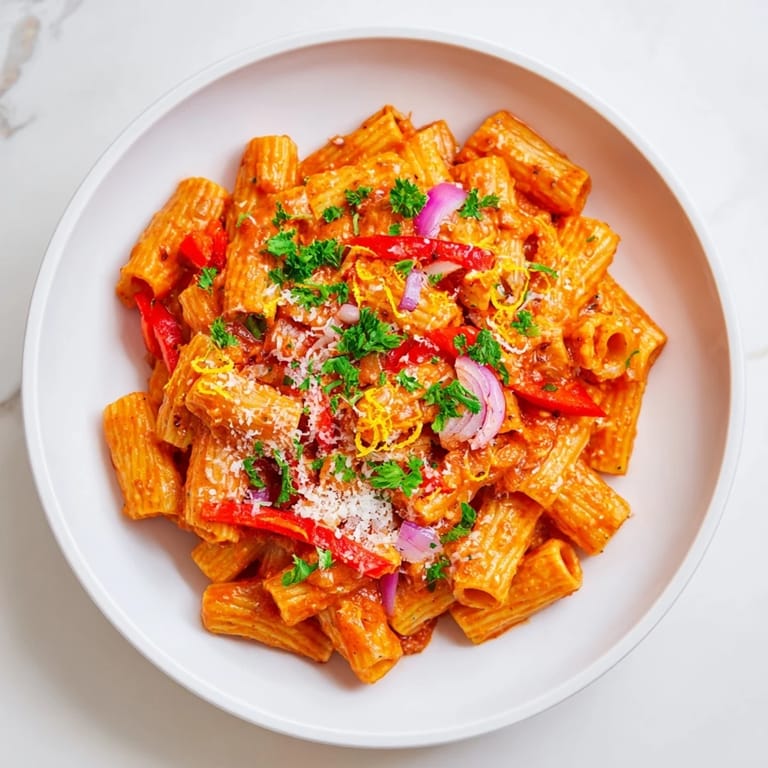
- Top each bowl with fresh parsley or basil and extra Parmesan. Serve immediately while everything is still steaming.
 Pin
Pin 
There's something deeply satisfying about standing over a single pot and watching it transform into a complete meal. I think that's when cooking stops feeling like a task and starts feeling like control.
Variations That Work
This pasta is flexible enough to bend to whatever you have on hand or whatever sounds good. On nights when I want protein, I'll stir in some sliced cooked chicken sausage or sautéed shrimp in the last minute—they heat through quickly and don't interfere with the spice profile. For a vegan version, nutritional yeast swapped in for Parmesan gives a savory depth that feels intentional rather than like a compromise.
Pairing and Serving Ideas
A crisp Italian white wine like Pinot Grigio cuts through the heat and spice beautifully, which I learned by accident when a bottle was already open while I was cooking. The wine doesn't diminish the dish; it enhances it by giving your palate something cool to return to between bites. If you want to stretch this into a meal, a simple green salad with lemon vinaigrette on the side adds freshness without stealing the spotlight.
A Few Last Things
Taste the pasta about a minute before you think it's done—the line between al dente and soft is thin when everything's cooking together. The pasta continues to absorb liquid even after you remove it from heat, so if it seems slightly looser than you want, that's actually perfect.
- Freshly grated Parmesan melts beautifully into the hot pasta, while pre-shredded versions stay grainy and refuse to blend.
- A microplane zester for the lemon creates fine wisps of zest that distribute evenly rather than chunks that taste too intense.
- Make this in a Dutch oven if you have one—the wider, deeper surface area helps everything cook more evenly than a standard skillet.
 Pin
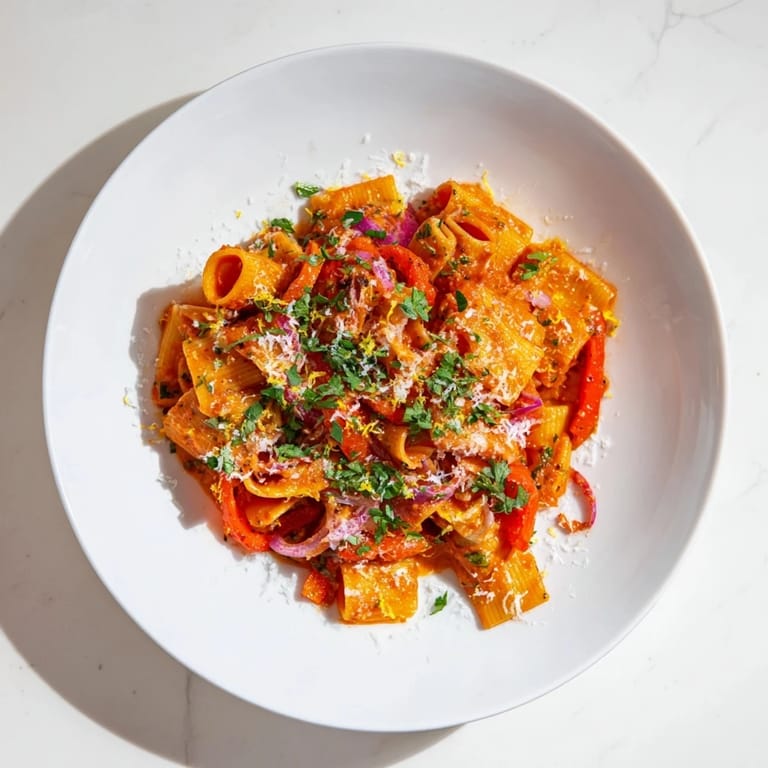
Pin This pasta has become my answer to 'I'm hungry, tired, and have 30 minutes'—and somehow it never feels like settling. That's the real magic here.
Recipe Questions & Answers
- → What type of pasta works best for this dish?
Penne or rigatoni hold up well, absorbing the spicy tomato sauce while maintaining a firm texture.
- → Can I adjust the spice level?
Yes, modify the amount of crushed red pepper flakes to suit your preferred heat intensity.
- → What can I use instead of Parmesan for a vegan option?
Nutritional yeast provides a cheesy flavor without dairy, perfect for a vegan variation.
- → Is it necessary to stir frequently while cooking?
Stirring ensures even cooking and prevents the pasta from sticking to the pot as the liquid reduces.
- → Can I add protein to this meal?
Sliced cooked chicken sausage or sautéed shrimp can be stirred in after cooking for added protein.