 Pin
Pin My kitchen window was open that April afternoon, and I could hear kids playing outside while I stood at the counter, peeling back the papery layers of a garlic bulb. I'd bought too much asparagus at the farmer's market again, and instead of my usual lemon-butter routine, I decided to let the oven do most of the work. The garlic went in first, wrapped in foil like a little gift, and I forgot about it until the smell pulled me back from answering emails. That's when I knew this wasn't going to be just another weeknight pasta.
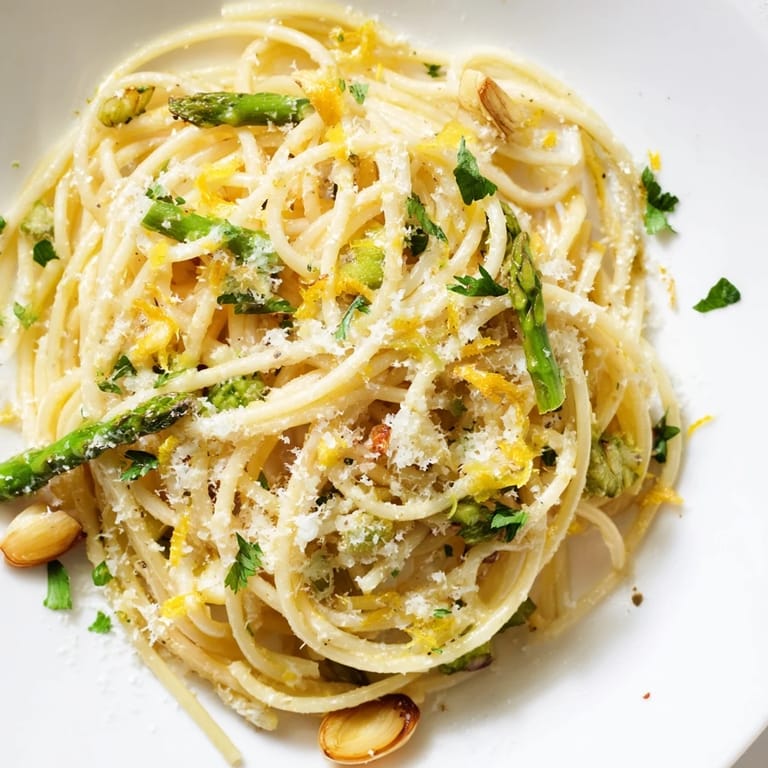
I made this for my sister when she visited last May, and she kept squeezing the roasted garlic cloves straight from their skins onto bread while I finished the pasta. By the time we sat down, half the garlic was gone, and we laughed because she'd essentially eaten her appetizer raw. The asparagus had just the right amount of char, and the pasta soaked up every bit of the garlicky oil. She asked for the recipe twice before she left, which is her version of a compliment.
What's for Dinner Tonight? 🤔
Stop stressing. Get 10 fast recipes that actually work on busy nights.
Free. No spam. Just easy meals.
Ingredients
- Garlic head: Roasting transforms it into something mild and almost buttery, so don't skip this step or try to use jarred stuff.
- Fresh asparagus: Look for firm stalks with tight tips, and snap off the woody ends instead of cutting them so you don't waste the tender parts.
- Spaghetti: The long strands grab onto the oil and garlic better than short shapes, and they twirl prettily on the fork.
- Extra-virgin olive oil: Use the good bottle here since it's not being cooked down to nothing, you'll actually taste the fruitiness.
- Sea salt and black pepper: Season every layer as you go, the pasta water, the asparagus, the final toss, so the flavor builds instead of tasting flat.
- Red pepper flakes: Just a pinch adds warmth without making it spicy, but skip it if you're feeding kids who notice everything.
- Parmesan cheese: Freshly grated melts into the pasta and creates a light sauce when it meets the starchy pasta water.
- Lemon zest: Brightens the whole dish and cuts through the richness, use a microplane if you have one.
- Fresh parsley: Adds a pop of color and a hint of freshness that dried herbs just can't match.
Instructions
- Get the garlic roasting:
- Preheat your oven to 400°F and slice the top off the garlic head so the cloves peek out. Drizzle it with olive oil, wrap it snugly in foil, and let it roast for 30 minutes until the cloves turn golden and soft enough to spread like butter.
- Roast the asparagus:
- After the garlic has been in for 15 minutes, toss your asparagus pieces on a baking sheet with olive oil, salt, and pepper. Slide them into the oven and roast for 12 to 15 minutes until they're tender with slightly crispy tips.
- Cook the pasta:
- Bring a big pot of well-salted water to a rolling boil and cook the spaghetti until it's al dente, with a slight bite in the center. Before draining, scoop out half a cup of the starchy pasta water and set it aside.
- Prep the roasted garlic:
- Unwrap the garlic head and let it cool for a minute, then squeeze the cloves out of their skins into a small bowl. Mash them gently with a fork so they break down into a rough paste.
- Build the sauce base:
- Heat a large skillet over medium and pour in the olive oil. Add the mashed garlic and let it sizzle for a minute or two, stirring so it perfumes the oil without browning.
- Bring it all together:
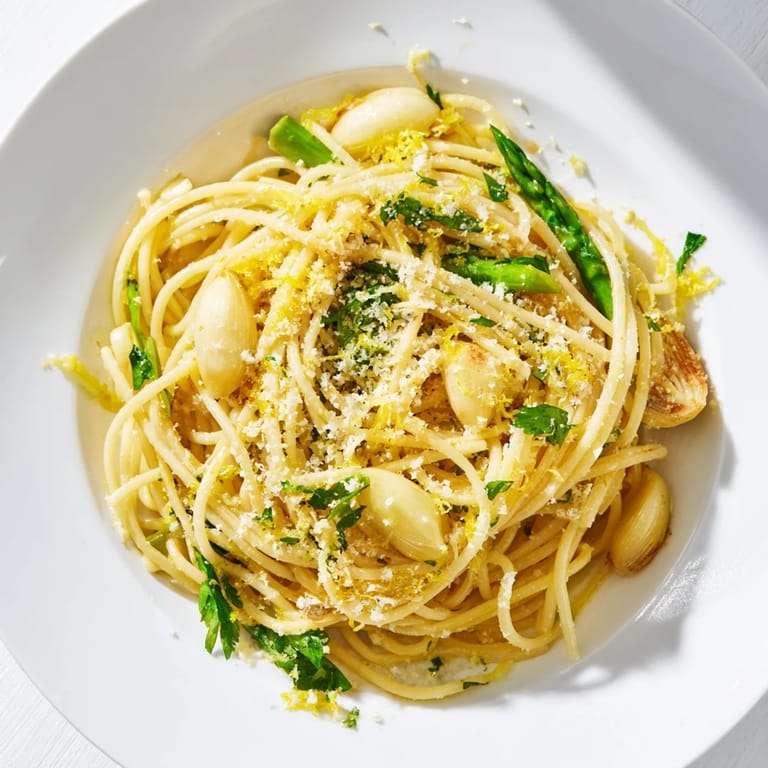
- Toss the roasted asparagus and drained spaghetti into the skillet with the garlic oil. Add splashes of the reserved pasta water and toss everything with tongs until the pasta looks glossy and coated.
- Finish and serve:
- Stir in the Parmesan, lemon zest, parsley, and red pepper flakes if you like a little heat. Taste and adjust the salt and pepper, then serve it hot with extra cheese on the side.
 Pin
Pin 
One evening in early June, I served this to a friend who claimed she didn't like asparagus. She ate two bowls and then admitted it was the roasting that changed her mind, something about the caramelized edges made it taste almost sweet. We sat on the back porch with our pasta bowls balanced on our knees, and she told me she'd been eating it steamed her whole life. Sometimes the cooking method matters more than the ingredient itself.
Choosing Your Asparagus
Thicker stalks hold up better in the oven and won't turn to mush, but pencil-thin ones cook faster and have a delicate sweetness. I usually go for medium thickness, somewhere in between, and I snap the ends instead of cutting them because the stalk naturally breaks where the tender part begins. If the tips look dried out or the stalks feel rubbery, keep looking. Fresh asparagus should feel firm and snap cleanly, and the cut ends shouldn't look woody or discolored.
Making It Your Own
I've added toasted pine nuts when I'm feeling fancy, and sometimes I'll toss in halved cherry tomatoes during the last few minutes of roasting for a burst of sweetness. If you want more protein, shredded rotisserie chicken or white beans stir in beautifully without changing the vibe of the dish. A handful of arugula at the very end wilts into the hot pasta and adds a peppery bite that plays nicely with the lemon. You can also swap the spaghetti for linguine, bucatini, or even a short shape like penne if that's what you have.
Storing and Reheating
Leftovers keep in the fridge for up to three days in an airtight container, though the asparagus will soften a bit and lose some of its roasted texture. I reheat it gently in a skillet with a splash of water or broth to loosen the pasta, and sometimes I add a drizzle of fresh olive oil to wake everything back up. It's not quite as vibrant as when it's fresh, but it still makes a solid lunch. If you're planning to make it ahead, roast the garlic and asparagus in advance and store them separately, then toss everything together when you cook the pasta.
- Add a squeeze of fresh lemon juice when reheating to bring back some brightness.
- If the pasta seems dry, a splash of pasta water or even a bit of cream works wonders.
- Leftover roasted garlic can be mashed into butter or spread on toast the next morning.
 Pin
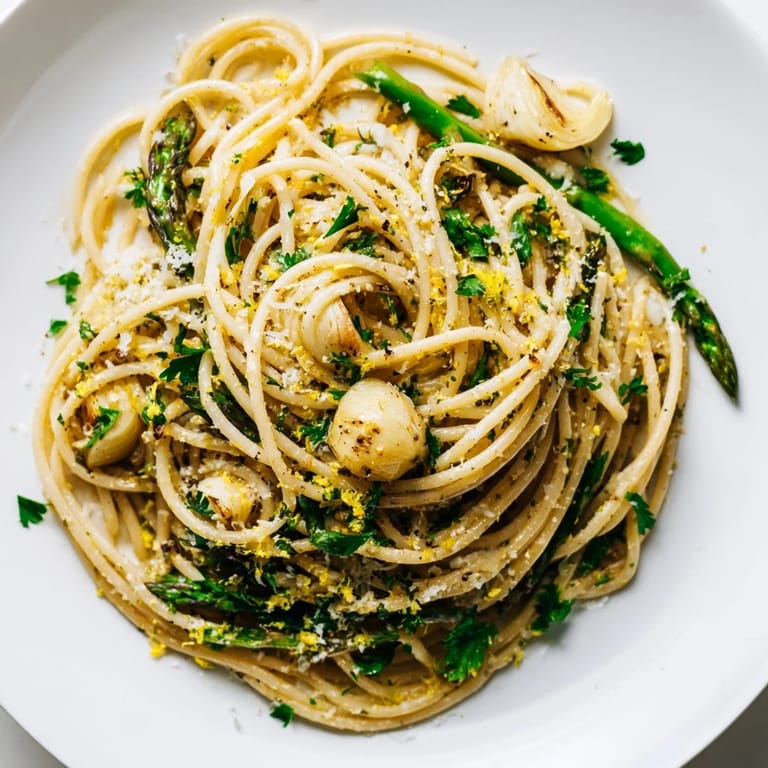
Pin This pasta has become my answer to spring evenings when I want something that feels special without the fuss. It's the kind of dish that tastes like you spent all day in the kitchen, but really, the oven did most of the work while you caught up on life.
Recipe Questions & Answers
- → How do I know when the garlic is properly roasted?
The garlic head should be soft and golden after 30 minutes at 400°F. When you squeeze the roasted cloves from their skins, they should come out easily and mash smoothly with minimal pressure from a fork.
- → Can I prepare the roasted garlic ahead of time?
Yes, you can roast the garlic up to 2 days in advance. Store it in an airtight container in the refrigerator and bring it to room temperature before mashing and adding to the skillet.
- → What's the best way to prevent mushy asparagus?
Watch the roasting time carefully—asparagus should roast for 12-15 minutes until just tender-crisp. Smaller, thinner spears may cook faster, so check for doneness a minute or two earlier if needed.
- → How much pasta water should I reserve?
Reserve about 1/2 cup of starchy pasta water after draining. This creates a silky sauce when added gradually to the skillet, helping the oil and garlic coat the pasta evenly.
- → What dairy-free options work well for this dish?
Use nutritional yeast, cashew cream, or store-bought dairy-free Parmesan alternatives. Each adds richness and umami while keeping the dish vegan-friendly.
- → Can I add protein to make this more substantial?
Absolutely. Toasted pine nuts, walnuts, or crispy chickpeas add texture and protein. For a non-vegetarian version, anchovies or crispy pancetta complement the roasted garlic beautifully.