 Pin
Pin One autumn evening, I was standing at the farmers market holding four glowing red peppers when a stranger mentioned she roasted hers until the skins blackened completely. Something about that casual detail stuck with me, so I went home and tried it that very night. The result was a soup so velvety and deep it tasted like bottled sunshine, and I've been chasing that moment ever since. The secret, I learned, wasn't just in the roasting but in letting the peppers surrender to the heat until they collapsed into sweet, smoky submission. Now whenever I make this soup, I'm transported back to that farmers market conversation and the small thrill of discovering something delicious by accident.
I made this for my sister on a rainy Sunday when she'd had a rough week, and she actually closed her eyes after the first spoonful like she was listening to music. There was something about the harissa's gentle heat paired with that silky base that seemed to ease something in her shoulders. She had thirds and asked for the recipe written on a card, which I found tucked into her kitchen drawer months later. That's when I knew this soup had become more than just a recipe, it was a small act of care I could give someone.
What's for Dinner Tonight? 🤔
Stop stressing. Get 10 fast recipes that actually work on busy nights.
Free. No spam. Just easy meals.
Ingredients
- Red bell peppers: Four large ones give you enough substance to create that velvety base, and they roast down beautifully when you let the skins char completely.
- Harissa paste: This is your secret weapon, adding warmth without aggression, but start with a tablespoon and adjust because brands vary wildly in intensity.
- Smoked paprika: This ingredient whispers rather than shouts, adding a subtle smokiness that makes people wonder what that mysterious flavor is.
- Vegetable broth: Quality matters here since it's the foundation, so use something you'd actually taste on its own.
- Day-old bread: Slightly stale bread absorbs the oil better and crisps up more evenly than fresh, so don't rush to use yesterday's loaf.
- Heavy cream or coconut cream: The optional finishing touch that transforms the soup from vibrant to luxurious, though it's beautiful either way.
- Fresh herbs: A handful of parsley or cilantro scattered on top brings brightness and reminds you that this dish celebrates living things.
Instructions
- Char your peppers until they surrender:
- Set your oven to 425°F and arrange pepper halves skin side up on a baking sheet, drizzled with olive oil. Roast for 25 to 30 minutes, watching as their skins blacken and blister, until the flesh becomes soft enough to collapse easily with a fork. This is the moment that transforms ordinary peppers into something with real depth.
- Build your crouton foundation:
- While peppers roast, toss bread cubes with olive oil, garlic powder, oregano, and salt, spreading them on a separate tray. Bake for 10 to 12 minutes with one toss halfway through, until they're golden and crispy with a slight give when you press them, then set them aside to cool completely.
- Prepare the charred peppers:
- Once the peppers are cool enough to handle, peel away and discard the blackened skins under cool running water, which makes the task easier and less frustrating. The beautiful flesh underneath is exactly what you need.
- Sauté your aromatic base:
- In a large pot, heat the remaining tablespoon of olive oil over medium heat and add your chopped onion, minced garlic, and diced carrot. Sauté for 5 to 7 minutes, stirring occasionally, until everything softens and the kitchen fills with that welcoming smell that signals good things are coming.
- Bloom your spices:
- Stir in the harissa paste, smoked paprika, and ground cumin, cooking for about 1 minute until the mixture becomes fragrant and the spices begin to release their oils. This step is crucial because it prevents them from tasting raw or one-dimensional in the finished soup.
- Build and simmer your soup:
- Add the roasted peppers, diced tomatoes with their juice, vegetable broth, salt, pepper, and sugar if using, bringing everything to a boil before reducing heat and simmering for 15 minutes. This allows all the flavors to marry and mellow into something harmonious.
- Purée until silky:
- Remove from heat and use an immersion blender to purée the soup until completely smooth and velvety, or work in batches with a standard blender if that's what you have. Listen for the change in sound as the texture transforms, which is oddly satisfying.
- Finish with cream and seasoning:
- Stir in your cream or coconut cream if you're using it, then taste and adjust the salt, pepper, or harissa to match your preferences. This is your moment to make the soup entirely your own.
- Serve with intention:
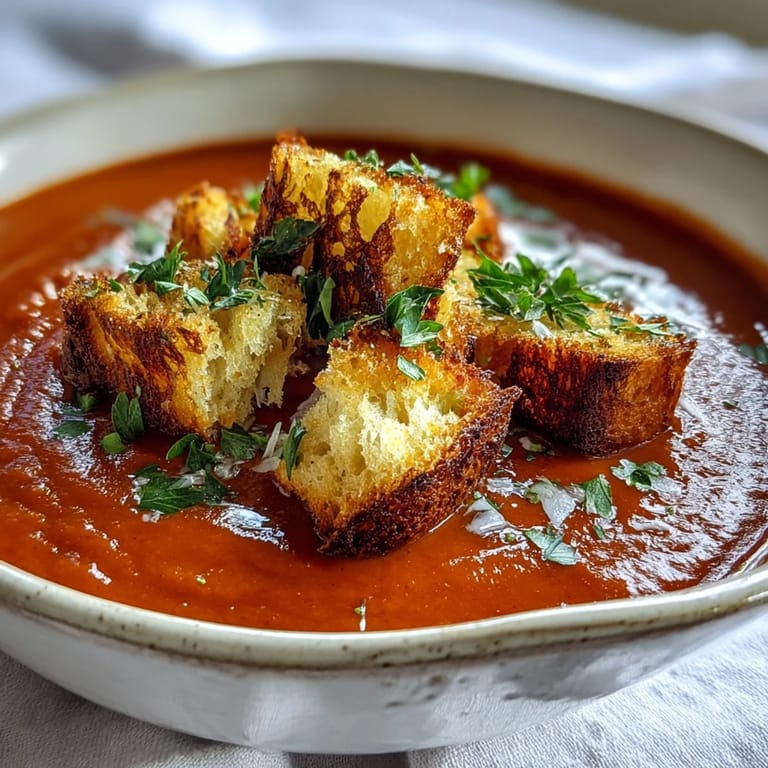
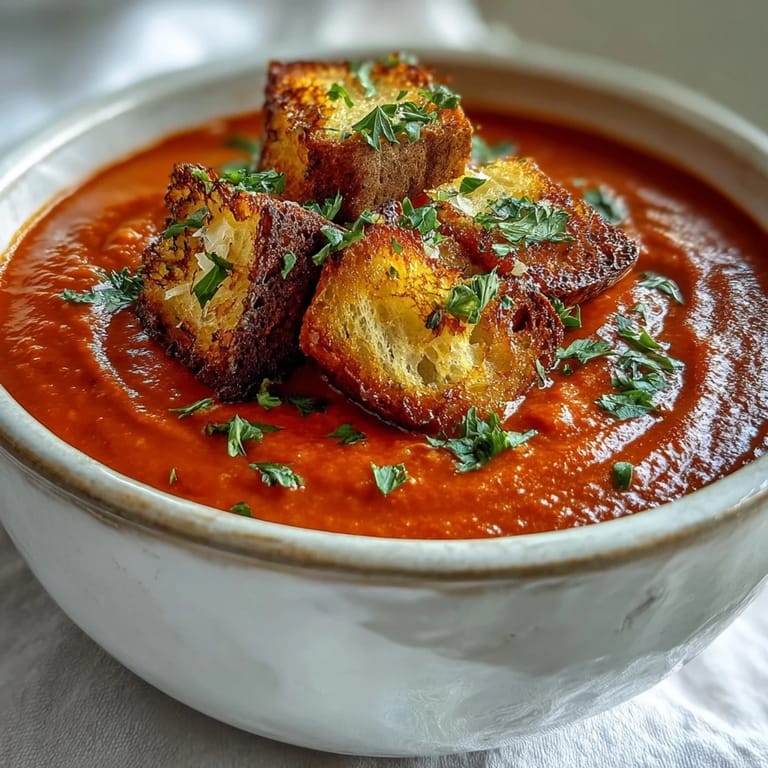
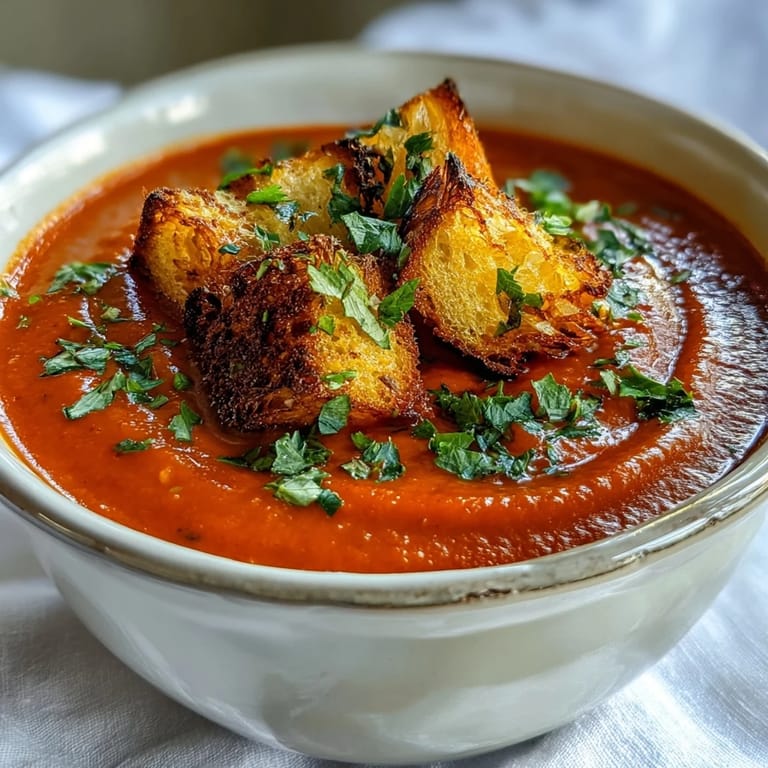
- Ladle the soup into bowls and top generously with crispy croutons, scattered fresh herbs, and a swirl of extra harissa or cream if the mood strikes. The croutons should arrive at the table still crispy, so add them just before serving for maximum textural contrast.
 Pin
Pin 
There was a moment last spring when I realized my partner had started making this soup on their own without asking me for the recipe, and I found them standing at the stove with the same focused expression I wear when I'm cooking something I love. That's when this soup stopped being my thing and became ours. It felt like the highest compliment a recipe could receive.
The Magic of Roasting Peppers
The transformation that happens when peppers roast is almost alchemical. What starts as crisp and pale becomes soft, sweet, and deeply flavored as the natural sugars concentrate and caramelize on the surface. The charred skin adds a subtle bitterness that plays beautifully against the sweetness, creating complexity that fresh peppers simply cannot match. When you peel away those blackened skins, you're left with the essence of pepper, which is exactly what makes this soup feel so complete and satisfying. I've tried shortcuts over the years, and there really isn't one that delivers the same result.
Croutons as a Textural Anchor
A silky soup without texture can feel incomplete, like listening to music without the drums. Croutons solve this problem while bringing something else valuable, a reminder that this dish respects your palate enough to offer contrasts. Day-old bread is genuinely better for this because it absorbs the seasoned oil more evenly and crisps rather than soaks. I learned this the hard way after using fresh bread that turned soggy and sad, and I never made that mistake twice. There's something about that satisfying crunch that makes people slow down and actually taste what they're eating.
Customizing Your Soup Experience
This soup is remarkably forgiving and invites experimentation rather than following rigid rules. I've added roasted garlic for deeper warmth, a splash of balsamic vinegar for complexity, and even a few leaves of fresh basil at the end because it was there and curious. The harissa is adjustable based on your heat tolerance and the specific brand you use, so start conservatively and taste as you go. My friend who's vegetarian keeps a batch in her freezer and swirls in different things each time, from pesto to sriracha to yogurt, making it feel new each time she serves it.
- Try roasting your peppers over an open flame for even more dramatic charring and smokiness if you're feeling adventurous.
- Coconut cream creates a completely different but equally beautiful vegan version that's actually lighter and more refreshing.
- Don't skip the fresh herbs at the end because they're the final brightness that prevents the soup from feeling one-dimensional.
 Pin
Pin This soup has become my answer to almost every occasion, whether someone needs comforting or impressing. It's the kind of dish that reminds you why cooking for others matters in the first place.
Recipe Questions & Answers
- → Can I make this soup ahead of time?
Absolutely. The soup actually improves after resting overnight as flavors meld together. Store in an airtight container in the refrigerator for up to 4 days. Reheat gently over medium-low heat, adding a splash of broth if needed. Prepare croutons fresh before serving to maintain their crunch.
- → What can I substitute for harissa paste?
Try sriracha mixed with smoked paprika for a similar heat profile, or use Calabrian chili paste for authentic Italian flair. For a milder version, simply increase smoked paprika to 2 teaspoons and add a pinch of cayenne. Aleppo pepper flakes also work wonderfully for a fruitier spice level.
- → Is this suitable for freezing?
Yes, freeze the soup base without cream for up to 3 months. Thaw overnight in the refrigerator, then reheat and stir in cream just before serving. Croutons don't freeze well—make fresh ones when ready to enjoy. The soup's velvety texture remains beautifully smooth after proper thawing.
- → How do I roast peppers without an oven?
Place peppers directly over a gas burner flame, turning frequently with tongs until all sides are charred black (about 5-7 minutes). Alternatively, use a kitchen torch or grill them over high heat. Once blackened, transfer to a bowl, cover tightly with plastic wrap, and let steam for 10 minutes before peeling.
- → Can I make this entirely plant-based?
Certainly. Swap heavy cream for full-fat coconut milk or cashew cream for equally rich results. Ensure your harissa brand is vegan-friendly—most are, but some contain preservatives derived from dairy. The result remains luxuriously creamy with plant-based alternatives.
- → What bread works best for croutons?
Day-old sourdough, ciabatta, or a rustic country loaf provide ideal structure and flavor. Stale bread actually produces crispier croutons as it lacks excess moisture. Avoid very soft sandwich bread as it tends to become chewy rather than crunchy. Cut into uniform cubes for even toasting.