
 Pin
Pin The first time I assembled an Italian antipasto board for a crowded dinner party, I was terrified I'd arranged it all wrong. But watching my guests lean over it, picking at different corners, laughing as their eyes darted between the golden prosciutto and the creamy Taleggio, I realized the beauty was in the abundance itself, not in some perfect order. That chaotic, hand-torn generosity is exactly what an Italian farmhouse board is supposed to feel like, and it changed how I think about feeding people.
I made this board for my sister's birthday last spring, and halfway through the evening, someone mentioned how it smelled like a little piece of Italy right there in our dining room. I'd never thought of a charcuterie board as something that could fill a space with aroma, but the rosemary, the cured meats, the sharp pecorino—it all created this warm, inviting fog that made everyone feel like they'd stepped into a trattoria. That's when I understood that presentation isn't just visual; it's sensory.
What's for Dinner Tonight? 🤔
Stop stressing. Get 10 fast recipes that actually work on busy nights.
Free. No spam. Just easy meals.
Ingredients
- Parmigiano-Reggiano, 200 g: Break it into large, uneven chunks rather than neat cubes; the jagged edges catch light and look more authentic, and you'll taste the crystalline texture better.
- Aged Pecorino, 200 g: This sharper, saltier cousin to Parmigiano deserves its own prominent pile so guests can taste both the creamy and the bold.
- Taleggio, 200 g: The creamy one—cut into thick wedges so it stays soft and spreadable, not melting into a puddle.
- Fresh mozzarella, 200 g: Tear it by hand into large pieces just before serving to preserve the delicate, milky texture and show that handmade quality.
- Prosciutto, 150 g: Loosely piled, never compressed; it should look like it's casually tumbled onto the board, not carefully arranged.
- Hot soppressata, 150 g: Slice thick and irregular; the heat in this salami cuts through the richness of the cheeses beautifully.
- Finocchiana salami, 150 g: Cut into chunks rather than thin slices so you get the fennel seeds and the meatiness all at once.
- Coppa, 100 g: Leave in large folded slices for visual drama and so it stays tender and flavorful, not dried out.
- Rustic Italian bread: A ciabatta or pane di casa with an open crumb and crispy crust is non-negotiable; it's the vehicle for every other flavor on this board.
- Extra-virgin olive oil: A light drizzle over some bread pieces adds richness and sheen without overwhelming the other flavors.
- Castelvetrano olives, 1 cup: These buttery, bright green ones are milder than other varieties and add sweetness to balance the salt.
- Oil-cured black olives, 1 cup: Deep, intense, and wrinkled; they provide the savory punch that makes you keep reaching.
- Cherry tomatoes, 2 cups: Halve them to expose their juicy centers and add a pop of color and acidity that refreshes the palate between bites of rich cheese.
- Artichoke hearts, 1 cup: Quarter them so they're substantial enough to grab and eat, and their subtle earthiness complements the meats and cheese.
- Marinated roasted red peppers, 1 cup: Slice into thick strips for chew and sweetness; they bridge the gap between the savory and the garden-fresh.
- Cornichons or Italian pickles, 1 cup: These tiny, sharp pickles are the palate cleanser everyone needs between bites, cutting through richness with a snap.
- Fresh rosemary and basil: Scatter sprigs throughout for aroma and visual life; they signal that this meal is about gathering and generosity, not precision.
- Flaky sea salt and cracked black pepper: These seasonings amplify the flavors of everything on the board and are the final touch that says someone cared.
Instructions
- Choose your stage:
- Pick a large wooden board or rustic platter at least 18 inches wide so there's room for abundance and drama. Wipe it completely dry beforehand; moisture is the enemy of good texture and turns beautiful bread soggy before anyone even takes a bite.
- Build with cheese as your anchor:
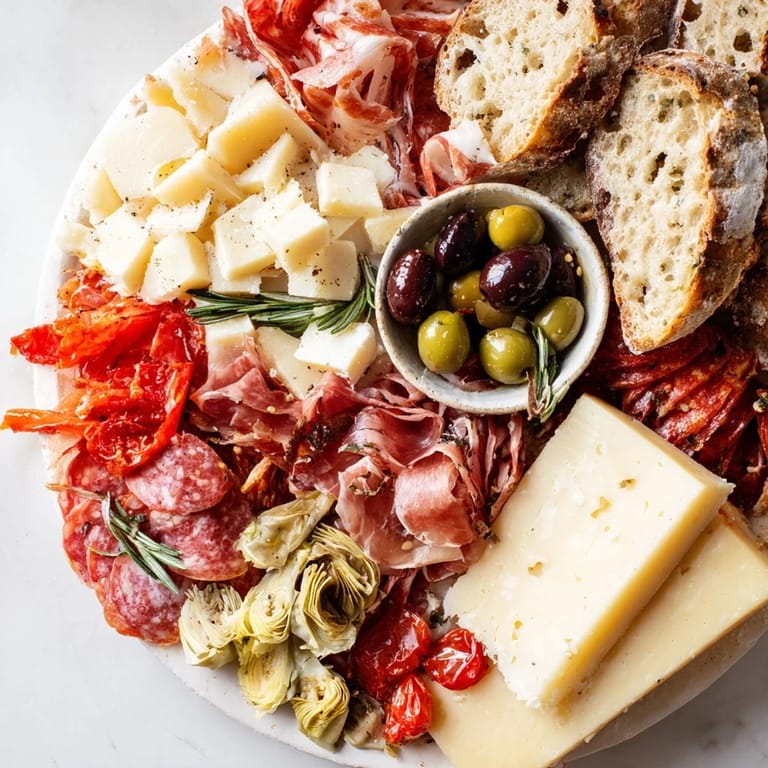
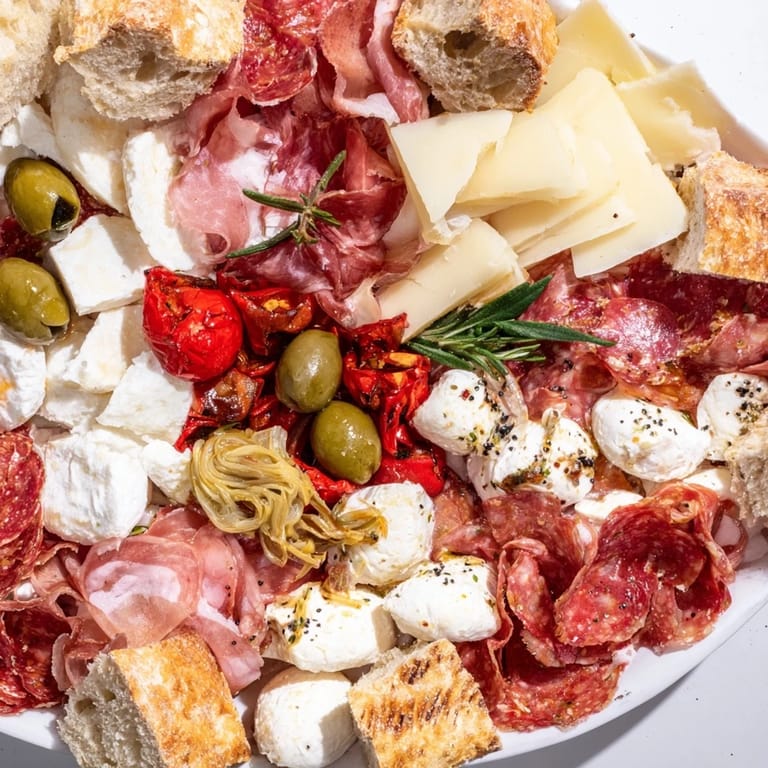
- Break each cheese into large, uneven pieces that catch the light differently. Place your Parmigiano and aged Pecorino in opposite corners as your bold statements, nestle the creamy Taleggio near the center, and scatter the hand-torn mozzarella in a generous, textured pile.
- Let your cheeses breathe:
- Set them out 30 to 45 minutes before serving so they warm to room temperature and their flavors open up fully. Cold cheese is tight and one-dimensional; warm cheese is supple, aromatic, and alive.
- Layer in the meats with loose, generous piles:
- Fold prosciutto and coppa into casual mounds that look like they tumbled onto the board, never tightly rolled. Scatter soppressata and finocchiana in thick, irregular chunks so there's height and visual interest, and position meats near but not directly on top of cheeses so flavors stay distinct.
- Tear and arrange the bread around the edges:
- Rip your loaf by hand into large, uneven pieces so the torn edges are visible and the surface is rough enough to soak up olive oil and the juices from everything else. Arrange them in overlapping piles around the board's perimeter, letting some pieces lean against cheese or meats for depth and dimension.
- Fill the gaps with color and contrast:
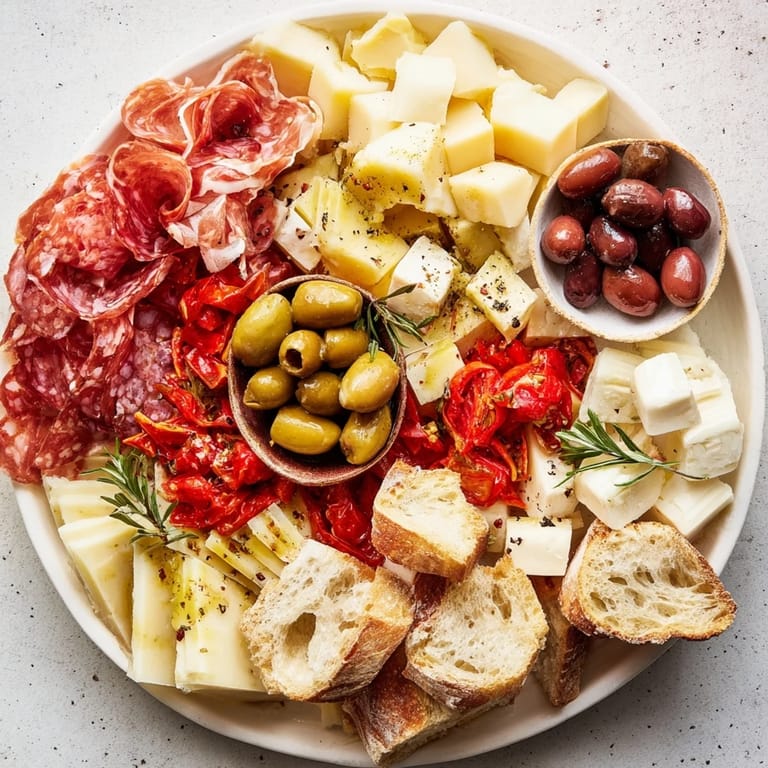
- Pile olives into small heaps (or nestle them in tiny bowls on the board itself), scatter cherry tomatoes and roasted peppers in generous, asymmetrical heaps, and tuck cornichons throughout for sharp little surprises. Season the tomatoes lightly with salt and pepper before placing them so every bite has that finishing touch.
- Finish with fragrance and visual abundance:
- Scatter fresh rosemary sprigs and basil leaves throughout the board so the whole thing smells like an Italian kitchen. Step back, adjust any gaps gently so everything is easily reached from all sides, and serve immediately while the bread is still warm and the meats are still glistening.
 Pin
Pin 
I remember standing in my kitchen watching my grandmother tear bread with her weathered hands, telling me that real food is about letting people eat with their hands and their hearts, not their forks and their manners. That's what this board became for me—an invitation to slow down, to taste each thing individually and then mix flavors together and discover something new. Food that celebrates generosity and imperfection feels like the closest thing to love I know.
The Art of Arrangement
There's a rhythm to building a board like this that has nothing to do with recipes and everything to do with trust. You're not trying to make everything look symmetrical or perfect; you're trying to make it look like an abundance of good things happened to land in one place. Odd numbers work better than even ones, clusters look more inviting than isolated pieces, and height variation keeps the eye moving and the hand reaching. The moment you stop thinking about it as a charcuterie board and start thinking about it as an edible landscape, everything falls into place naturally.
Cheese Selection and Sourcing
If you can, buy your cheeses from a proper cheese counter where someone can tell you about each one and help you pick pieces that are in good condition. The difference between grocery-store pre-sliced cheese and a wedge you break yourself is the difference between listening to a song and seeing a concert. Parmigiano-Reggiano should have visible crystals that crunch when you bite them, aged Pecorino should smell sharply of sheep and salt, and Taleggio should feel creamy but not collapsed. When you taste cheese that's been treated with respect, you can tell, and your guests will taste it too. If you want to swap cheeses, Grana Padano works where Parmigiano does, creamy Gorgonzola brings a bold funk that some guests will love, and soft ricotta appeals to those who want something milder and milky.
Building Flavor Layers and Pacing
The magic of a board like this is that you control your own flavor journey. One bite might be just bread and olive oil, the next might be a triangle of Taleggio with a slice of hot soppressata, and the one after that might be a whole conversation between sharp Pecorino and a cornichon. The accompaniments are there to reset your palate and guide you toward new combinations. Rosemary and basil aren't just garnish; they're flavor anchors that make everything taste more vibrant and remind you that you're eating something rooted in place and tradition. Small gestures—a pinch of flaky salt, a grind of pepper, even the order in which you taste things—change the entire experience.
- Taste bold cheeses and cured meats first while your palate is fresh, then pivot to milder cheeses and vegetables.
- Let acidic elements like pickles and tomatoes interrupt stretches of rich, salty foods so you don't get overwhelmed.
- Come back to bread throughout your meal as the constant that ties every other flavor together.
 Pin
Pin This board is less a recipe and more an invitation to trust your instincts and celebrate what you love. Gather good ingredients, arrange them with your hands, and let people eat the way they want to—that's all it takes.
Recipe Questions & Answers
- → What cheeses are featured on this board?
Parmigiano-Reggiano, aged Pecorino, Taleggio, and fresh mozzarella are arranged in large, rustic chunks to showcase their distinct textures and flavors.
- → How should the cured meats be prepared?
Meats like prosciutto, soppressata, finocchiona salami, and coppa are sliced or chunked thickly and piled loosely to maintain texture and visual appeal.
- → What type of bread works best here?
Rustic Italian loaves such as ciabatta or pane di casa torn by hand into large pieces offer an ideal open crumb texture to absorb flavors.
- → Are any accompaniments included?
Yes, Castelvetrano and oil-cured black olives, cherry tomatoes, artichoke hearts, roasted red peppers, cornichons, and fresh herbs add color, flavor, and contrast.
- → How should the board be arranged?
Arrange cheeses and meats in separate prominent piles with bread around the perimeter and accompaniments scattered for a natural, abundant presentation.
- → Can leftovers be stored?
Store meats and cheeses separately in airtight containers refrigerated for up to 3 days; bread is best fresh or wrapped for 1 day.