 Pin
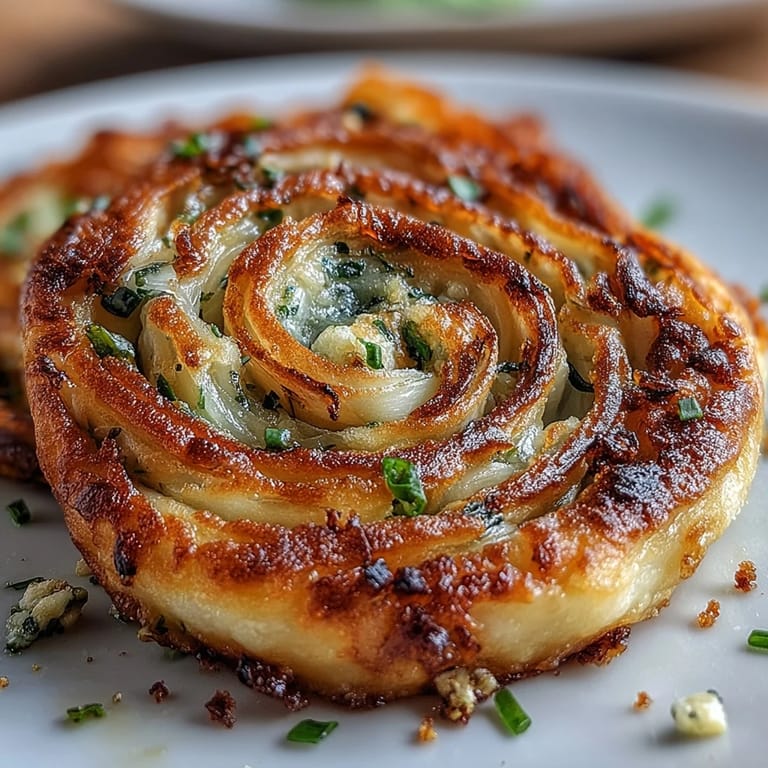
Pin The first time I tried making spring onion pancakes, my kitchen filled instantly with the crackling sound of dough frying and the sharp, vivid aroma of fresh scallions. I was feeling a bit restless that rainy afternoon, craving something both comforting and a little bit special. As I rolled the dough thin, I realized the rhythm of the recipe was almost meditative—stretch, sprinkle, curl, flatten—each step slowing down the day. The sizzle in the pan built my anticipation, making the final, golden results well worth a little extra effort. Watching the pancakes puff and brown, I knew I'd stumbled into something beyond your average snack.
Last spring, I made a double batch for friends after a late-night movie marathon, and every last triangle vanished faster than I could plate them. At one point, I caught someone dipping their pancake straight into soy sauce, eyes closed and grinning—there was no higher compliment. Standing around the stove, we passed the first pancake, still warm, like it was treasure. I’ve tried so many ‘easy’ snacks, but none bring people into the kitchen quite like these. There’s something almost magnetic about their crackling crust and savory layers.
What's for Dinner Tonight? 🤔
Stop stressing. Get 10 fast recipes that actually work on busy nights.
Free. No spam. Just easy meals.
Ingredients
- All-purpose flour: Get a good, fine flour for a tender yet sturdy dough—it’s forgiving, but don’t skip the sifting to avoid lumps.
- Boiling water: Pour it in slowly for a dough that’s wonderfully pliable, turning your shaggy mix into silky smoothness.
- Cold water: Adds just enough extra moisture and temperature contrast to perfect the final texture.
- Salt: Don’t underestimate this—well-seasoned dough lifts every bite, and a quick sprinkle on the filling brings out the onion’s zing.
- Spring onions: Both the greens and whites go in, chopped fine for bursts of flavor; fresher onions mean sweeter, milder pancakes.
- White pepper: Optional, but just a hint gives a gentle background warmth (black pepper works if you don’t have white).
- Vegetable oil: Essential for those crisp, shattering layers—generous brushing inside is the difference between chewy and flaky.
Instructions
- Make the dough:
- In a large bowl, mix the flour and salt, then carefully stir in boiling water until the mixture looks rough and shaggy. Add the cold water and knead until springy and smooth, about five minutes, then cover and let it rest under a damp cloth for twenty minutes.
- Divide and shape:
- Cut the rested dough into four equal pieces and roll each into a smooth ball—warm hands help here.
- Roll and fill:
- Working with one ball at a time, roll on a lightly floured surface into a thin rectangle, brush lightly with oil, sprinkle with a little salt and a quarter of the spring onions, and dust with white pepper if you’re using it.
- Roll up and coil:
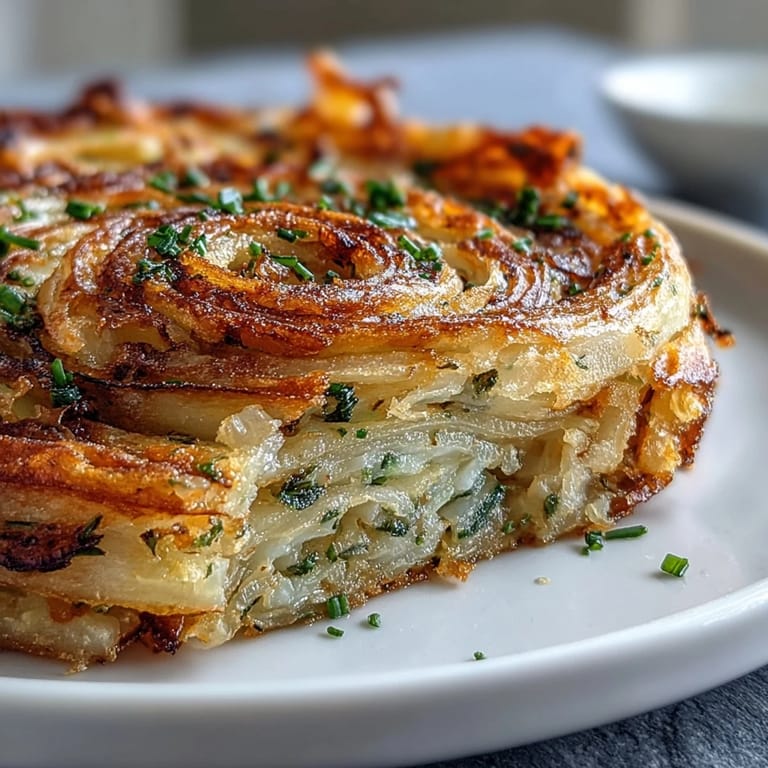
- Carefully roll up the sheet into a fat log, then twist it gently into a spiral, tucking the tip underneath for a neat finish.
- Flatten to pancakes:
- Use your palms (a favorite kitchen moment) to flatten each spiral into a 6-inch disc—gently, so the onion stays inside.
- Pan fry:
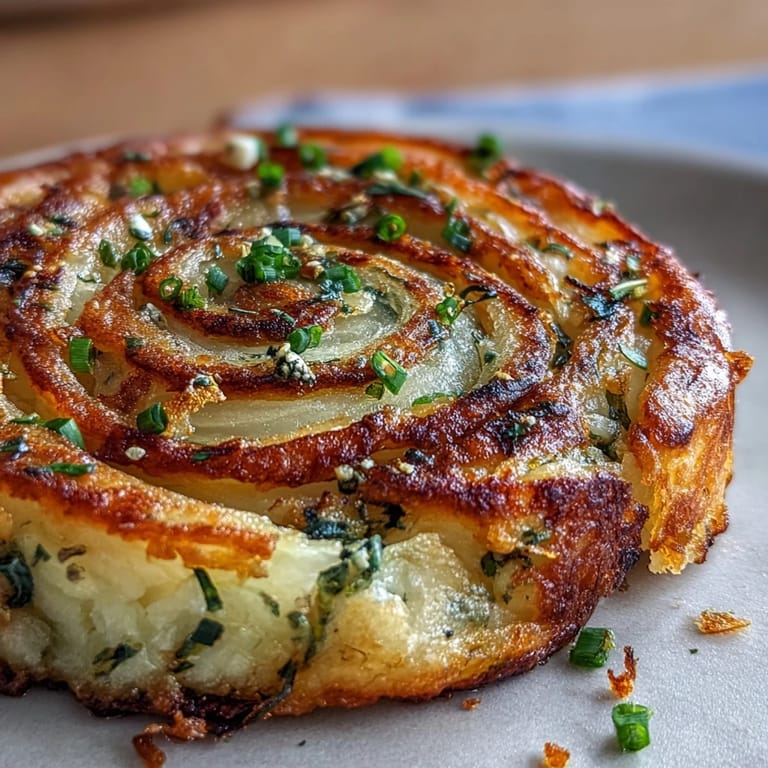
- Heat oil in your skillet until shimmering, then fry each pancake for two to three minutes per side, listening for that telltale sizzle and watching for the golden crust to develop.
- Serve hot:
- Transfer the pancakes to a paper towel to blot, then slice into wedges and hand out while they’re still fresh and warm.
 Pin
Pin 
There’s a quiet kind of joy in tearing into a pancake at the table and finding vivid green scallions swirling through each bite. One quiet afternoon, my sister dropped by just as I finished frying a batch, and we ate them standing at the counter, swapping stories as crumbs collected on the cutting board. It’s these in-between moments, more than the recipe itself, that make these pancakes a keeper. Even now, the scent of frying spring onions can make us both laugh about that impromptu snack. Sometimes, sharing food really can say everything you need.
How to Slice and Serve Like a Pro
I used to just hack the pancakes into pieces, but a sharp knife and a confident, single motion makes for neat triangles every time. Let them cool for just a minute before cutting—a piping-hot pancake can squish instead of slice. For parties, arrange on a platter with a small bowl of dipping sauce in the center for a street food effect. Leftovers (if you’re ever lucky enough) crisp up beautifully in a dry skillet the next day. Sharing is recommended but not required.
When to Improvise (and When Not to)
Once, I got bold and tried tossing in sesame seeds and a little garlic, and the results were a hit; just be careful not to overload the filling or the coils won’t seal. If you’re missing white pepper, black will do. On a whim, I swapped half the flour for whole wheat—good, but the classic white is just unbeatable for flake factor. The recipe’s forgiving, but too many substitutions can dull the central magic of dough and alliums. Find your favorite twist, then stick with it.
Making Pancakes With Friends or Family
The real fun starts when the kitchen turns into a pancake production line. Put on music, hand out rolling pins, and let everyone tackle their own dough spiral—mishaps are part of the charm, and rogue flour clouds are practically mandatory. Even skeptical cooks end up grinning once they taste the golden result.
- Prep the filling ahead so assembling goes quickly.
- Fry pancakes one at a time for best results, even if it takes a little longer.
- Always taste the first pancake with a pinch of salt—quality control, chef’s treat.
 Pin
Pin These pancakes never fail to draw a crowd, whether it’s a lazy brunch or a midnight snack session. Enjoy sharing every layer and crumb—sometimes, the simplest ingredients really do make the best memories.
Recipe Questions & Answers
- → How do I get the pancakes extra flaky?
Brush each rolled layer generously with oil before rolling and coiling. This creates distinct layers that separate during frying and yield a flaky texture.
- → What is the right dough consistency?
The dough should be smooth and slightly tacky but not sticky. Knead until elastic, then cover and rest to relax gluten for easier rolling.
- → Can I prepare them ahead of time?
Yes. After shaping, stack uncooked pancakes between parchment and refrigerate for a few hours. Bring to room temperature before frying, or freeze flattened rounds and cook from frozen with a bit more oil and time.
- → How do I keep them crispy after frying?
Drain on a wire rack or paper towels briefly, but avoid covering tightly. Serve soon after frying; a hot oven on low will keep them warm and slightly crisp if needed.
- → Can I change the filling flavors?
Yes. Mix in sesame seeds, minced garlic, or a pinch of white pepper for variation. Finely chop the scallions so they distribute evenly through the layers.
- → What oil is best for frying?
Use a neutral oil with a high smoke point, such as vegetable or canola. A light sesame oil added near the end can enhance aroma but avoid using it as the primary frying oil.