
 Pin
Pin I learned to love this platter the hard way—at a crowded potluck where I showed up with a predictable salad while someone else commanded the kitchen counter with a riot of colored peppers and three perfect dips. The energy around that board was electric, and I realized that sometimes the most memorable appetizers aren't complicated; they're just honest food arranged with intention. Ever since, I've become obsessed with recreating that moment, except this time with my own spin and the confidence that fresh peppers and homemade dips could make people linger around the platter instead of rushing past.
The first time I assembled this for my sister's birthday gathering, I arranged the peppers by color in circles, and watching guests build their own pepper-and-dip combinations felt like watching artists at a palette. One friend kept coming back to the avocado cream and kept saying things like "I didn't know I needed this in my life," which made me realize that simple, honest ingredients arranged with care genuinely move people. That afternoon taught me that appetizers are about creating moments, not just feeding appetites.
What's for Dinner Tonight? 🤔
Stop stressing. Get 10 fast recipes that actually work on busy nights.
Free. No spam. Just easy meals.
Ingredients
- Fresno peppers (8 red): These are the sweet spot between jalapeños and serrano peppers—more flavorful than bell peppers but not aggressively hot, and their thin walls make them perfect for stuffing with dips.
- Orange mini sweet peppers (8): Naturally sweeter and milder, these add visual pop and give heat-sensitive guests an approachable entry point.
- Yellow Hungarian wax peppers (8): Slightly tangy and waxy in texture, they're the bridge between sweet and spicy and hold their shape beautifully.
- Red jalapeños (4) and yellow chili peppers (4): These bring assertive heat and sharp flavor, letting adventurous eaters dial up the intensity.
- Chickpeas: The backbone of hummus; canned and rinsed chickpeas work just as well as dried if you don't have the patience for soaking and cooking.
- Roasted red bell peppers (1/2 cup): Jarred roasted peppers save time and deliver that smoky, sweet depth without a trip to the stovetop.
- Tahini (2 tablespoons): This sesame paste creates body and richness in hummus; it's worth seeking out the good stuff because it matters.
- Greek yogurt (3/4 cup full fat): The full-fat version makes a difference in texture and taste—don't reach for the low-fat version here.
- Ripe mango (1/2): Ripe is non-negotiable; an underripe mango will taste mealy and bitter instead of luminous and sweet.
- Ripe avocado (1): Use it immediately after mashing to prevent browning, and taste the avocado first to ensure it's buttery and not overripe.
- Fresh lime and cilantro: These are the unsung heroes that elevate everything from good to crave-worthy.
Instructions
- Wash and dry your peppers:
- Rinse thoroughly under cold water and pat completely dry with paper towels—any lingering moisture will weep onto your platter and make dips slide around. This step takes thirty seconds and changes everything.
- Prepare the peppers for scooping:
- Trim stems with a sharp paring knife, then slice each pepper in half lengthwise, creating natural boats. If you want gentler heat, carefully scoop out seeds and the white membrane with a small spoon; for more fire, leave seeds intact. Wear gloves to protect your hands from capsaicin oil, which lingers for hours.
- Arrange by color in a pattern:
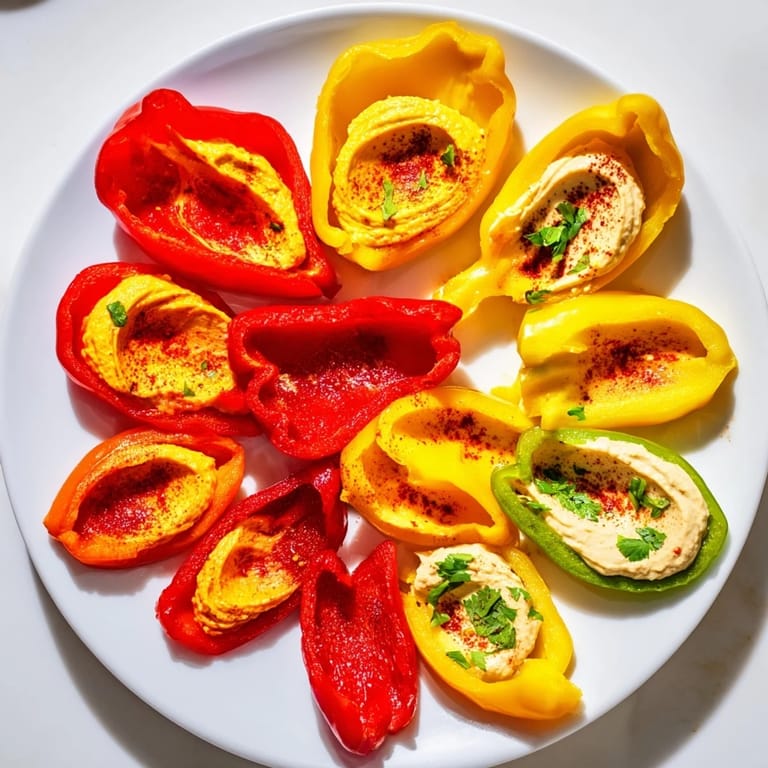
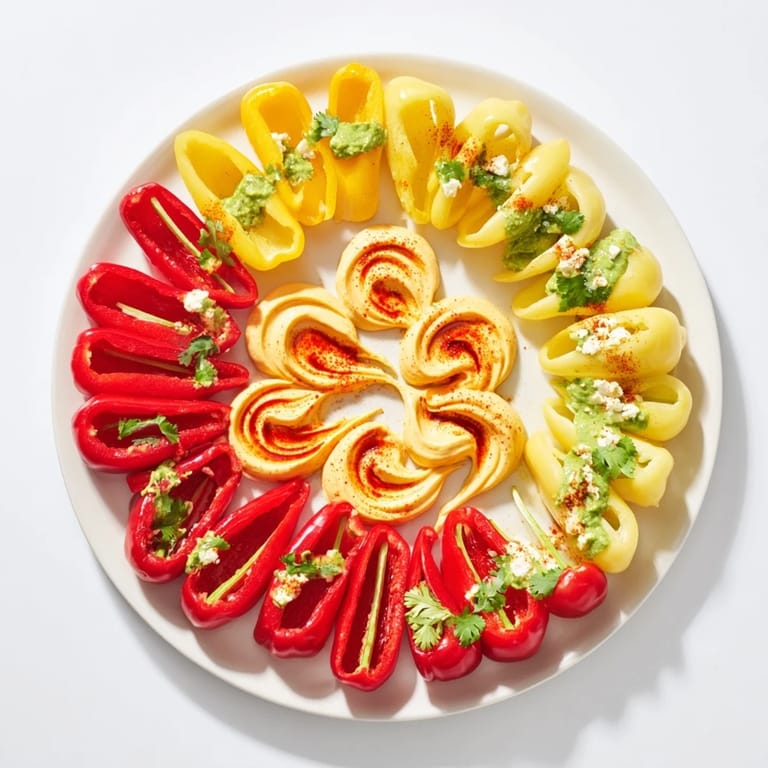
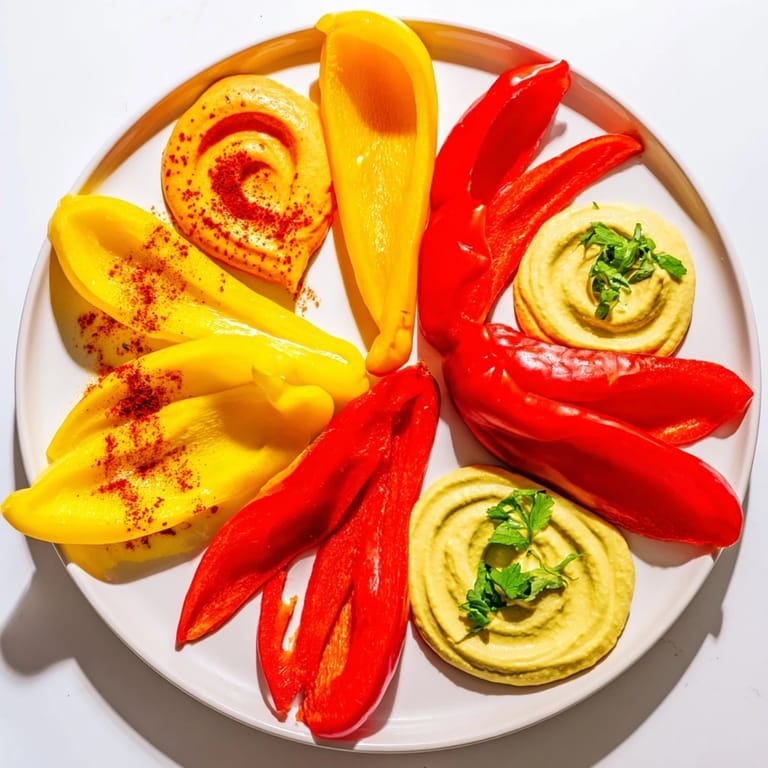
- Place pepper halves skin-side down on a large platter, grouping by color in concentric circles, rays, or stripes—whatever pattern calls to you. Alternate pepper types as you go so the textures and flavors surprise the palate.
- Blend the roasted red pepper hummus:
- Combine chickpeas, roasted red pepper, tahini, olive oil, lemon juice, smoked paprika, salt, and a small garlic clove in a food processor. Pulse until completely creamy and silky (about 1–2 minutes), scraping down the sides as needed. Over-processing turns hummus gluey, so stop while it's still spreadable.
- Make the mango-yogurt dip:
- Blend Greek yogurt, diced mango, lime juice, chili powder, and salt in a blender or mini processor until completely smooth with no chunks. Taste and add more lime for brightness or a splash of water if it's too thick.
- Combine the avocado-cilantro cream:
- Scoop avocado into a bowl, add sour cream, lime juice, cilantro, cumin, and salt, then mash with a fork until smooth and flecked with green. Make this last so it doesn't brown, and serve immediately.
- Nestle dips and garnish:
- Arrange dip bowls among the peppers, using them as visual dividers between color groups. Scatter chopped cilantro and crumbled cheese across the platter, tuck in lime wedges, and serve right away while peppers are crisp.
 Pin
Pin 
There's something almost spiritual about watching people build their own appetite with this platter—the way they gravitate to different peppers based on their heat tolerance, how they linger over which dip to pair with what. A friend once told me that my avocado-cilantro cream reminded her of summers in Mexico, and suddenly an appetizer platter became a time machine. Moments like that remind me that food is never just fuel; it's permission to pause and connect.
Choosing Your Peppers Wisely
The beauty of this platter is that you're not locked into the exact peppers I've listed—you can follow your heat tolerance and what's fresh at your market. Fresno peppers deliver a fruity kick without overwhelming the palate, while Hungarian wax peppers offer a subtle tang that catches you by surprise. If your crowd skews toward heat-averse, lean into sweet mini peppers and orange bells; if you want to test who the real spice lovers are, add a handful of thin serrano peppers to the mix. The color gradient matters more than the exact variety, so shop for what looks most vibrant and ask your produce person which peppers are mild versus fiery.
Dips That Do the Heavy Lifting
These three dips work together like a flavor triptych: the roasted red pepper hummus brings smokiness and earthy depth, the mango-yogurt dip adds tropical brightness and cooling tang, and the avocado-cilantro cream is pure richness with herbaceous snap. I've experimented with dozens of dip combinations, but these three stayed because they don't compete—they complement. Each one tastes completely different when you eat it plain versus paired with a mild pepper or a fiery jalapeño, which keeps guests coming back for more discoveries. You can absolutely make these ahead (the hummus and mango dip will keep for two days in the fridge), but the avocado cream must be made fresh or it loses its silky texture and color.
Presentation That Steals the Show
The secret to a platter that people actually want to photograph and eat is visual tension—color, texture, and repetition balanced just right. Arrange peppers in clear color groups (reds next to oranges next to yellows) so the eye can travel without confusion, then use the dips as anchors and dividers. Scatter cilantro and cheese across the whole thing for texture, and make sure lime wedges are visible as a hint that there's brightness in this dish. The peppers should look glistening and fresh, not tired or sweating.
- Arrange peppers no more than thirty minutes before serving so they stay crisp and don't absorb moisture from the platter.
- Use a large white or neutral platter so colors really pop; dark surfaces swallow the visual impact.
- Taste each dip one more time before guests arrive—cold temperatures mute flavors, so they should taste slightly over-seasoned at room temperature.
 Pin
Pin This platter has taught me that hospitality doesn't require hours of labor or complicated recipes—just fresh ingredients and intention. Make it, watch it disappear, and feel the quiet pride of knowing you created something people actually wanted to linger over.
Recipe Questions & Answers
- → How do I reduce the heat of the chili peppers?
Carefully remove seeds and membranes from the peppers to minimize heat. Wearing gloves is recommended to avoid irritation.
- → Can I prepare this platter in advance?
Peppers can be trimmed and sliced a few hours ahead, but arrange the platter just before serving for best freshness and crispness.
- → What are good substitutions for the dips?
Try beet tzatziki or spicy salsa for more color and variety. Greek yogurt can be replaced with dairy-free alternatives.
- → How should leftover dips be stored?
Store dips in airtight containers in the refrigerator for up to three days. Stir well before serving again.
- → Are there any allergy concerns with the ingredients?
Yes, the hummus contains sesame (tahini) and dairy is present in the yogurt, sour cream, and cheese. Chickpeas may affect those with legume allergies.