 Pin
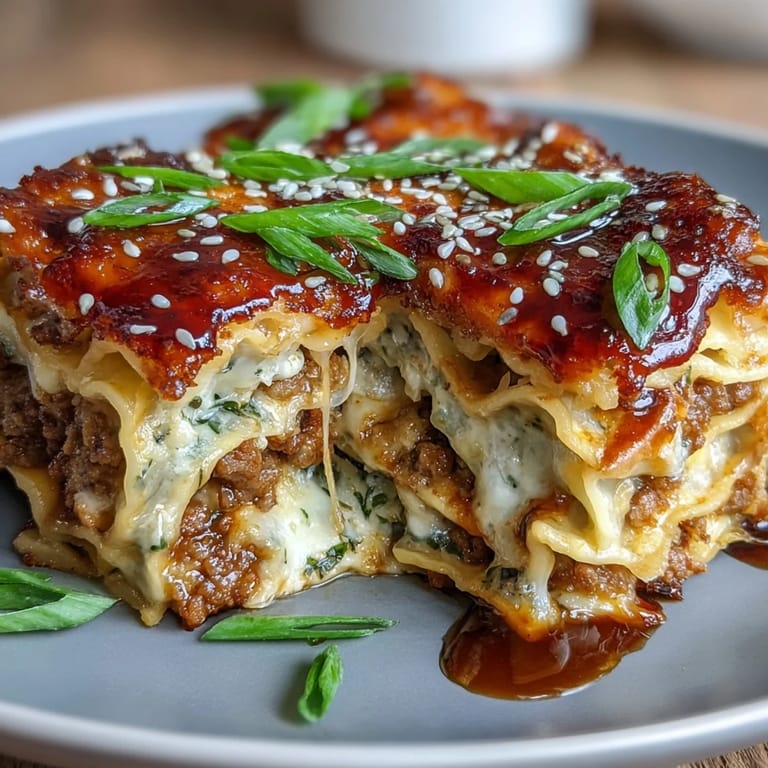
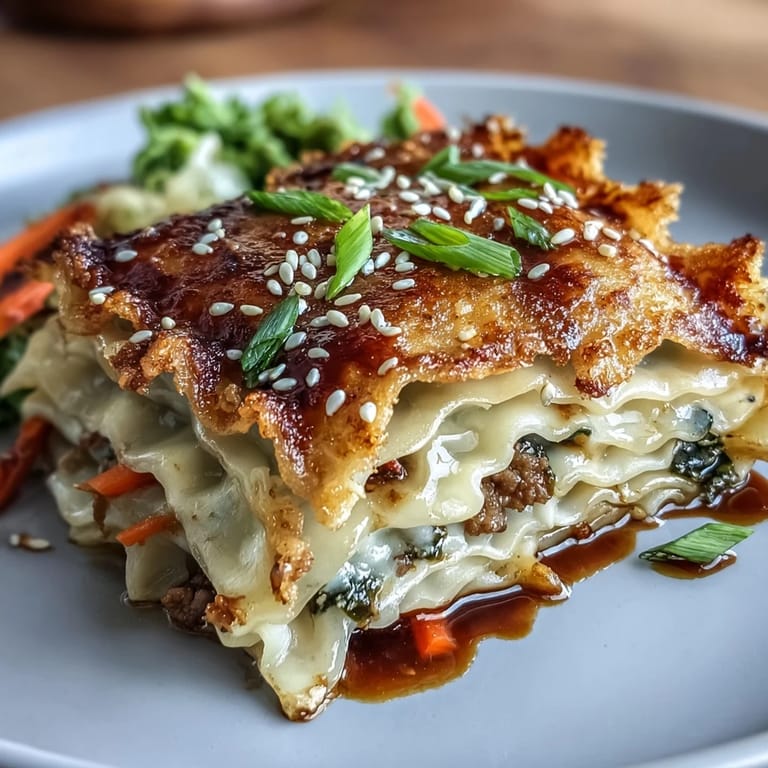
Pin My coworker brought leftovers to the office one Tuesday that smelled so good, everyone kept wandering over to ask what she was eating. When she finally revealed it was dumpling wrappers layered like lasagna with ginger sauce, I thought she was joking. But one bite later, I was in my kitchen that same evening, hunting through my pantry for wonton wrappers and wondering why no one had ever told me fusion dishes could be this simple and this delicious.
I made this for my sister's potluck last spring, nervous about bringing something so unconventional to a crowd that usually plays it safe. She tasted it during setup and immediately moved it to the center of the table, shooting me a look that said everything. By dessert, there was barely a crumb left, and three people asked for the recipe before they'd even left.
What's for Dinner Tonight? 🤔
Stop stressing. Get 10 fast recipes that actually work on busy nights.
Free. No spam. Just easy meals.
Ingredients
- Dumpling or wonton wrappers (24): These are your secret weapon, far more delicate and flavorful than regular lasagna noodles, and they soften perfectly without needing to cook separately.
- Ground pork or chicken (500 g): Choose pork for a richer, more authentic flavor, though chicken works beautifully if you prefer something lighter.
- Vegetable oil (1 tablespoon): Keep your heat at medium so the aromatics toast gently rather than burn and turn bitter.
- Onion, garlic, and ginger: These three build the flavor foundation, and taking time to mince them finely means they distribute evenly through every bite.
- Fresh carrot, red bell pepper, and napa cabbage: The vegetables add color and texture without overwhelming the dish, so don't skip the julienne or shred them too coarsely.
- Soy sauce, hoisin, rice vinegar, and sesame oil: This flavor quartet is what makes the filling taste unmistakably Asian, so use quality versions if you can find them.
- Mozzarella and cheddar cheeses (300 g total): The blend creates both stretchiness and a slightly sharp finish that complements the soy notes perfectly.
- Spring onions and sesame seeds: These are finishing touches that sound small but add brightness and visual appeal that make the dish feel intentional.
- Soy ginger sauce ingredients: Low sodium soy sauce, rice vinegar, honey, fresh ginger, garlic, optional chili flakes, sesame oil, and a cornstarch slurry all come together to create a glaze that's tangy, slightly sweet, and deeply aromatic.
Instructions
- Preheat and prep your workspace:
- Set your oven to 180°C (350°F) and get your 9x13 inch baking dish ready. Having everything organized before you start cooking makes the layering process feel less frantic.
- Build the flavor base:
- Heat oil in a large skillet over medium heat and sauté your chopped onion, minced garlic, and grated ginger for about 2 minutes until they're fragrant and just starting to soften. You'll know it's right when the smell fills your kitchen and the mixture looks slightly golden at the edges.
- Brown the meat:
- Add your ground pork or chicken and cook, breaking it apart with a wooden spoon, until it's completely cooked through with no pink remaining. This usually takes 5 to 7 minutes depending on how finely ground your meat is.
- Add the vegetables:
- Toss in your julienned carrot, sliced bell pepper, and shredded napa cabbage, stirring frequently for 3 to 4 minutes until they're just tender but still have a little bite. Don't let them go completely soft or they'll disappear into the sauce.
- Season the filling:
- Pour in the soy sauce, hoisin, rice vinegar, and sesame oil, stirring everything together and cooking for another 2 minutes. Taste it here and adjust if needed—this is your moment to make sure the flavors are balanced to your preference.
- Make the soy ginger sauce:
- In a separate saucepan, combine the soy sauce, rice vinegar, honey, fresh ginger, minced garlic, optional chili flakes, and sesame oil. Bring it to a gentle simmer and let it warm through for about a minute.
- Thicken the sauce:
- Mix your cornstarch with cold water to create a slurry, then whisk it into the simmering sauce and cook for 1 to 2 minutes until the sauce coats the back of a spoon. It should look glossy and slightly thickened but still pourable.
- Build your first layer:
- Spread a thin layer of soy ginger sauce across the bottom of your greased baking dish. Arrange 8 dumpling wrappers to cover the base in a single layer, overlapping them slightly so they stay together as they bake.
- Layer the filling:
- Spread one-third of your meat-vegetable mixture over the wrappers, then sprinkle one-third of the mixed cheeses over that, and drizzle with more sauce. This is the moment the dish really starts looking like something special.
- Repeat and finish:
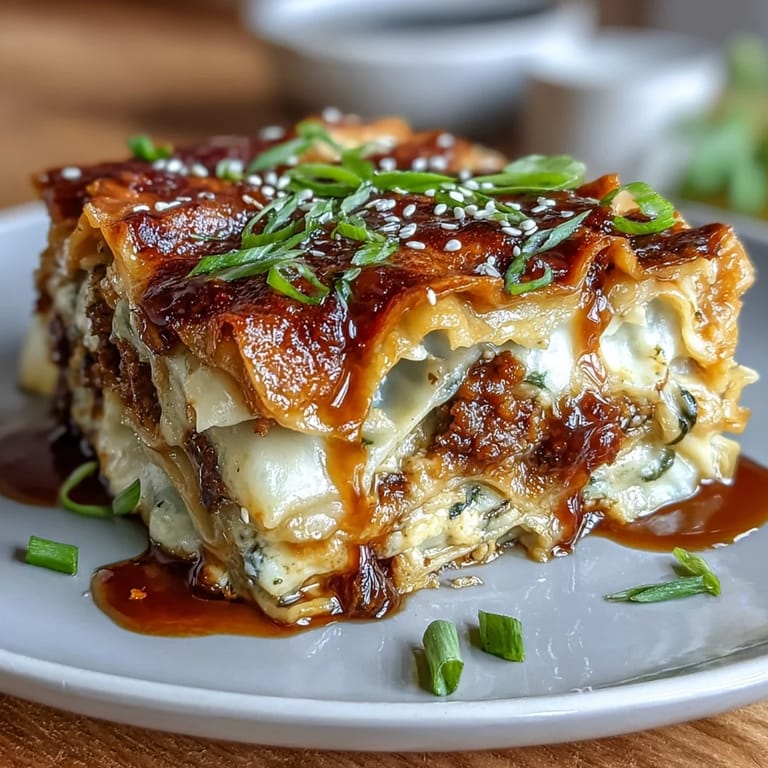
- Create two more complete layers using the same pattern: wrappers, filling, cheese, sauce. End with the final layer of cheese and sauce on top so it gets golden and slightly crispy.
- Bake covered, then uncovered:
- Cover your baking dish with foil and bake for 25 minutes so the wrappers steam and soften without the cheese browning too quickly. Remove the foil and bake for another 10 to 15 minutes until the cheese is golden, bubbling at the edges, and the kitchen smells absolutely incredible.
- Rest and garnish:
- Let the lasagna sit for 10 minutes before serving so the layers set slightly and are easier to portion. Scatter spring onions and sesame seeds across the top right before bringing it to the table.
 Pin
Pin 
The best moment came when my nephew, who usually pushes vegetables to the side of his plate, asked for seconds and then asked if he could help me make it again next time. Something about wrapping it in cheese and sauce made the vegetables disappear into something he actually wanted to eat.
Why This Fusion Works
Asian fusion isn't just about mixing two cuisines randomly—it's about finding the points where they naturally fit together. Dumpling wrappers and lasagna both create layers and comfort, but dumpling wrappers bring a delicate, slightly chewy texture that feels special in a way regular pasta doesn't. The ginger-soy sauce adds brightness and heat that cuts through the richness of the cheese, so nothing feels heavy or one-note. It's the kind of dish that makes people think you've spent hours cooking when really you've just thought about the dish differently.
Customizing Your Version
The beauty of this recipe is how flexible it is once you understand the foundation. If you're cooking for vegetarians, mushrooms or crumbled tofu work surprisingly well—they absorb the sauce flavors just like the meat does. Add spinach, bok choy, or snap peas if you want extra greens without changing the basic structure. You can even adjust the sauce heat by adding more or less chili flakes, or swap the honey for a touch of sriracha if you like things spicier. I've made this with three different cheese combinations depending on what was in my fridge, and honestly, it's been delicious every time.
Pairing and Serving
I used to serve this with whatever side seemed convenient, but I've learned that the right pairing really does make a difference. A crisp white wine like Riesling cuts through the richness of the cheese while complementing the ginger notes, or green tea if you want something nonalcoholic that echoes the Asian flavors. A simple cucumber salad on the side adds freshness and helps balance the heavier elements of the baked dish. Leftovers keep beautifully in the fridge for up to 3 days and actually taste better the next day once all the flavors have had time to meld together.
- Pair with a crisp Riesling or green tea for the best balance of flavors.
- Serve alongside a refreshing cucumber salad to cut through the richness of the cheese.
- Store leftovers refrigerated for up to 3 days and enjoy them even more as flavors develop.
 Pin
Pin This dish has become something I make when I want to feel creative in the kitchen but don't want stress. It's proof that the best recipes often come from someone taking a chance on an idea that seems a little wild.
Recipe Questions & Answers
- → What wrappers work best for layering?
Dumpling or wonton wrappers hold layers well and develop a tender texture when baked, making them ideal for this dish.
- → Can I substitute ground pork with other meats?
Yes, ground chicken or turkey can be used for a lighter option while maintaining moistness and flavor.
- → How is the soy ginger sauce thickened?
The sauce is thickened by whisking in a cornstarch slurry and simmering until it reaches a glossy consistency.
- → What vegetables complement the filling?
Julienned carrots, red bell pepper, napa cabbage, and aromatic onions add a crisp, fresh balance to the rich layers.
- → How long should the dish rest after baking?
Allowing it to rest for about 10 minutes helps the layers set and improves slicing.
- → Are there vegetarian alternatives for this dish?
Finely chopped mushrooms or tofu can replace meat, maintaining texture and flavor with the same seasoning.