
 Pin
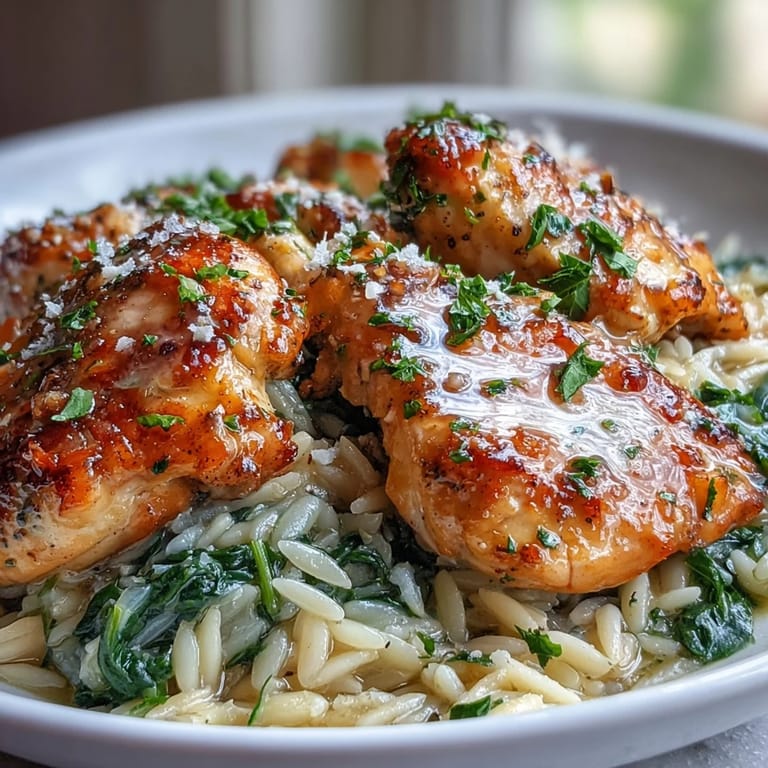
Pin There's something about the smell of garlic and lemon hitting hot oil that makes you pause mid-chop and just breathe it in. I discovered this one-pot wonder on a Tuesday evening when I had exactly forty minutes before friends arrived and absolutely nothing in my plan. The chicken thighs were already thawed, a lemon sat neglected in the crisper drawer, and somehow it all came together in one beautiful pot that didn't require a sink full of dishes afterward. That night, watching everyone twirl orzo onto their spoons and ask for seconds, I realized the best meals aren't the complicated ones—they're the ones that taste like someone actually cared enough to make it simple.
I made this for my sister during one of those gray afternoons when she needed comfort food but didn't want anything heavy. We sat at the kitchen counter while it simmered, and she told me about a work situation that had been bothering her. By the time the spinach wilted into the broth, she was laughing again, and we both agreed that sometimes the best therapy involves a warm bowl and someone who bothers to cook.
What's for Dinner Tonight? 🤔
Stop stressing. Get 10 fast recipes that actually work on busy nights.
Free. No spam. Just easy meals.
Ingredients
- Boneless, skinless chicken thighs or breasts (1.5 lbs): Thighs stay juicier than breasts, but either works—just don't skip the searing step because it builds flavor right into the broth.
- Kosher salt and freshly ground black pepper: Toast the pepper if you have time; it brings out a warmth you won't get from the pre-ground stuff.
- Olive oil (2 tbsp): Use good oil here because it flavors the entire dish—don't reach for the cheapest bottle.
- Yellow onion and garlic (1 medium and 4 cloves): Mince them fine; large chunks won't soften properly in the time we have.
- Lemon zest and juice: Zest before juicing to make life easier, and always taste as you go because lemon intensity varies wildly between fruit.
- Orzo pasta (1.5 cups): Don't use regular long pasta here—orzo's small size means it cooks evenly in the broth and tastes like it's swimming in flavor.
- Low-sodium chicken broth (3 cups): The quality matters more than you'd think; taste yours beforehand and adjust seasoning accordingly.
- Dry white wine (½ cup, optional): It deglazes the pan beautifully and adds depth, but more broth works just fine if you skip it.
- Fresh baby spinach (4 cups): It wilts down dramatically, so don't panic at how much it looks before cooking—you need all of it.
- Parmesan cheese and fresh parsley: Grate Parmesan fresh if possible; the pre-grated stuff has anti-caking agents that change the texture.
Instructions
- Season your chicken:
- Pat the chicken pieces dry with paper towels, then season generously with salt and pepper—this is your foundation for flavor, so don't be shy.
- Sear the chicken:
- Heat olive oil in a large deep skillet over medium-high heat until it shimmers, then add chicken and let it sit undisturbed for two minutes before moving it around. You're looking for a golden crust that indicates the proteins are caramelizing and building that savory depth.
- Cook the aromatics:
- Remove the chicken to a plate and add the chopped onion to the same pot, scraping up any stuck bits—those are pure flavor. Once soft, add the minced garlic and lemon zest, stirring constantly for about a minute until your kitchen smells incredible.
- Toast the orzo:
- Add the dry orzo directly to the pot and stir frequently for one to two minutes, letting each piece turn slightly golden. This step is small but mighty; it prevents the pasta from absorbing too much liquid too quickly and tastes noticeably better than skipping it.
- Deglaze and build broth:
- Pour in the white wine if using, scraping the bottom with your spoon to release those browned bits—the deglazing action pulls all that caramelized flavor into the liquid. Let it bubble for a minute, then add the broth and lemon juice.
- Simmer everything together:
- Bring to a gentle boil, then return the chicken and any juices to the pot. Reduce the heat to medium-low, cover loosely, and let it simmer for about ten minutes, stirring every couple of minutes to prevent sticking.
- Finish with spinach:
- Add the spinach and stir until it's completely wilted and integrated, about two to three minutes. The orzo should be tender but still have a slight bite, and the liquid should be mostly absorbed or absorbed.
- Season and serve:
- Remove from heat, stir in the Parmesan and fresh parsley, then taste and adjust with more salt, pepper, or lemon juice depending on what your palate tells you. Serve warm with extra Parmesan scattered on top and lemon wedges on the side for squeezing.
 Pin
Pin 
There's a moment right when the spinach hits the pot and turns that brilliant green where you realize you're not just cooking dinner—you're creating something people will remember. My nephew, who normally picks at vegetables, asked for extra spinach on his bowl, and I didn't correct him.
Why This Becomes a Regular Rotation
After making this three times in two weeks, I started understanding why it's the recipe I keep coming back to. It's not fancy enough to intimidate you, but it's interesting enough that it doesn't feel boring on a Thursday night. The one-pot aspect means cleanup is genuinely minimal, which matters more than any food blog admits when you're tired and just want dinner done.
Flexibility Without Losing Yourself
What makes this recipe special is that you can adapt it without feeling like you're cheating. Kale works beautifully instead of spinach if that's what you grabbed, and honestly, arugula adds a peppery note that's kind of lovely. You can use rotisserie chicken to cut the cooking time in half—just add it when the spinach goes in instead of searing raw chicken at the beginning, and nobody will know the difference except you.
Storage and Making It Again
This dish keeps for three days in the refrigerator and actually tastes better the next day because the flavors have time to mingle and deepen. When reheating, add a splash of broth or water because the orzo continues absorbing liquid even when chilled, and stirring it in gently prevents the pasta from breaking apart into mush.
- For extra creaminess on a cold evening, stir in a couple tablespoons of heavy cream right before serving—it doesn't change the character of the dish, just makes it feel more luxurious.
- Leftover portions freeze well for up to two months if you store them in an airtight container, though the spinach loses some vibrancy when thawed.
- If you're doubling the recipe for meal prep, use a larger pot and extend the simmering time slightly so everything cooks evenly.
 Pin
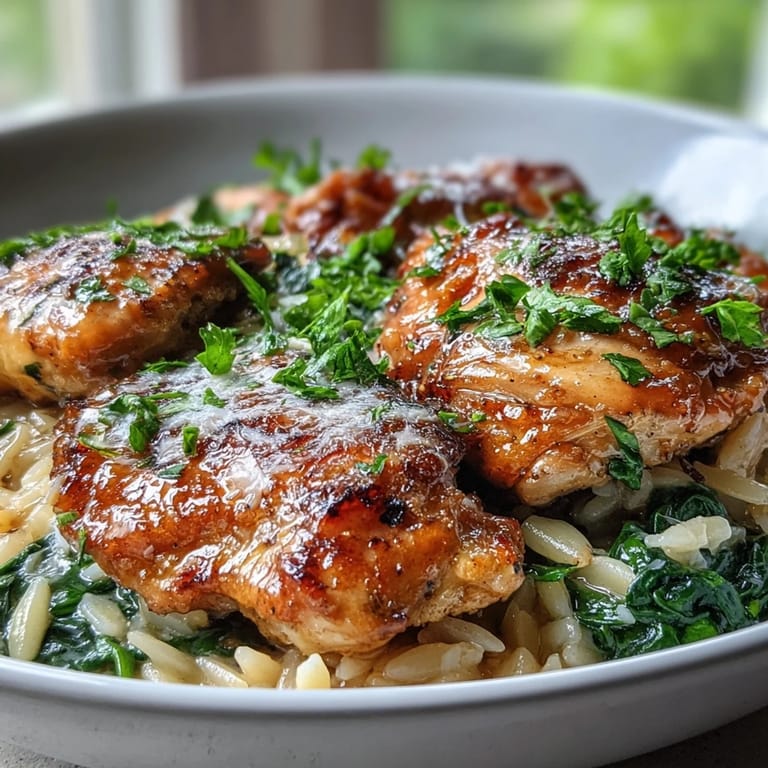
Pin This is the kind of dinner that makes you feel competent in the kitchen without requiring restaurant-level skills or a pantry full of exotic ingredients. Make it once, and you'll understand why it becomes the recipe friends ask for.
Recipe Questions & Answers
- → Can I make this dish ahead of time?
Yes, you can prepare this dish up to a day in advance. Store in an airtight container in the refrigerator. Reheat gently with a splash of broth or water to loosen the orzo, as it will continue absorbing liquid.
- → What can I substitute for the orzo?
You can use rice, small pasta shapes like ditalini or stelline, or gluten-free orzo for a gluten-free version. Adjust cooking time and liquid amounts based on your substitution.
- → Can I use chicken breasts instead of thighs?
Absolutely. Chicken breasts work well but may cook slightly faster. Cut into bite-sized pieces and adjust cooking time to avoid drying them out. Thighs tend to stay more tender in simmered dishes.
- → How do I prevent the orzo from becoming mushy?
Stir occasionally during simmering and check for doneness at the 10-minute mark. The orzo should be al dente. Remove from heat promptly once done, as residual heat will continue cooking the pasta.
- → Can I make this dairy-free?
Yes. Simply omit the Parmesan cheese or use a dairy-free alternative. The dish remains flavorful with the lemon, garlic, and fresh herbs providing plenty of seasoning.
- → What other greens can I use?
Kale, arugula, or Swiss chard make excellent substitutes for spinach. Add heartier greens like kale a few minutes earlier to ensure they wilt properly.