
 Pin
Pin My neighbor brought over a bowl of traditional Irish stew on a rainy Tuesday, and while it was delicious, I found myself thinking about what it could be without all the potatoes weighing it down. That evening, I started experimenting with lean beef and cauliflower, trying to capture that same cozy, soul-warming feeling but lighter. The first attempt was hesitant, uncertain if the flavors would hold up without the starch, but something clicked when that mash hit the bottom of the bowl.
I made this for a friend who was nervous about trying low-carb cooking, convinced it would taste like punishment masquerading as dinner. Watching her face when she took that first spoonful of stew over the mash, seeing her relax into it, was exactly why I keep coming back to this recipe. It proved that eating lighter doesn't mean sacrificing the warmth and depth you actually crave.
What's for Dinner Tonight? 🤔
Stop stressing. Get 10 fast recipes that actually work on busy nights.
Free. No spam. Just easy meals.
Ingredients
- Lean beef stew meat: Buy the trimmed cuts and don't skip patting them dry; it's the difference between a golden crust and gray disappointment.
- Olive oil: Medium-high heat is your friend here, and one tablespoon is enough if you trust the browning process.
- Onion, carrots, celery: The holy trinity that builds the foundation; don't rush the sautéing step.
- Garlic cloves: Mince them yourself if you can; jarred garlic never quite captures that sharp, fresh bite.
- Low-sodium beef broth: This matters because you're controlling the salt, not the broth manufacturer.
- Dry red wine: A wine you'd actually drink; cooking wine is a myth perpetuated by people who don't like food.
- Tomato paste: Two tablespoons adds depth and umami without making it taste tomatoey.
- Worcestershire sauce: The secret ingredient nobody mentions until it's gone; it rounds out everything.
- Dried thyme and rosemary: These are forgiving, but fresh would be even better if you have them.
- Bay leaves: Two is my number; they perfume the whole pot gently.
- Frozen peas: Added near the end so they stay bright and tender, not mushy.
- Cauliflower: One large head; it's more forgiving than you'd think, and overcooking it actually helps the mash.
- Unsalted butter and milk: This keeps the mash silky without being heavy; low-fat milk works beautifully here.
- Fresh chives: Optional but worth seeking out for that final herbaceous note.
Instructions
- Dry and season your beef:
- Pat each cube thoroughly with paper towels before salting and peppering. This simple step is what gives you that mahogany crust you're after.
- Achieve a proper sear:
- Let the oil get shimmering hot, then don't move the beef around obsessively. Give it three to four minutes per side in batches, working in stages so you don't crowd the pot.
- Build the aromatic base:
- After removing the beef, add your diced onion, carrots, and celery to the same pot and let them soften for five minutes, scraping up all those browned bits stuck to the bottom. This is flavor you don't want to waste.
- Bloom the aromatics and spices:
- Add the garlic and let it perfume the kitchen for just one minute, then stir in the tomato paste, thyme, rosemary, and bay leaves. That one minute of cooking them together unlocks flavors that raw spices can't reach.
- Deglaze and return the beef:
- Pour in the wine, scraping the bottom again, then return the beef and add the beef broth and Worcestershire sauce. The liquid should almost cover the meat.
- Simmer low and slow:
- Cover the pot, reduce heat to low, and let it go for an hour and fifteen minutes, stirring occasionally. The beef should be fork-tender when it's ready, not falling apart but yielding easily.
- Finish with peas:
- Remove the lid, add the frozen peas, and simmer uncovered for five to ten minutes until they're heated through and the broth has reduced slightly. Taste and adjust the salt and pepper now.
- Prepare the cauliflower mash while the stew simmers:
- Cut the cauliflower into florets, boil them in salted water until they're very tender (ten to twelve minutes), then drain them really well; excess water is the enemy of a creamy mash.
- Blend into silky smoothness:
- Transfer the drained cauliflower to a food processor with butter and milk, then blend until it's as smooth as you like it. Season with salt and pepper, tasting as you go.
- Plate and serve with intention:
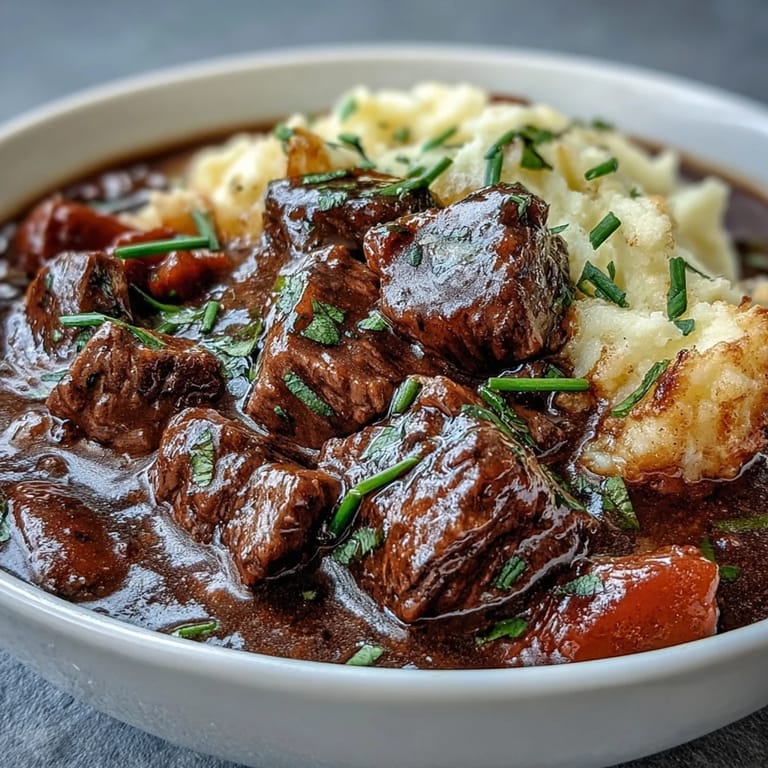
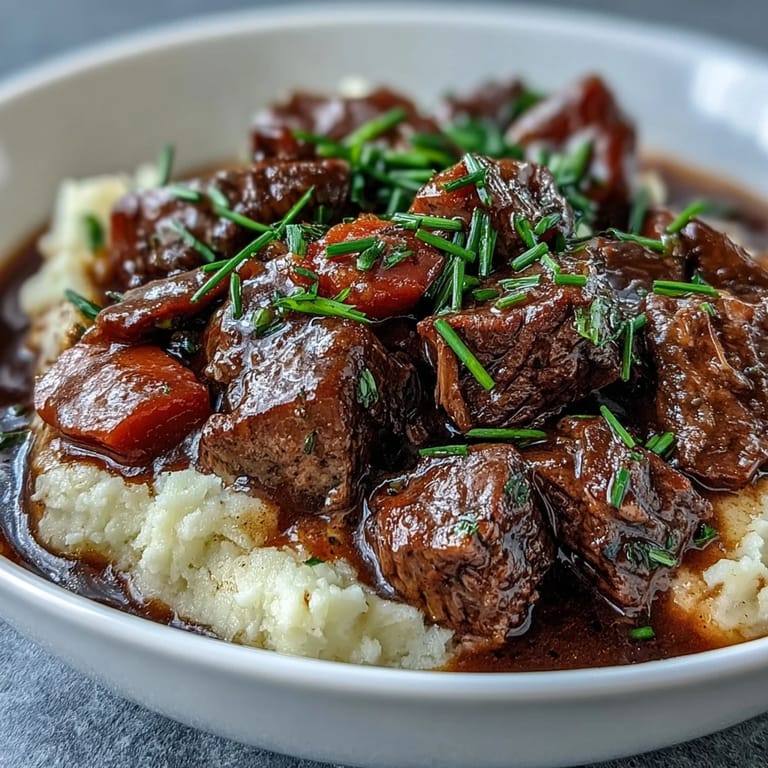
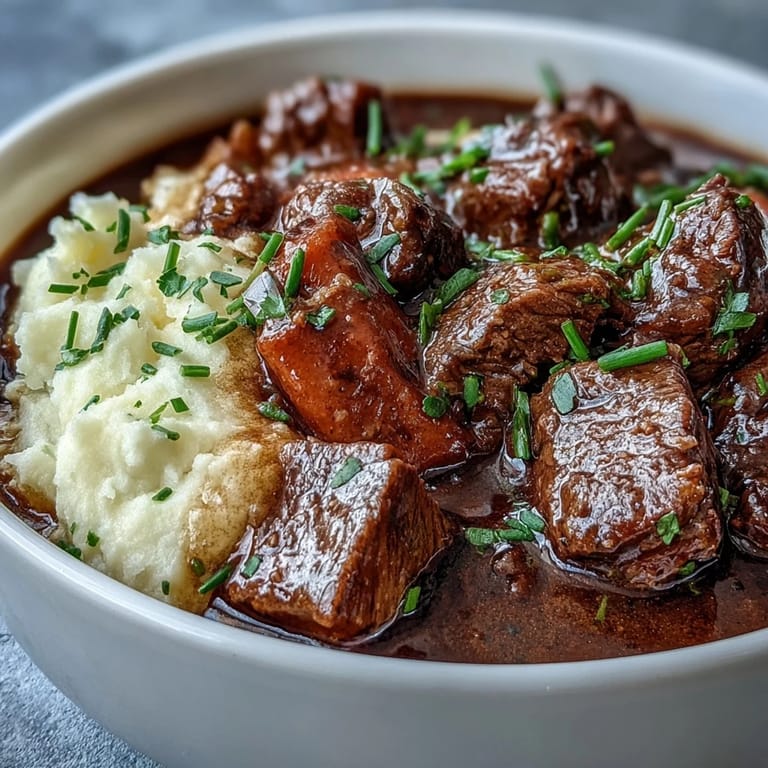
- Spoon a mound of mash into each bowl, ladle the hot stew over it, and finish with chopped fresh chives if you have them.
 Pin
Pin 
There's a moment near the end of cooking when you lift the lid and the steam rises up with all those herbs and wine and beef, and you know you've done something right. That's when this dish stops being just dinner and becomes something you want to share.
Why Cauliflower Actually Works Here
Cauliflower mash isn't trying to pretend it's mashed potatoes; it's its own thing, creamy and mild, which lets the stew be the star. The first time I made this, I was skeptical about swapping out something so traditional, but the mash absorbs the broth beautifully and gives you that same satisfied feeling without the heaviness. It's become the reason I make this over a regular Irish stew now.
Wine Choices and Pairing
Use a wine you actually enjoy drinking, because a quarter of the bottle goes in the pot and the rest belongs in your glass. A light-bodied red like a Pinot Noir or even a dry Rosé works beautifully, adding fruitiness without overpowering the beef. If you're not a wine person, use additional beef broth, though you'll lose a subtle complexity.
Making This Ahead and Variations
This stew actually tastes better the next day, when all the flavors have gotten to know each other overnight in the fridge. You can make it up to three days ahead, and the cauliflower mash is best made fresh just before serving, though you could prepare it ahead and reheat it gently with a splash of milk. If you want to switch things up, try Guinness instead of red wine for deeper richness, roasted sweet potato slices instead of carrots for a different sweetness, or add root vegetables like turnips and parsnips in the last thirty minutes.
- To thicken the stew further if it's too brothy, mash half a cup of cooked vegetables and stir them back in.
- Fresh herbs like parsley and chives added at the end brighten the whole dish.
- Leftovers freeze beautifully for up to a month, making this a perfect make-ahead meal.
 Pin
Pin This dish proves that lighter cooking isn't about deprivation; it's about being intentional with your ingredients and respecting the time it takes to build real flavor. Make it once, and you'll understand why it keeps calling you back.
Recipe Questions & Answers
- → What cut of beef works best for this stew?
Lean beef stew meat cut into 1-inch cubes is ideal as it becomes tender while retaining flavor during slow cooking.
- → Can I substitute red wine in the stew?
Yes, you can replace red wine with additional beef broth or a splash of Guinness for a different flavor profile.
- → How do I achieve a creamy cauliflower mash?
Boil cauliflower until tender, then blend with butter and low-fat milk until smooth and creamy. Season with salt and pepper to taste.
- → Is this dish suitable for gluten-free diets?
Yes, all ingredients used are naturally gluten-free, making this a safe option for gluten-sensitive individuals.
- → What herbs are used to enhance the stew’s flavor?
Dried thyme, rosemary, and bay leaves add aromatic depth and enhance the rustic character of the stew.
- → How can I thicken the stew if desired?
Remove half a cup of cooked vegetables, mash them, then stir back into the stew to add natural thickness.