
 Pin
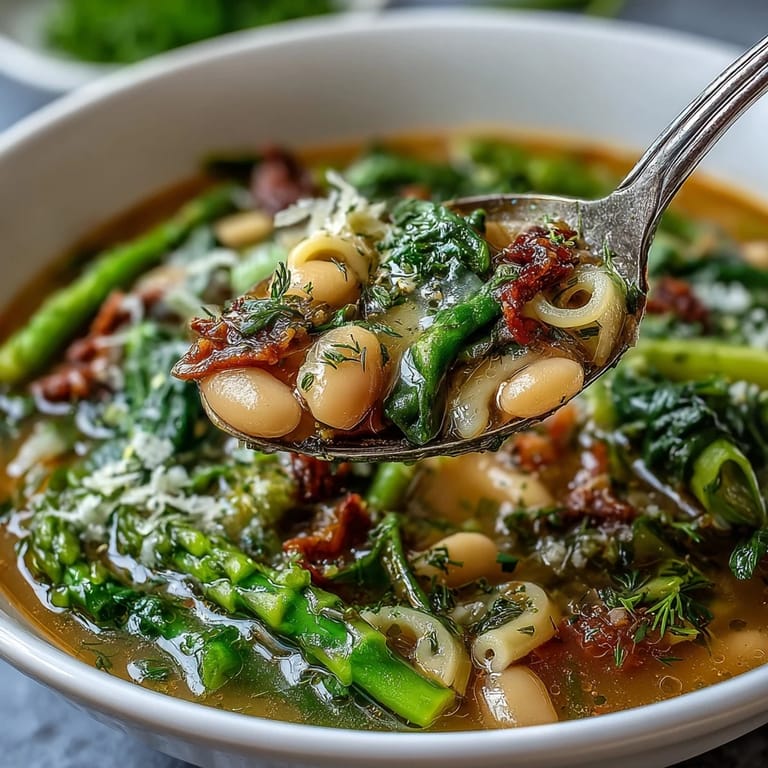
Pin Last spring, I stood in my kitchen on one of those perfectly clear mornings when the farmers market had just opened, and I came home with more asparagus and fresh peas than I knew what to do with. The bundle was so bright green it almost glowed on my counter, and I realized I needed something that would let those vegetables shine without fussing over them for hours. This minestrone became my answer, a soup that feels both effortless and somehow like you've been cooking all day.
My neighbor appeared at my back door as I was ladling this into bowls one evening, drawn by the smell of herbs and garlic drifting through the fence. She sat at my kitchen counter with a spoon in hand before I'd even finished explaining what was in it, and by the time she left, she'd asked for the recipe three times. That's when I knew this soup had something worth holding onto.
What's for Dinner Tonight? 🤔
Stop stressing. Get 10 fast recipes that actually work on busy nights.
Free. No spam. Just easy meals.
Ingredients
- Olive oil: Start with good oil because it's one of the few things you'll actually taste in the broth, and it carries the flavor of everything else along with it.
- Onion, carrots, and celery: This is your flavor foundation, the aromatics that build the soul of the soup, so don't rush them or skip the softening step.
- Garlic: One minute is all it needs to become fragrant and sweet, any longer and it turns bitter on you.
- Zucchini: It breaks down slightly during cooking and thickens the broth in the most natural, unforced way.
- Asparagus: Add it later so it stays tender-crisp and doesn't turn to mush, keeping that fresh spring texture alive.
- Peas: Whether frozen or fresh, they burst with sweetness and add a pop of color that makes the soup feel more alive.
- Baby spinach or Swiss chard: The greens wilt in at the very end, adding nutrients and that earthy bite that grounds everything.
- White beans: Cannellini or Great Northern beans hold their shape and add creaminess and protein without being heavy.
- Small pasta: Ditalini or small shells work best because they don't overshadow the vegetables and stay delicate in the broth.
- Vegetable broth: Use low-sodium so you can season to your own taste and the vegetables' natural flavors come through.
- Thyme, oregano, and bay leaf: These dried herbs are forgiving and build a warm, Mediterranean backdrop for the bright vegetables.
- Lemon zest and fresh parsley: These two additions come at the very end and feel like turning on a light in the finished soup.
Instructions
- Start with your base:
- Heat the olive oil over medium heat and add your diced onion, carrots, and celery, stirring occasionally for about five minutes until they soften and the onion turns translucent. You'll know they're ready when the kitchen starts to smell deeply savory and the vegetables have lost their raw edge.
- Build the aromatics:
- Stir in the minced garlic and let it cook for exactly one minute, stirring constantly so it becomes fragrant and golden but never brown. This is where the soup gets its warm, welcoming personality.
- Add the first round of vegetables:
- Toss in the diced zucchini and cook it for two minutes, letting it begin to soften slightly and release its flavor into the oil.
- Pour in the broth and season:
- Add your vegetable broth along with the thyme, oregano, and bay leaf, then bring everything to a gentle boil. The broth should smell herbal and inviting now, ready to welcome the other ingredients.
- Add beans and pasta:
- Stir in the drained white beans and your small pasta, then reduce the heat to a simmer for ten minutes. The pasta will absorb some of the broth as it cooks, making everything creamy and cohesive.
- Introduce the spring vegetables:
- Add your asparagus pieces and peas, cooking for another five to seven minutes until the pasta is tender and the vegetables still have a slight bite to them. This is where the soup transforms into something that tastes like the best part of spring.
- Finish with brightness:
- Stir in your spinach or Swiss chard, the lemon zest, and fresh parsley, cooking for just two more minutes until the greens are wilted but still vibrant. Taste everything and season with salt and pepper until it feels balanced and alive on your tongue.
- Serve and garnish:
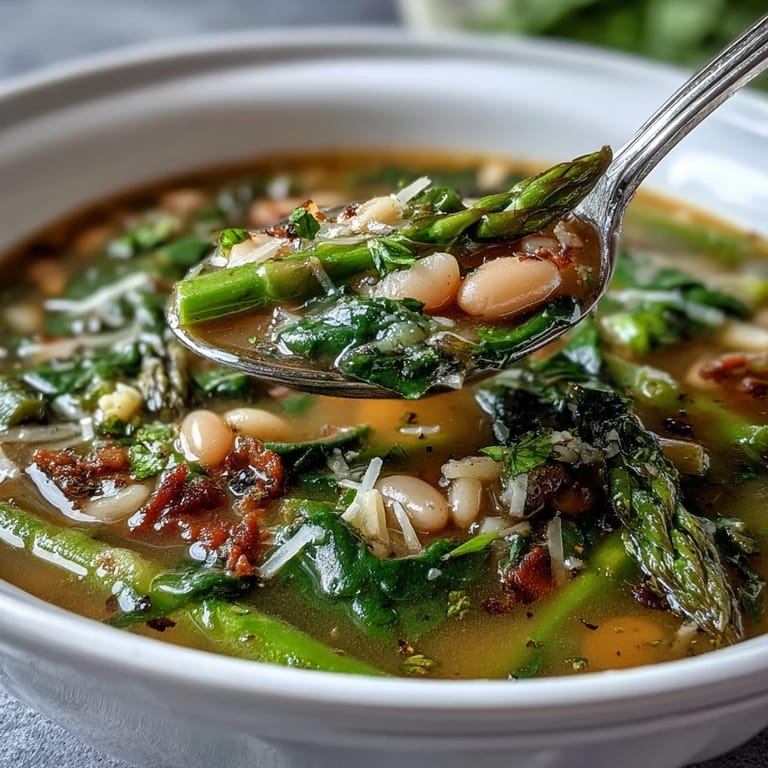
- Remove the bay leaf, ladle the soup into bowls, and finish each one with a drizzle of good olive oil and a handful of grated Parmesan if you'd like that savory richness.
 Pin
Pin 
There was something deeply satisfying about serving this soup on that first warm evening of the year, when we could finally open all the windows and the whole house felt lighter. Everyone wanted seconds, and someone asked if there was cream in it even though it was completely plant-based, which somehow felt like the highest compliment possible.
The Art of Seasoning a Spring Soup
Spring vegetables are delicate and their flavors are subtle, so you have to be gentle with your seasoning rather than bold. The herbs should feel like whispers, not shouts, and the lemon zest does more work than you'd expect, brightening everything without tasting aggressively citrusy. This is why I wait until the very end to taste and adjust with salt and pepper, because once everything comes together, you'll know exactly what it needs.
Variations That Keep It Interesting
The beauty of minestrone is that it's forgiving and welcomes whatever spring vegetables you have on hand. Some weeks I've added fresh fava beans instead of asparagus, other times I've used green beans when asparagus wasn't at its peak. You could also swap in different herbs like basil or dill if they speak to you, or add a handful of arugula at the end for a slightly peppery note that plays wonderfully against the creamy beans.
Making It Your Own
This soup has a way of becoming a reflection of whatever's at your market and whatever mood you're in, and that's exactly how it should be. The basic structure is reliable enough that you can trust it even when you're improvising, and that confidence in the kitchen is its own kind of joy. Once you've made it once, you'll find yourself returning to it whenever spring finally arrives and you need something that tastes like warmth and care in a bowl.
- A squeeze of fresh lemon juice right into your finished bowl adds another layer of brightness if the zest alone isn't quite enough.
- Serve it alongside crusty bread for soaking up every last drop of broth, or on its own as a lighter meal.
- It keeps beautifully in the refrigerator for several days, and the flavors actually deepen and mellow as it sits.
 Pin
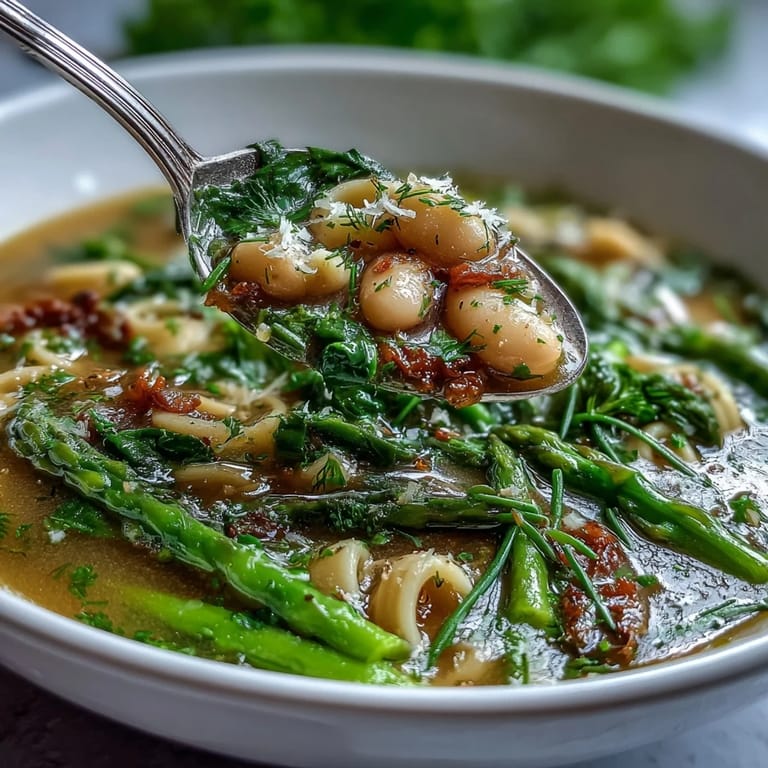
Pin This is the kind of soup that feels as good to make as it is to eat, honest and unpretentious and full of reasons to feel nourished. It's become my go-to whenever I want to celebrate spring without any fussing or complications.
Recipe Questions & Answers
- → Can I use fresh beans instead of canned white beans?
Yes, fresh beans can be used but should be soaked and cooked until tender before adding, as canned beans are pre-cooked for convenience.
- → What pasta works best in this soup?
Small shapes like ditalini, small shells, or gluten-free alternatives work well to blend with the vegetables and beans without overpowering.
- → How can I make this dish vegan?
Simply omit the Parmesan garnish or replace with a plant-based cheese alternative to keep it vegan-friendly.
- → Is it possible to substitute asparagus with other vegetables?
Yes, spring greens such as fava beans or green beans can be used as a fresh substitute for asparagus.
- → What is the best way to store leftovers?
Store in an airtight container in the refrigerator for up to 3 days. Reheat gently on the stove to maintain texture.
- → Can I prepare this soup ahead of time?
This soup can be prepared a day in advance; just add delicate greens like spinach and lemon zest fresh before serving to preserve flavor.