 Pin
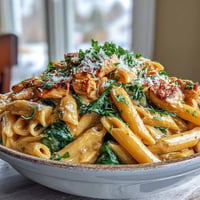
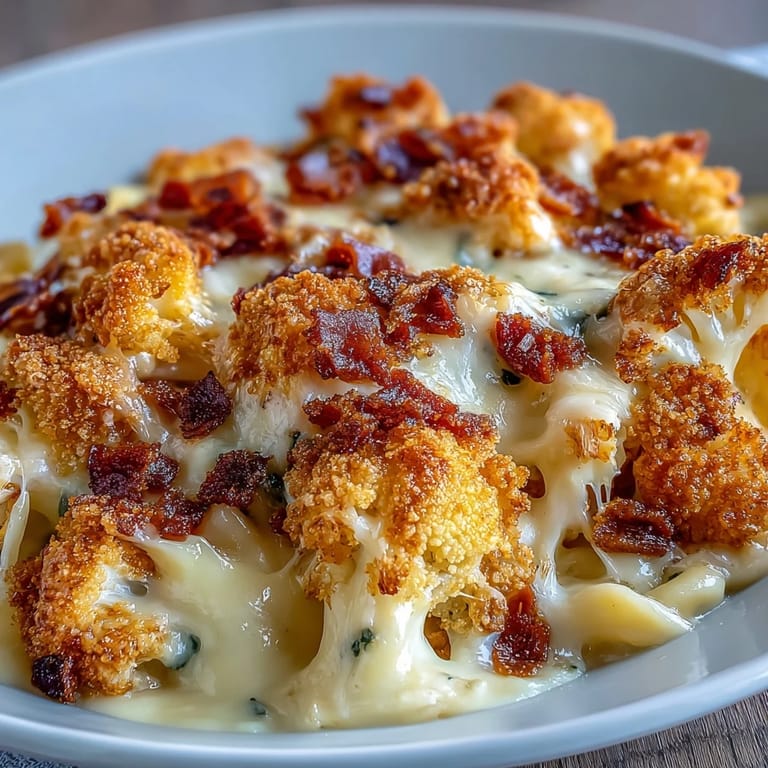
Pin My friend Sarah texted me one random Tuesday asking if mac and cheese could actually fit into a keto diet, and honestly, I had no idea until I started experimenting that week. The first time I roasted cauliflower florets instead of reaching for pasta, something clicked—they got crispy at the edges, tender in the middle, and soaked up this ridiculously creamy cheese sauce like they were born for it. When I scattered crispy bacon crumbs on top, my whole kitchen smelled like a breakfast-dinner dream collision, and I knew I'd stumbled onto something worth making again and again.
I made this for my family dinner last month when my brother came home exhausted from work, expecting something that tasted restrictive because I mentioned the keto part. He took one bite, closed his eyes, and said nothing for a solid ten seconds—the highest compliment he's ever paid any meal. That's when I realized this dish has this sneaky power to satisfy on every level, whether someone's following keto or just hungry and happy.
What's for Dinner Tonight? 🤔
Stop stressing. Get 10 fast recipes that actually work on busy nights.
Free. No spam. Just easy meals.
Ingredients
- Cauliflower florets (1 large head, about 800 g): This is your pasta substitute, and the key is cutting pieces roughly bite-sized so they roast evenly and absorb the sauce without falling apart.
- Unsalted butter (2 tablespoons total): Split between roasting the cauliflower and building your sauce base—unsalted lets you control the salt level completely.
- Heavy cream (1 cup): This is what makes the sauce luxurious and prevents it from getting grainy when you add the cheeses.
- Sharp cheddar cheese (1 1/2 cups shredded): The backbone flavor—sharp cheddar has more punch than mild, so you don't need to use a ton of cheese to feel satisfied.
- Mozzarella cheese (1/2 cup shredded): Adds stretch and silkiness to the sauce without overpowering the cheddar's character.
- Cream cheese (2 ounces): Acts as an emulsifier to keep everything smooth and prevents the sauce from breaking when it sits.
- Parmesan cheese (1/4 cup grated): Brings a salty, umami depth that makes people ask what your secret ingredient is.
- Bacon (6 slices): Cook it until it shatters when you crumble it, not just until it's soft—that crispy texture is everything.
- Garlic powder, onion powder, smoked paprika (1/2, 1/2, 1/4 teaspoon): These create savory depth without fresh aromatics, and the smoked paprika adds a subtle warmth that rounds everything out.
- Salt and black pepper: Taste as you go because the cream cheese and bacon are already salty—you might need less than you think.
- Fresh chives or parsley (optional): A handful scattered on top at the very end adds a pop of color and a tiny fresh note that cuts through the richness.
Instructions
- Get your oven ready and prep the pan:
- Preheat to 425°F and line a baking sheet with parchment paper so nothing sticks and cleanup is actually simple.
- Roast the cauliflower until golden:
- Toss your florets with a tablespoon of melted butter, salt, and pepper, spread them in one layer, and roast for 20 to 25 minutes, stirring halfway through. You want the edges caramelized and golden, and the insides tender enough to pierce with a fork but still with a little resistance.
- Cook the bacon while the cauliflower roasts:
- In a skillet over medium heat, lay out your bacon strips and let them crisp up for about 7 to 8 minutes, flipping occasionally. Once they're golden and shattered-crispy, drain them on paper towels and crumble them into fine pieces—you're looking for texture here, not big chunks.
- Build your cheese sauce carefully:
- In a large saucepan over medium-low heat, melt the remaining butter, then pour in your heavy cream. Add the cream cheese in small pieces and whisk constantly until it melts completely and the mixture is smooth, which takes about 2 to 3 minutes. This is the foundation—don't rush it or you'll end up with lumps.
- Layer in the cheeses slowly:
- Season with garlic powder, onion powder, smoked paprika, salt, and pepper, then add your shredded cheddar and mozzarella a handful at a time, whisking between each addition. Once those are melted and glossy, add the Parmesan last—this whole process should take about 3 to 4 minutes, and you should never let it boil or the sauce breaks.
- Combine everything together:
- Gently fold the roasted cauliflower into the cheese sauce until every piece is coated, working slowly so you don't break the florets apart.
- Finish it in the oven:
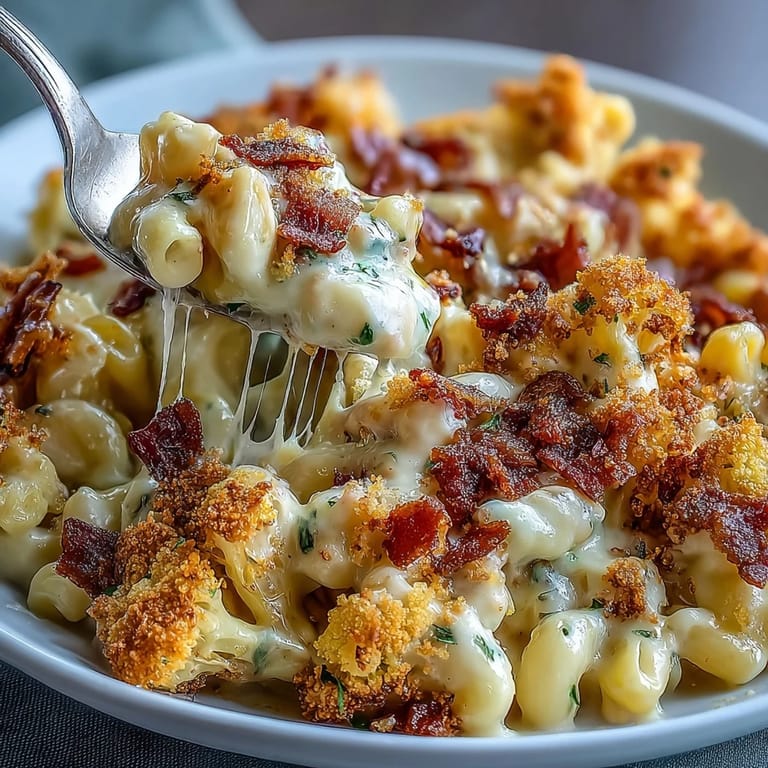
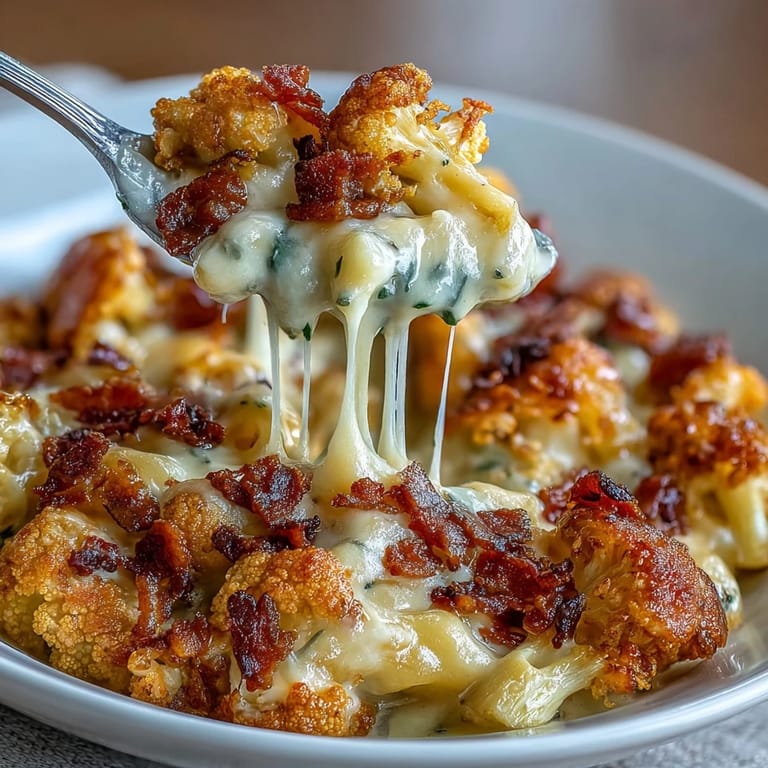
- Transfer to a baking dish, scatter the bacon crumbs across the top, and bake at 400°F for 7 to 10 minutes until the top is golden and the sauce is bubbling at the edges. The bacon will crisp up even more from the oven heat.
- Serve right away:
- Garnish with fresh chives or parsley if you want that brightness, and serve it straight from the baking dish so everyone can grab it while it's still steaming.
 Pin
Pin 
There's this moment, maybe the third time I made this, when I realized my seven-year-old nephew asked for seconds without being asked, and he's the kid who usually announces when vegetables are involved. That's when this dish stopped being just a keto solution and became something I make because people actually want to eat it, regardless of what diet they're following.
Why Cauliflower Florets Work Better Than You'd Think
When you roast cauliflower at high heat, something magical happens to the surface—the natural sugars caramelize, the edges crisp up, and the whole floret gets this almost nutty complexity that raw or boiled cauliflower could never achieve. The texture is substantial enough that your brain registers it as a real pasta substitute instead of just feeling like you're eating vegetables in a cheese sauce. Combined with the creamy sauce and salty bacon, roasted cauliflower becomes the star of the plate, not the apologetic sidekick.
The Cheese Sauce Strategy That Actually Works
The secret to a sauce that stays smooth and creamy lies in three rules: keep the heat medium-low, add cheeses gradually instead of all at once, and use cream cheese as your emulsifier to prevent the whole thing from breaking. I learned this the hard way by trying to shortcut with just cheddar and cream, which curdled within minutes and left me staring at a separated mess. Now I always build the base with cream and cream cheese first, then layer in the sharper cheeses, and the result is always silky and stable.
Variations, Swaps, and When to Experiment
Once you nail the basic version, you can play around without ruining it—swap half the cheddar for Gruyère if you want something more sophisticated, or add a pinch of cayenne or even a dash of hot sauce if you like heat. I've also tried crushing pork rinds and mixing them with the bacon for extra crunch, and it adds a texture that feels almost like breadcrumbs. The dish is flexible enough to handle your preferences while staying fundamentally delicious and satisfying.
- Gruyère, Gouda, or Emmental all work beautifully if you want to swap out some of the cheddar for different flavor profiles.
- A small sprinkle of crushed pork rinds mixed with the bacon crumbs adds a crispy texture that feels fancy and unexpected.
- This tastes just as good served as a main dish with a simple green salad as it does as a rich side next to grilled steak or chicken.
 Pin
Pin This dish reminds me why I love cooking keto food—it's not about restriction, it's about realizing that some of the most comforting, indulgent meals happen to fit perfectly into this way of eating. Make it once, and it becomes a regular rotation, the kind of meal people remember and ask you to make again.
Recipe Questions & Answers
- → Can cauliflower be substituted for pasta in mac and cheese?
Yes, roasted cauliflower florets make an excellent low-carb alternative, providing a tender and flavorful base.
- → How is the bacon prepared for this dish?
Bacon is cooked crisp in a skillet, then crumbled into fine crumbs to add a crunchy, smoky topping.
- → What cheeses are used to create the sauce?
A combination of sharp cheddar, mozzarella, cream cheese, and Parmesan gives a rich, creamy, and flavorful sauce.
- → How do spices enhance the flavor?
Garlic powder, onion powder, and smoked paprika add depth and a subtle smoky warmth to the cheese sauce.
- → Is this dish suitable for gluten-free diets?
Yes, it contains no gluten ingredients but verifying cross-contamination risks is recommended for sensitive individuals.
- → What is an optional garnish for added freshness?
Chopped fresh chives or parsley brighten the dish and add a mild herbal note.